Kazan Kremlin & Bauman Street
Kazan: Where East Meets West
Kazan is a unique city where Orthodox Christianity and Islam, Russian and Tatar cultures peacefully coexist. This route takes you through the main symbols of "Russia's third capital" — from the ancient Kremlin to the lively pedestrian Bauman Street.
Kazan Kremlin — UNESCO Site
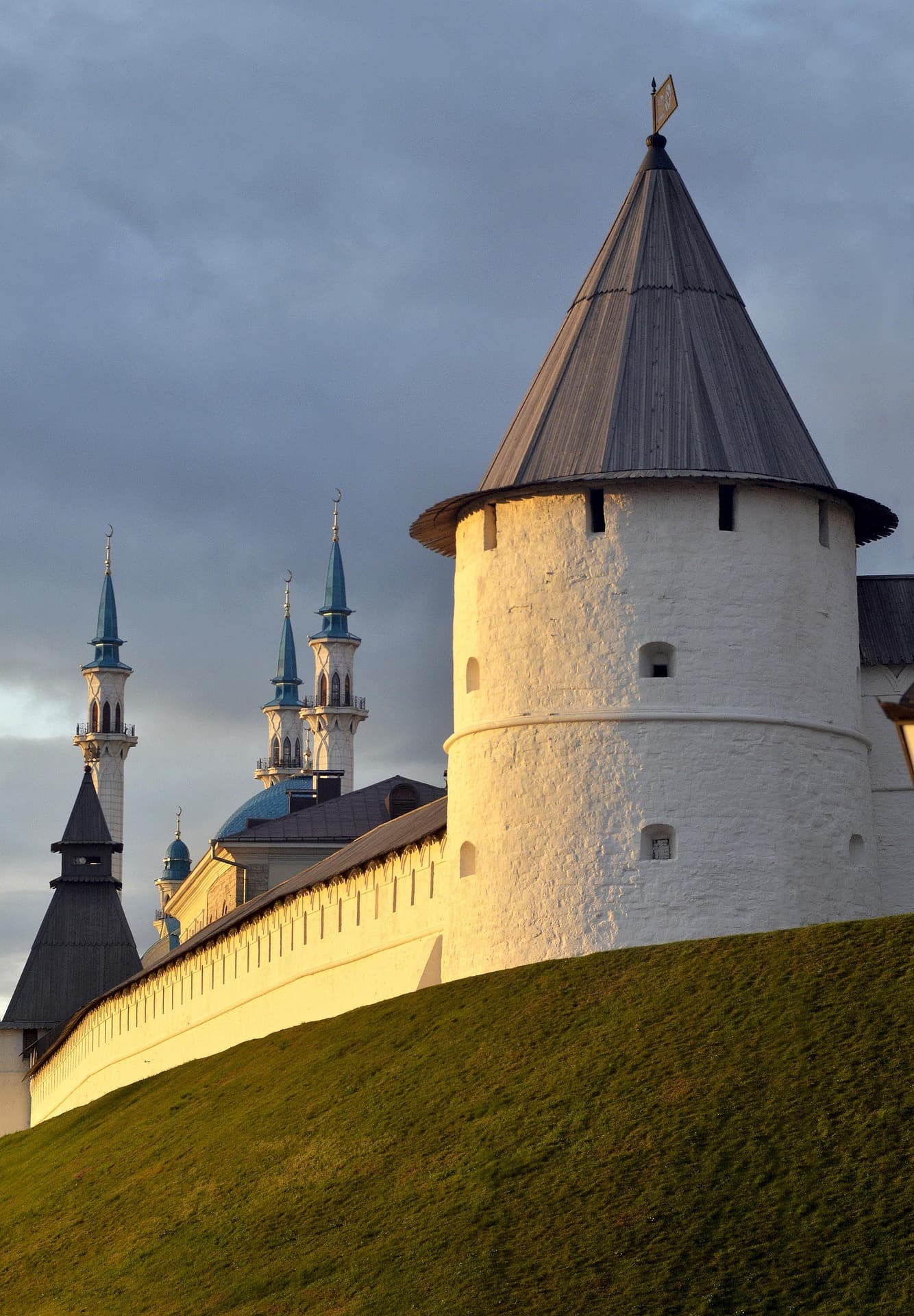
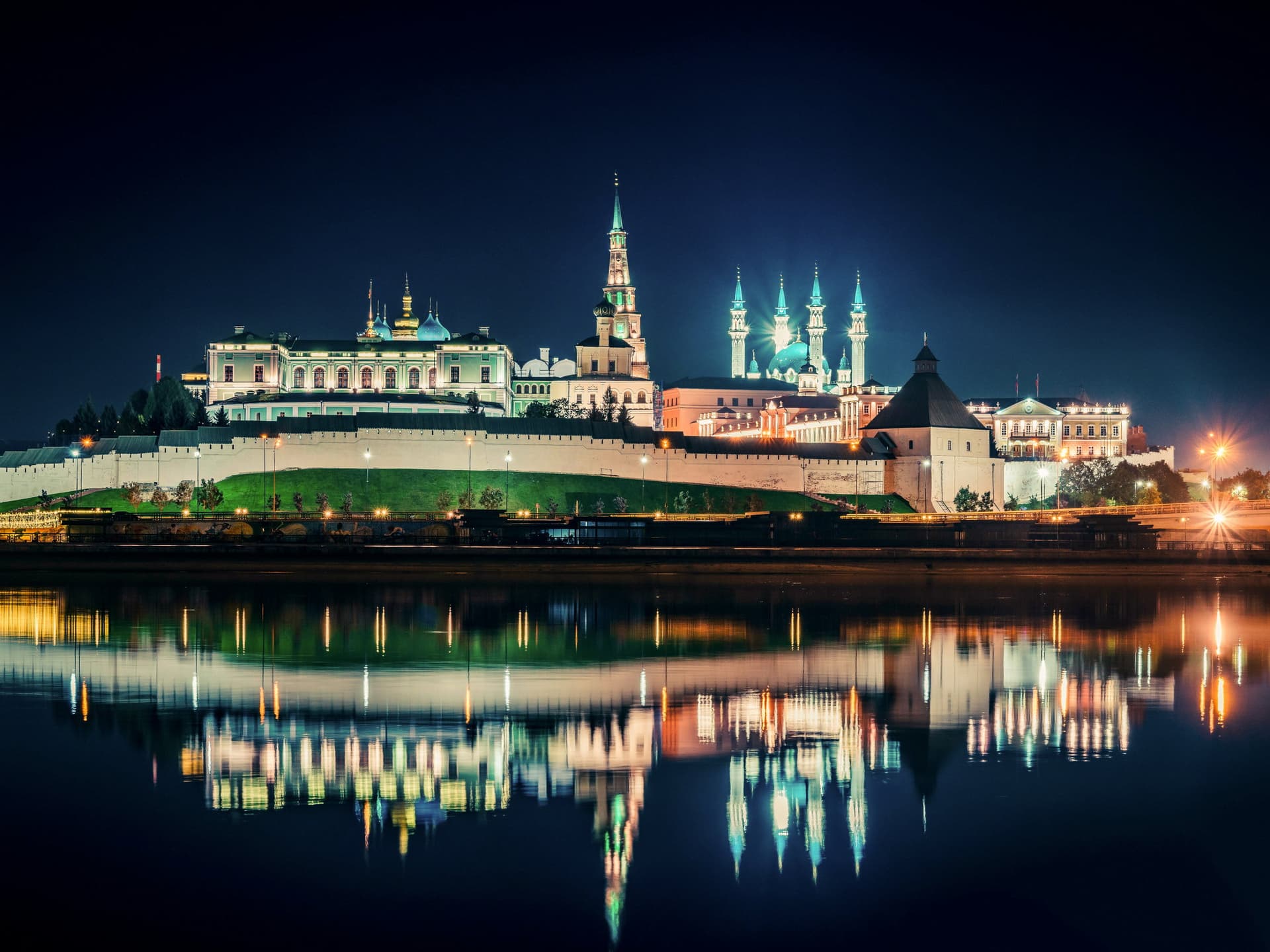
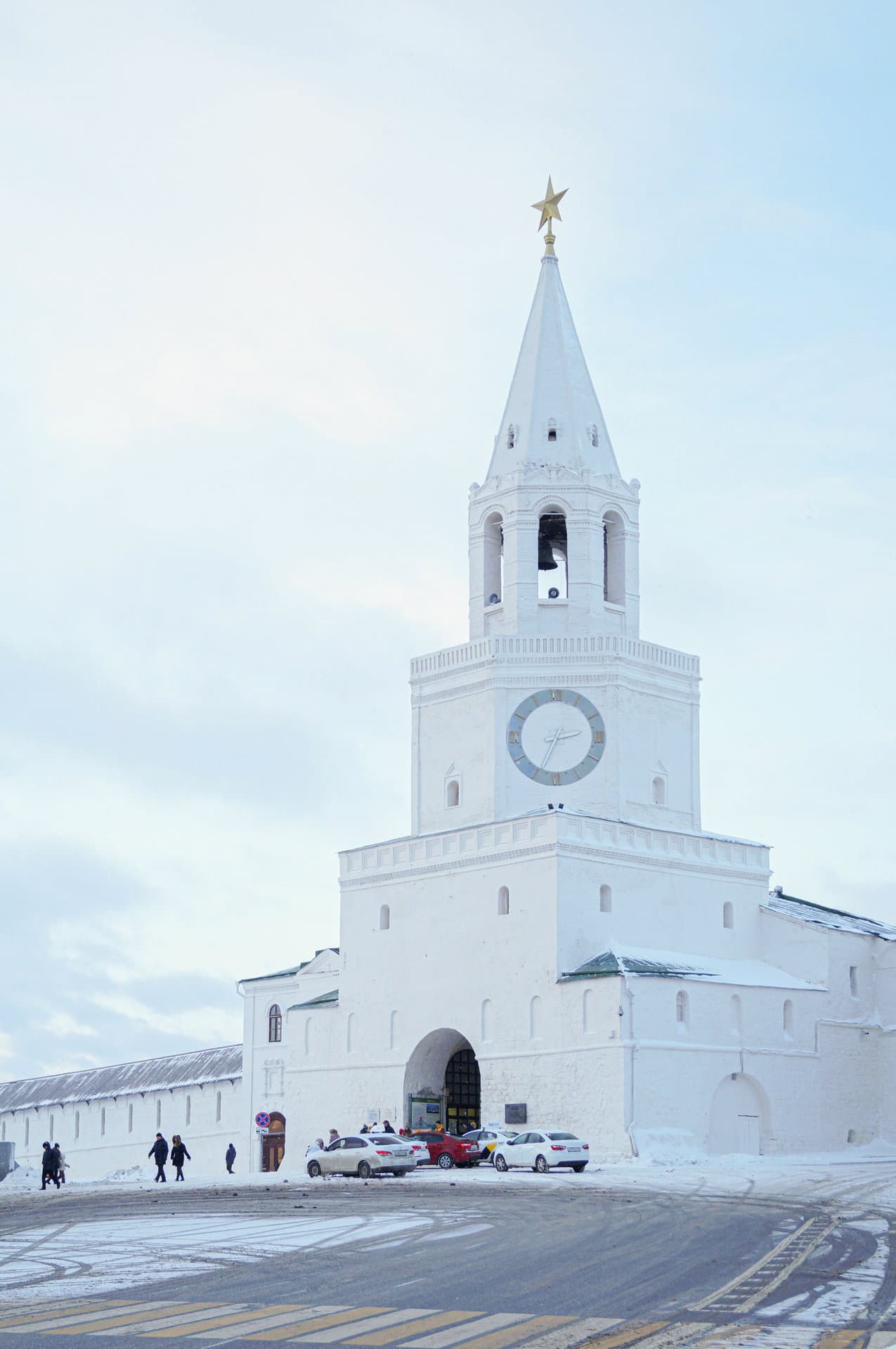
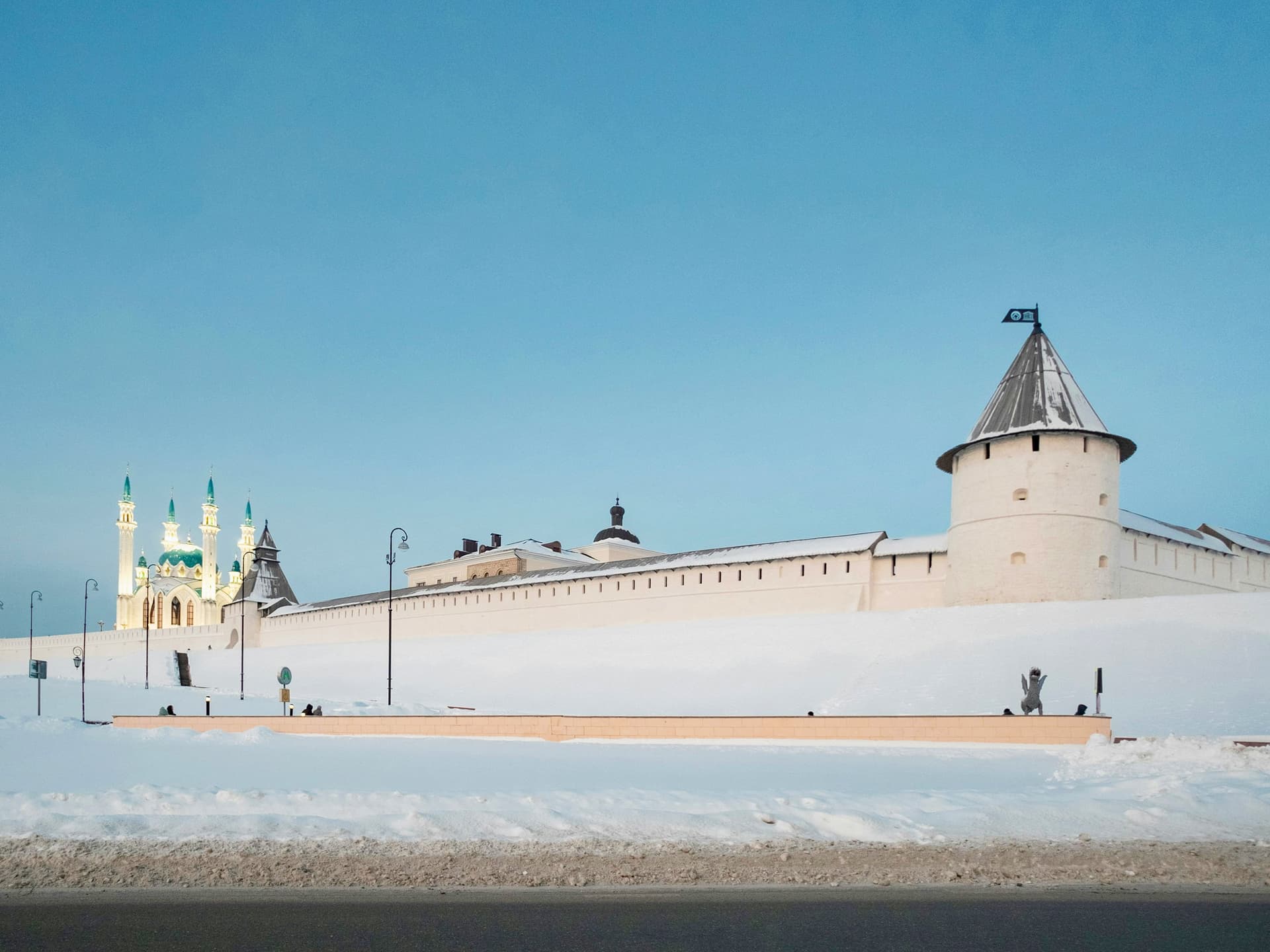
Kazan Kremlin is an ancient fortress on a hill at the confluence of the Kazanka and Volga rivers. This is the world's only functioning center of Tatar statehood and culture included in the UNESCO World Heritage list.
The Kremlin's history spans over 1000 years. Bulgar emirs and Kazan khans ruled here, and in 1552 Ivan the Terrible's troops captured the city by storm. Today the Kremlin territory hosts:
- Kul Sharif Mosque — Tatarstan's main mosque
- Annunciation Cathedral — the city's oldest Orthodox church
- Söyembikä Tower — Kazan's "leaning" tower
- Presidential Palace — residence of Tatarstan's head
- Museums and exhibition halls
Kul Sharif Mosque
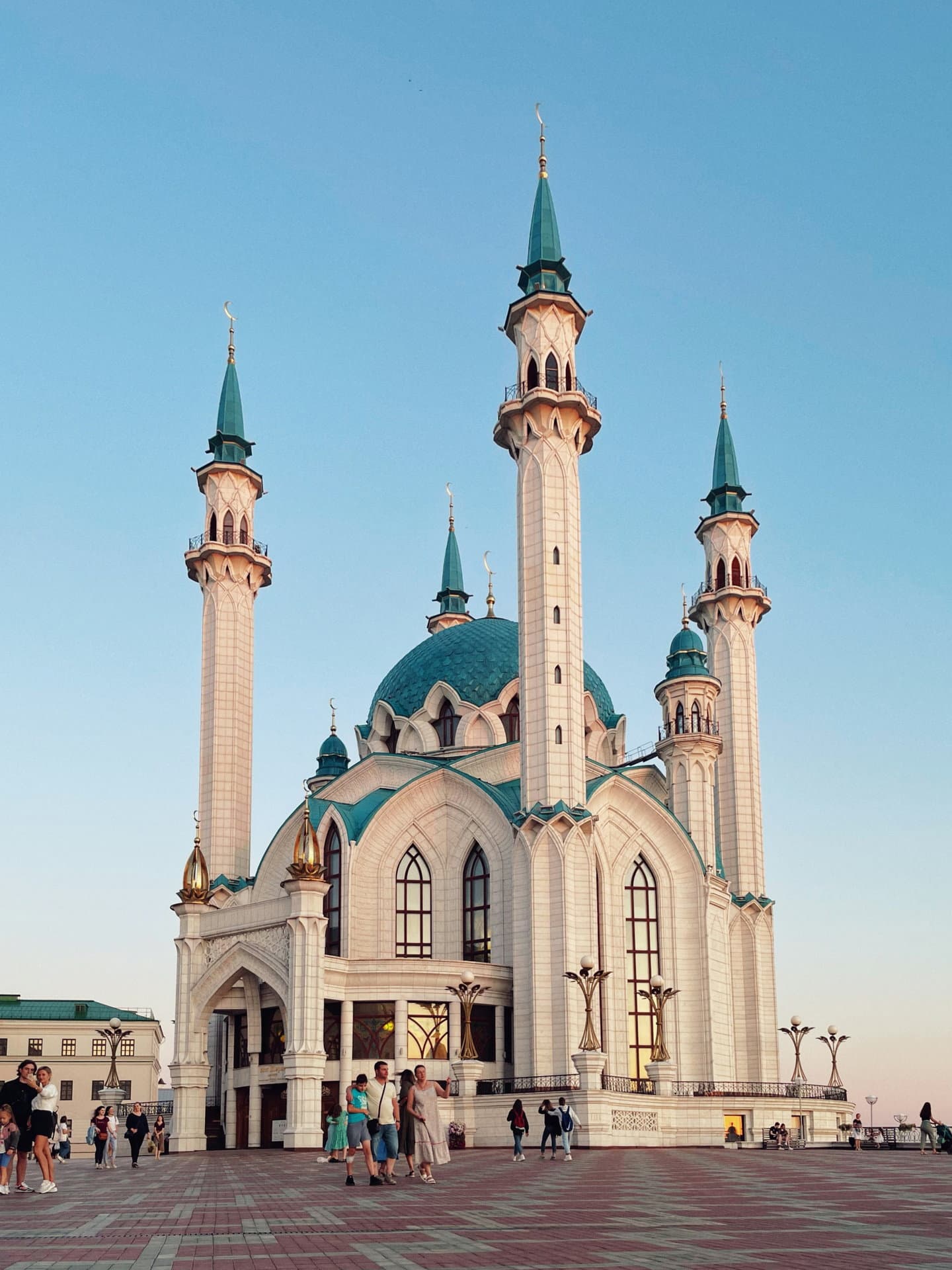
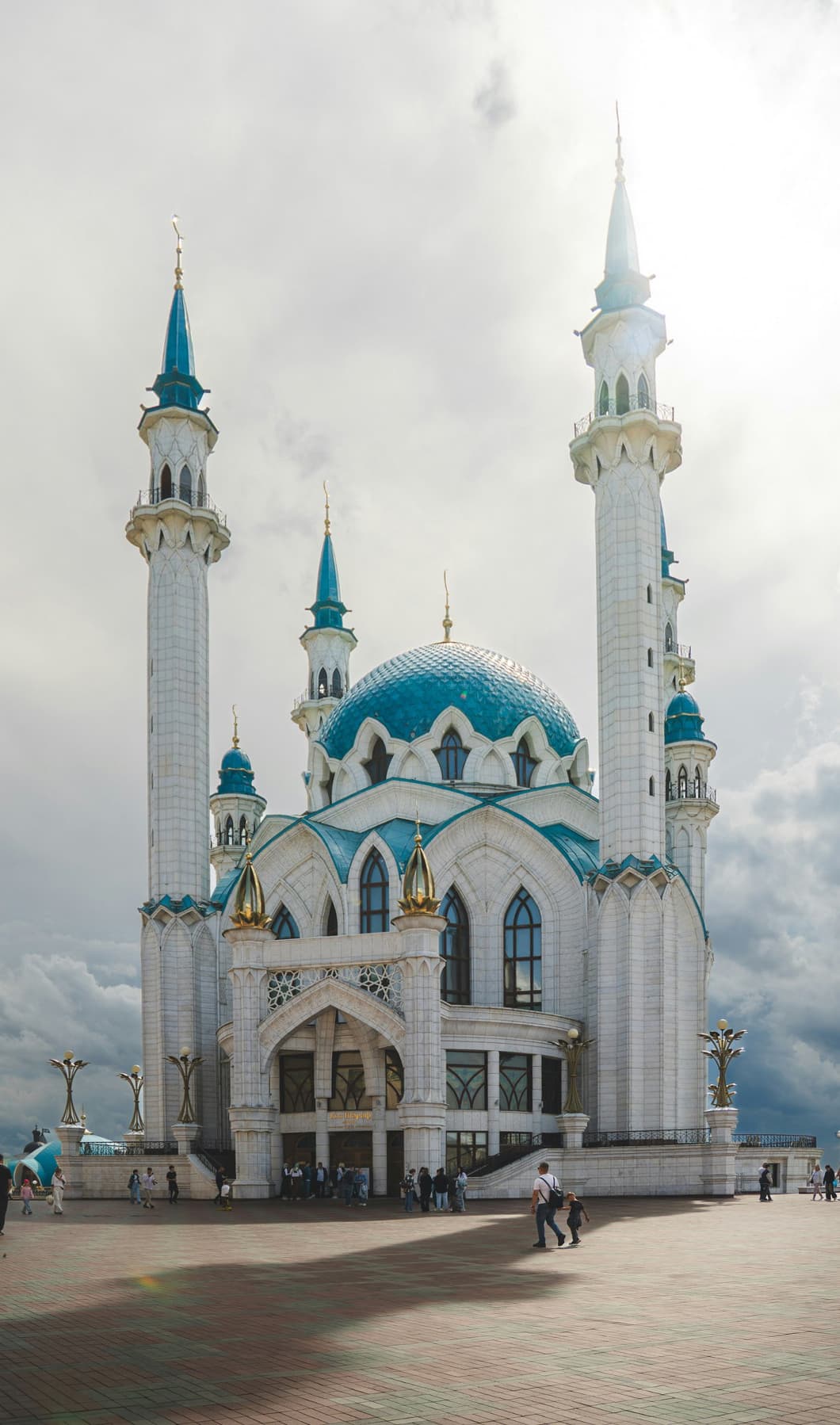
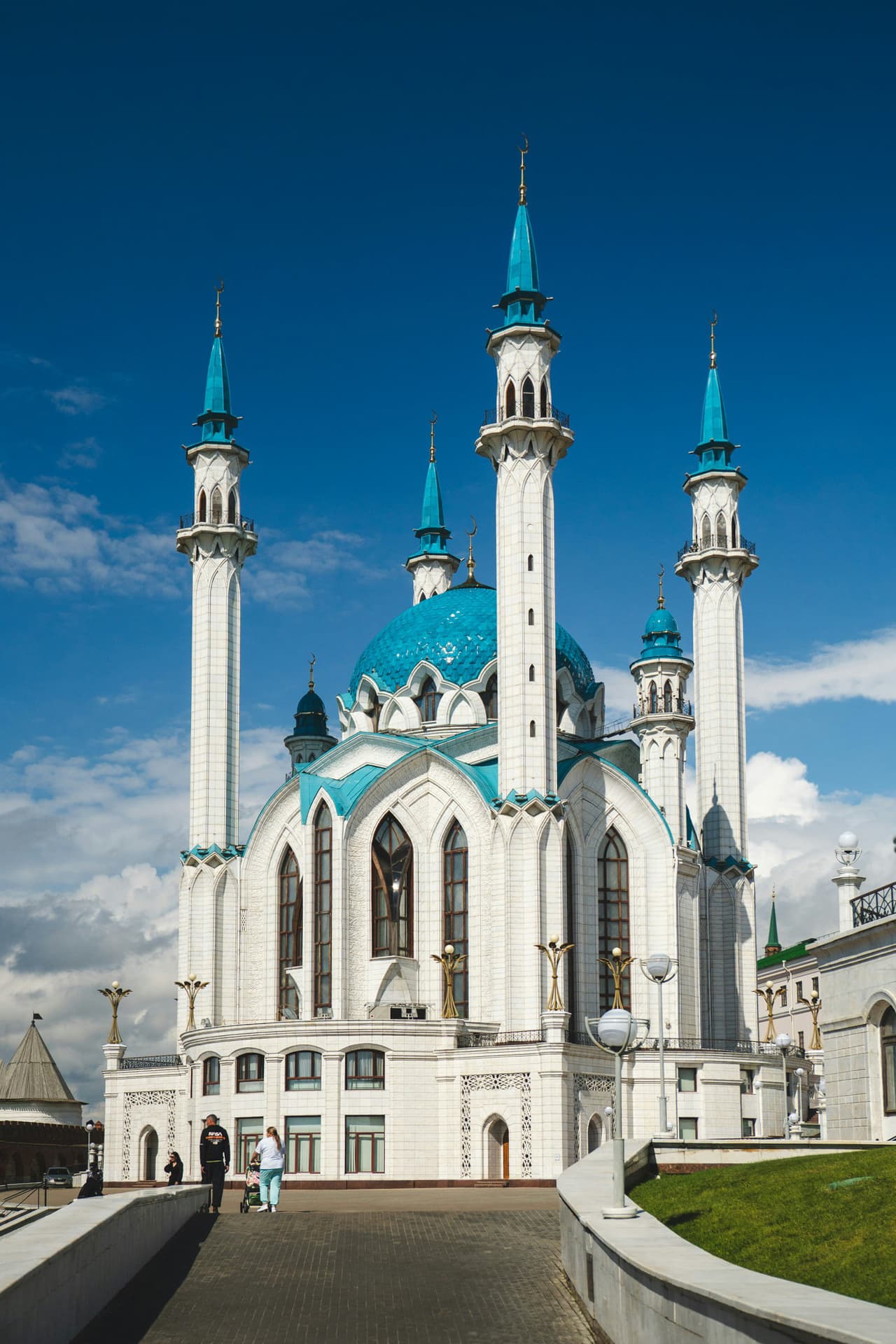
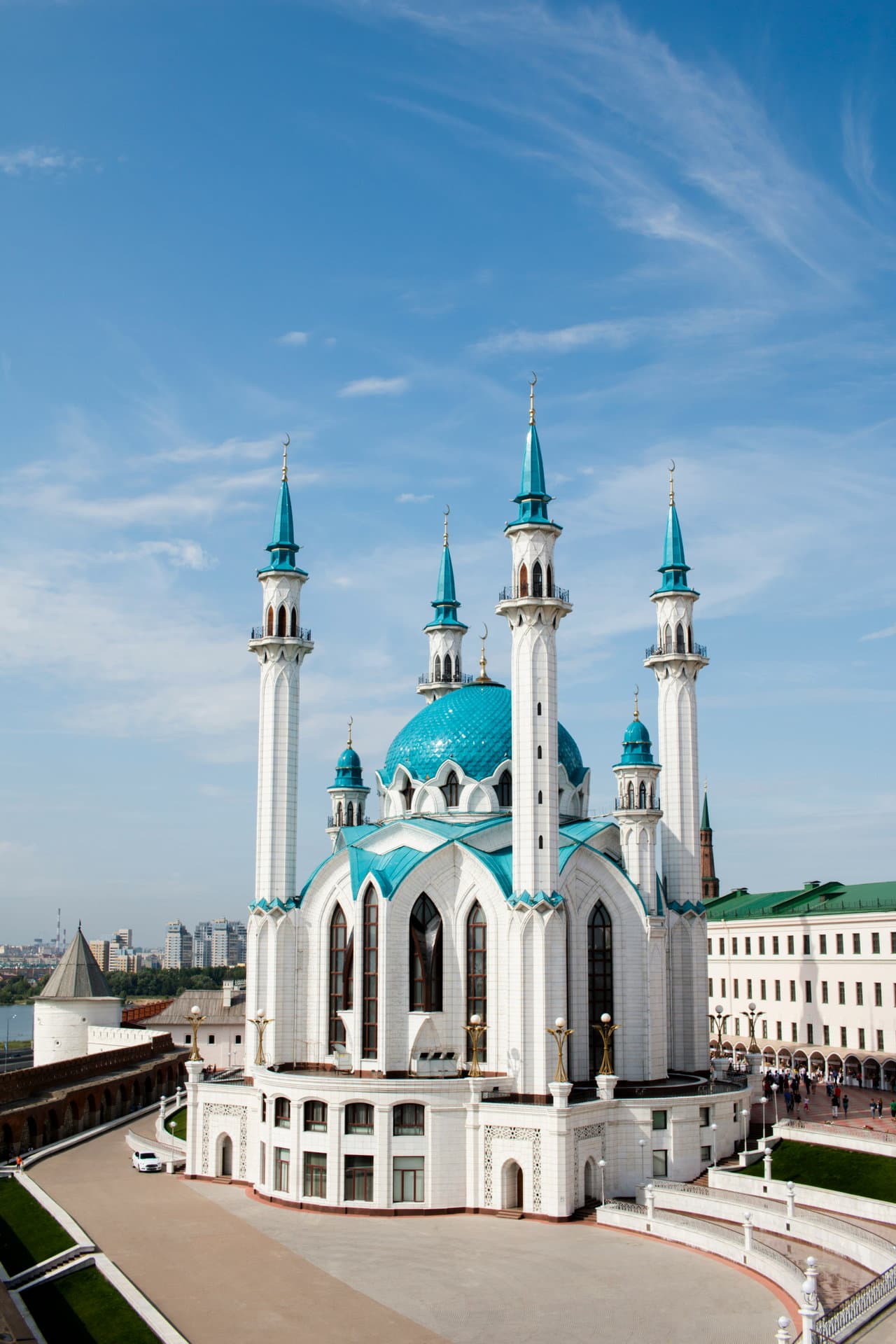
Kul Sharif Mosque is the Kremlin's architectural dominant and one of Europe's largest mosques. It's named after Imam Kul Sharif, who died defending Kazan from Ivan the Terrible's troops in 1552.
The modern building (2005) recreates the multi-minaret mosque destroyed when the city was taken. The white-and-blue building with four 55-meter minarets is visible from anywhere in the city.
Anyone can enter — it's not only an active mosque but also an Islamic museum. Interiors amaze: Carrara marble, Ural malachite, colored stained glass, Persian carpets. Modest clothing required; women need headscarves (available at entrance).
Annunciation Cathedral
Just steps from the mosque is the Annunciation Cathedral, built in 1561-1562 immediately after Kazan's capture. This is the city's oldest surviving building and a vivid example of Pskov architectural school.
The contrast between mosque and cathedral symbolizes Kazan's unique character — peaceful coexistence of two great religions and cultures. Such proximity is possible only here.
Söyembikä Tower
Söyembikä Tower is one of Kazan's main symbols, a "leaning" tower with an inclination of almost 2 meters (more than Pisa!). Height — 58 meters, seven tiers of red brick.
A romantic legend is connected with the tower: Queen Söyembikä, not wanting to marry Ivan the Terrible, asked to build a tower and threw herself from it. Historians, though, believe the tower was built later — in the 17th-18th centuries.
Bauman Street — Kazan's Arbat
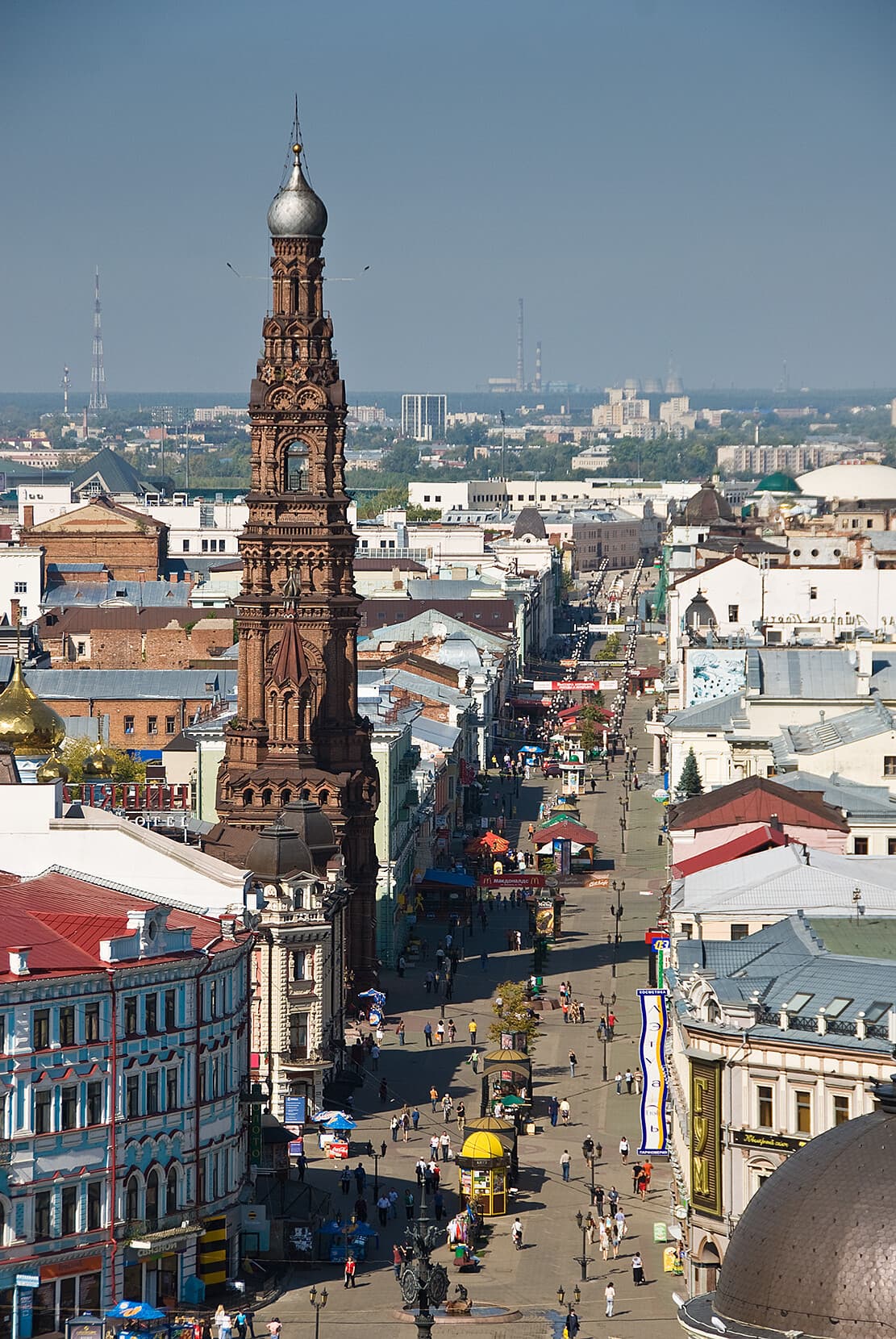
From the Kremlin, descend to Bauman Street — Kazan's main pedestrian artery, about 2 kilometers long. City life concentrates here: cafes, shops, street musicians, fountains.
Note:
- Replica of Catherine II's carriage — the empress visited Kazan in 1767
- Kazan Cat monument — city symbol (legend of cats that protected the Winter Palace)
- Epiphany Cathedral with bell tower — Fyodor Chaliapin was baptized here
- Kazan's zero meridian — distance reference point
Where to eat: the street is full of Tatar cuisine restaurants. Must-try:
- Echpochmak — triangular pies with meat, potato, and onion
- Chak-chak — traditional honey-drenched pastry
- Gubadiya — layered pie with rice, cottage cheese, and raisins
- Tatar pilaf — different from Uzbek
"Kazan" Family Center
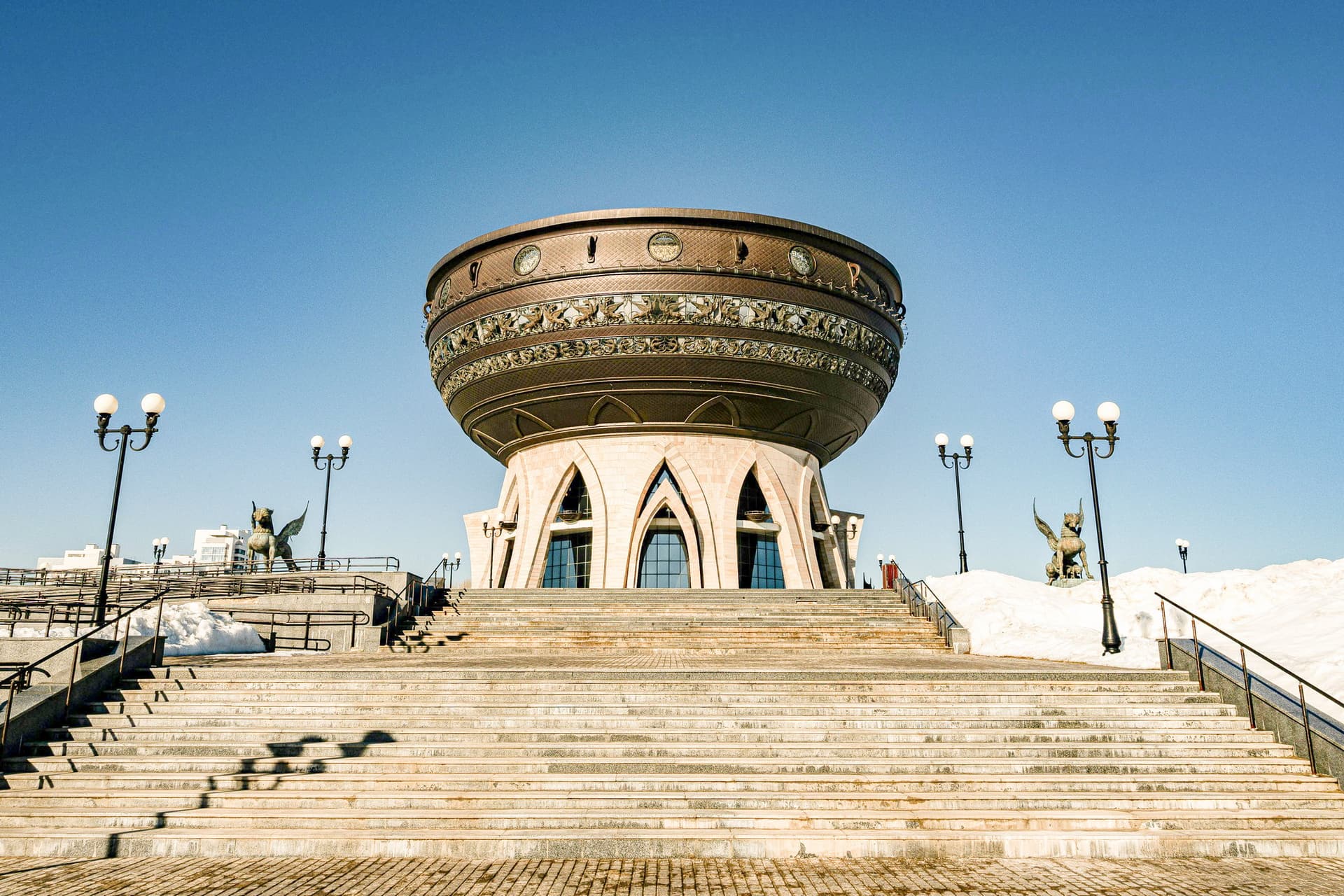
End your route at the "Kazan" Family Center — a futuristic building shaped like a cauldron (kazan), from which the city got its name. Marriage ceremonies are held here.
On the building's roof is an observation deck with panorama of the city, Kazanka River, and Kremlin. Taking the elevator up is an excellent way to see the entire route from a bird's eye view.
Practical Tips
Duration: 4-5 hours.
Best time: any season. Summer is comfortable for walking, winter is beautiful but cold.
Budget: Kremlin entry is free, museums — 100-300 rubles. Lunch at a Tatar restaurant — 500-800 rubles.