Uluru
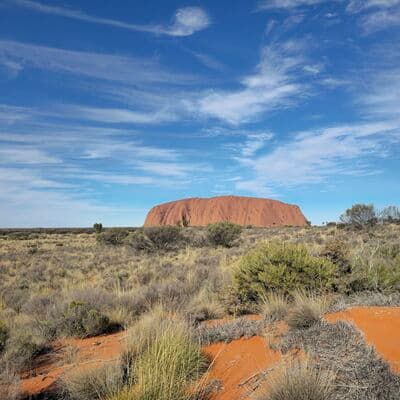
Rising from the red desert of Central Australia is a monolith impossible to miss — 348 meters high, 9 kilometers in circumference, a single rock without cracks or layers. Uluru (Europeans called it Ayers Rock) isn't merely a geological attraction. For the Anangu Aboriginal people, this is a sacred place, the center of their spiritual world for 30,000 years. And when you stand before this mass at sunset, as the stone changes color from orange to blood red, you understand: there's something here greater than just a beautiful landscape.
Geology and Spirituality
Uluru is the tip of an iceberg. Underground, the rock extends several kilometers deep. It formed about 550 million years ago from sedimentary rocks of an ancient sea. Erosion exposed the red arkose sandstone, rich in iron — iron oxides give the stone its characteristic color.
For the Anangu people, Uluru isn't just a rock but a living being. Every crack, cave, and outcrop is connected to stories from the Dreamtime (Tjukurpa) — the mythological era when ancestors created the world. Some places are so sacred they cannot be photographed. Others are restricted to men only or women only.
How to Experience Uluru
Sunset and Sunrise
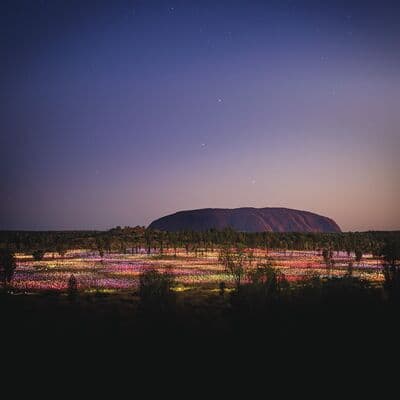
The main show is the color change at sunset and sunrise. Special viewing areas are positioned several kilometers from the rock. As the sun descends, Uluru passes through a palette from yellow through orange to deep red and violet. Sunrise is the reverse process. This spectacle cannot be captured in photos — the scale and atmosphere require being there in person.
Walking Around
The Base Walk is a 10-kilometer trail around Uluru. Three to four hours to see the rock from all angles. Caves with ancient paintings, water sources, sacred sites. Part of the trail runs close to the wall — you can touch rock that's half a billion years old.
Climbing Is Prohibited
Since October 2019, climbing Uluru has been closed — at the Anangu's request. For them this was important: tourist ascents desecrated a sacred place. Many are still disappointed, but respect for Indigenous peoples is more important than tourist curiosity. The rock is no less impressive for it.
Kata Tjuta
Thirty kilometers from Uluru lies Kata Tjuta (formerly the Olgas), a group of 36 dome-shaped rocks. This place is even more sacred to the Anangu than Uluru. Initiation ceremonies are held here, the details of which are known only to initiates.
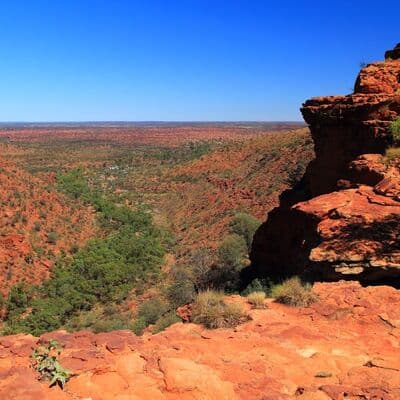
Valley of the Winds is the main trek through Kata Tjuta. Seven kilometers through gorges between the domes. The views are otherworldly. Many consider Kata Tjuta even more impressive than Uluru — and there are fewer crowds.
Cultural Centre
The Cultural Centre at the park entrance is an excellent start to your visit. Exhibits about the Anangu people, their history and culture. A shop with genuine Aboriginal art — not Chinese knockoffs. The opportunity to book a tour with an Anangu guide who will share stories of their people.
Practical Tips
When to Go
Australian winter (May-September) is the best time. Days are warm (20-25°C), nights are cold. In summer (December-February) temperatures reach 45°C — this is dangerous, and many trails close. Spring and autumn are a compromise.
Getting There
Uluru Airport (Connellan) receives flights from Sydney, Melbourne, and Cairns. From the airport to the park is 15 minutes. Alternatively, there's an epic road trip from Alice Springs (450 km through the red desert).
Where to Stay
Ayers Rock Resort is the only accommodation near the park. From budget camping to the luxury Sails in the Desert hotel. Book ahead in peak season.
What to Bring
Lots of water — the desert dehydrates you instantly. Hat, sunscreen, sunglasses. Closed shoes for treks. And respect for local culture — follow signs about photography restrictions.
Atmosphere and Character
Uluru is a place that makes you think about time. For half a billion years this rock has stood here, and people have been coming to it for the last 30,000 years. Empires rose and fell, but Uluru remained. There's something humbling in that.
For the Anangu, this isn't a tourist attraction but a living sacred place. By visiting Uluru with respect, we get the opportunity to touch not only a geological wonder but one of the oldest living cultures on Earth. This is more than just "seeing a rock." It's a chance to feel a connection with something ineffably ancient and significant.