Taj Mahal
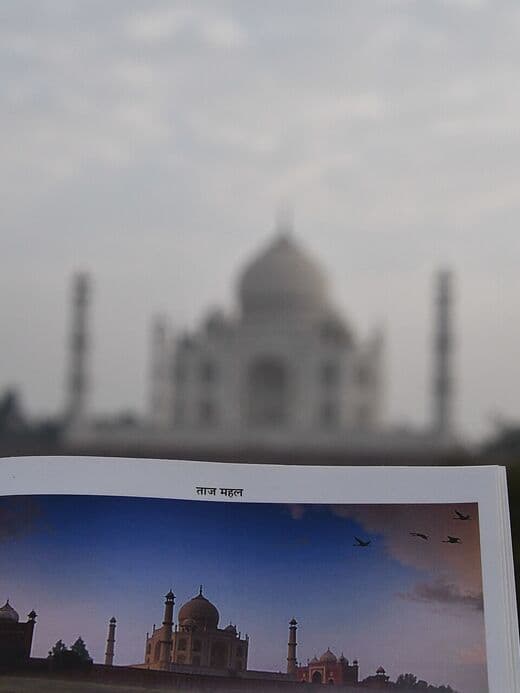
Your first glimpse of the Taj Mahal through the arch of the entrance gate, and in that moment you understand why it's called perfection. White marble against the sky, symmetry, reflection in the water channel. Photos capture form but not light. And the Taj Mahal is above all light: it changes color from pink at dawn to gold at sunset.
A Love Story
In 1612, Mughal prince Khurram married Arjumand Banu Begum. He named her Mumtaz Mahal. For nineteen years she was by his side. She bore him fourteen children. In 1631, she died in childbirth.
By then Khurram had become Emperor Shah Jahan. They say his hair turned gray overnight. Then he began to build the mausoleum.
Twenty-two years, twenty thousand workers, marble from Rajasthan, precious stones from across Asia. Cost about a billion dollars in today's money.
Architecture
The Taj Mahal is symmetrical on all axes except one detail. The mausoleum at center, four minarets at corners. The only asymmetry - the sarcophagi inside: Mumtaz at center, Shah Jahan beside her.
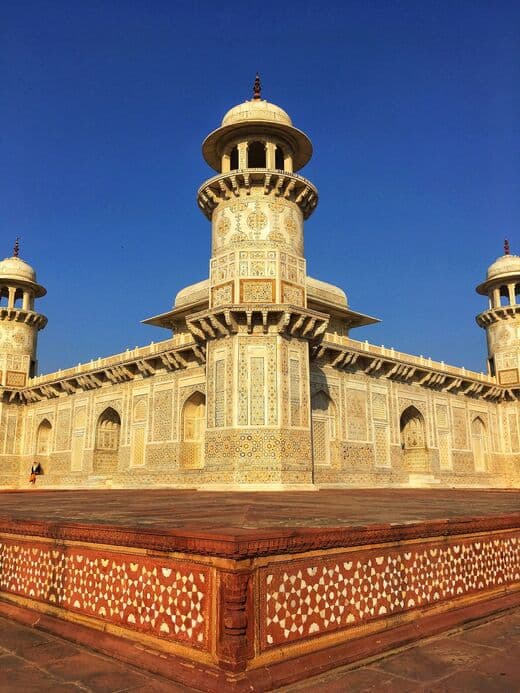
White marble is decorated with inlay of semi-precious stones. One flower can have sixty stones of different shades. This isn't paint, it's stone within stone.
How to Visit
Time: sunrise (few people, pink light), sunset (golden light), full moon (five nights monthly, marble turns silver). Three entrances, western for foreigners is shorter.
Practical Information
Tickets: about 1,100 rupees for foreigners. Hours: sunrise to sunset, except Friday. Minimum 2 hours to visit. From Delhi train 2-3 hours.