Varanasi
Varanasi 2026: What You Need to Know Before You Go
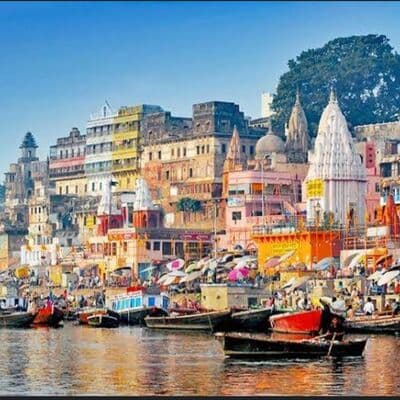
Varanasi will change you. That is not a travel-brochure platitude - it is a warning and a promise. The oldest continuously inhabited city on Earth sits on the western bank of the Ganges, and here life and death exist so close together that after a couple of days you stop noticing where one ends and the other begins. Thousands of pilgrims descend stone steps to the river at dawn, cremation pyres burn around the clock at Manikarnika Ghat, and in alleyways barely a meter wide you will share space with cows, chai sellers, sadhus carrying tridents, funeral processions, and children flying kites from rooftops.
This is not a city you 'do' like Bangkok or Barcelona. Varanasi demands surrender. Your plans will fall apart, your senses will be overwhelmed, and at some point you will find yourself sitting on a ghat watching the river and feeling something you cannot quite name. That is when Varanasi has done its work.
In brief: Come for the magnificent Varanasi Ghats stretching along the Ganges, the mesmerizing Ganga Aarti ceremony at sunset, the Buddhist pilgrimage site of Sarnath, some of the best street food in India, and a spiritual atmosphere that exists nowhere else on the planet. Plan 3-4 days minimum, and visit between October and March for the best experience.
Neighborhoods: Where to Stay in Varanasi
Your choice of neighborhood will shape your entire Varanasi experience. The city divides roughly into the old town along the ghats, the slightly more modern areas inland, and the Cantonment area near the railway station.
Assi Ghat Area
Best for: First-time visitors, solo travelers, yoga seekers. Assi Ghat sits at the southern end of the ghats and is the most popular base for international travelers. The vibe is calmer, there are good cafes within walking distance, and you can start your morning ghat walk heading north without the chaos hitting you all at once. Guesthouses range from $8-12 per night for a basic room to $40-70 for air conditioning, hot water, and a river view. The downside: it is a 20-30 minute walk to the main action at Dashashwamedh Ghat. During peak season (November-February), book at least two weeks ahead.
Dashashwamedh Ghat Area
Best for: Those who want to be in the thick of it. The main Ganga Aarti happens here every evening, and you are within walking distance of almost everything. The trade-off is noise, crowds, and aggressive touts. Hotels tend to be older buildings with character but variable plumbing. Expect $15-40 per night. Request a room facing the river or an interior courtyard - lane-facing rooms are noisy until midnight and again from 4 AM when temple bells start.
Mir Ghat and Munshi Ghat Area
Best for: Budget travelers seeking authenticity. Between Dashashwamedh and the cremation ghats, this stretch offers a more local feel. Fewer souvenir shops, more neighborhood chai stalls. Prices are lower ($6-20 per night). The cremation ghats at Manikarnika are a 10-minute walk north, which some people find unsettling at night.
Kedar Ghat and Chausatti Ghat Area
Best for: Returning visitors, photographers. South of Dashashwamedh but north of Assi, this middle stretch has photogenic ghats and far fewer tourists. Heritage havelis converted into boutique stays run $50-120 per night. The lanes behind these ghats are some of the oldest in the city - carry your hotel's card with the address in Hindi.
Bhelupur and Lanka
Best for: Those who want modern amenities with ghat access. These areas sit 1-2 kilometers inland along main roads. Proper hotels with elevators, parking, and 24-hour front desks. Auto-rickshaws to the ghats cost $0.50-1.50 and take 10-15 minutes. Rooms run $20-60 per night.
Cantonment Area
Best for: Transit stays only. Functional hotels near Varanasi Junction for $10-30 per night. Zero charm, 6-7 kilometers from the ghats.
Where NOT to Stay
Avoid hotels that claim to be 'near the ghats' but sit on the main road (Godowlia area) - all the noise, none of the atmosphere. Also avoid anything directly adjacent to Manikarnika Ghat unless you are comfortable with 24-hour cremation activity, smoke, and the smell of burning wood.
Best Time to Visit Varanasi
October to March: The Sweet Spot
Temperatures range from 8-25 degrees Celsius (46-77F), the monsoon is gone, the river is full but not flooding. November and December are ideal - cool mornings on the ghats, comfortable walking, and major festivals. January can be cold (5-10C at dawn), so pack layers for early morning boat rides. February and March warm up but remain pleasant.
April to June: The Furnace
Temperatures hit 40-47C (104-117F) and the hot wind called 'loo' makes outdoor activity between 11 AM and 4 PM dangerous. If you must visit in summer, explore only at dawn and evening. Hotels are cheap and empty. Drink 4-5 liters of water daily and carry oral rehydration salts.
July to September: Monsoon
Heavy rains flood the lower ghats, the river rises dramatically, humidity is oppressive. Some guesthouses near the ghats close. But the city has a dramatic beauty - ghats partially submerged, rain-soaked stone, fewer tourists. Be prepared for disrupted transport, mosquitoes, and power cuts.
Festivals Worth Planning Around
Dev Deepavali (November): Every ghat illuminated with hundreds of thousands of oil lamps on the full moon of Kartik month. Book accommodation a month in advance; prices double.
Maha Shivaratri (February/March): The biggest night in the city of Shiva. The Kashi Vishwanath Temple area becomes a sea of devotees.
Holi (March): Celebrated with particular intensity. Wear disposable clothes, protect your eyes, seal your phone in a bag.
Kartik Purnima and Ganga Mahotsav (November): Five-day cultural festival with classical music, dance, and spiritual gatherings. Coincides with Dev Deepavali, making November the single best month to visit.
Varanasi Itineraries: 3, 5, and 7 Days
3-Day Essentials
Three days is the minimum to experience Varanasi meaningfully.
Day 1: The Ghats and the River
- 5:00 AM: Head to the Varanasi Ghats and hire a boat for a sunrise ride. Negotiate before boarding: 200-300 rupees ($2.50-3.50) shared, 800-1500 rupees ($10-18) private for 1-2 hours.
- 7:30 AM: Breakfast at a ghat-side stall. Try kachori sabzi - deep-fried pastry with spiced potato curry, 30-50 rupees ($0.40-0.60).
- 8:30 AM - 12:00 PM: Walk the ghats from Assi to Manikarnika, roughly 4 kilometers passing 60+ ghats. Observe the cremations at Manikarnika respectfully and from a distance.
- 12:00 - 3:00 PM: Lunch and rest. Midday heat makes this a good time to retreat.
- 3:00 - 5:00 PM: Explore lanes behind Dashashwamedh Ghat. Visit Kashi Vishwanath Temple (bring passport, no electronics or leather). Browse silk shops in Vishwanath Gali.
- 6:00 - 7:30 PM: Ganga Aarti at Dashashwamedh Ghat. Arrive by 5:30 PM for a spot on the steps, or watch from a boat. Seven priests perform synchronized fire rituals with large brass lamps for about 45 minutes.
- 8:00 PM: Dinner in the lanes - thali meal for $2-4.
Day 2: Sarnath and Deeper Exploration
- 6:00 AM: Sunrise from the ghats - different perspective than from a boat.
- 8:00 AM: Auto-rickshaw to Sarnath, 10 km northeast, 30-45 minutes, 200-400 rupees ($2.50-5). Where the Buddha gave his first sermon.
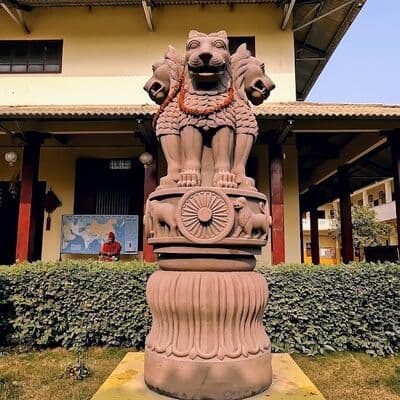
- 9:00 AM - 12:30 PM: Explore the Dhamek Stupa, the Archaeological Museum (closed Fridays, 300 rupees/$3.60 for foreigners) with the Lion Capital of Ashoka, the Mulagandhakuti Vihara temple with Japanese-painted murals, and the peaceful Deer Park.
- 2:30 - 5:00 PM: Return to Varanasi. Visit Tulsi Manas Temple or Durga Temple (the Monkey Temple - watch your belongings).
- 5:30 PM: Evening at the ghats. Try the Aarti from a different vantage point.
- 8:00 PM: Rooftop dinner overlooking the Ganges.
Day 3: Markets, Crafts, and Slow Exploration
- 5:30 AM: Final sunrise. By now you notice details you missed before - the way a dhobiwallah beats clothes against stone, the sound of conch shells across water.
- 8:00 - 11:00 AM: Explore markets. Godowlia Crossing for the commercial chaos. For silk, visit the Muslim weaver quarter in Alaipura to see looms in action. Bargain hard: first prices are 3-5x the real value.
- 11:00 AM - 1:00 PM: Ramnagar Fort across the river - boat from Tulsi Ghat (100 rupees/$1.20) or drive over the bridge. Crumbling but atmospheric, small museum. Entry 50 rupees.
- 1:00 - 3:00 PM: Farewell lunch with Banarasi lassi. Blue Lassi near Manikarnika is famous, but Kachori Gali stalls are just as good without the queue.
- 3:00 - 5:00 PM: Get deliberately lost in the lanes. The best moments in Varanasi happen when you are not looking for anything specific.
5-Day Extension
Day 4: Day trip to Chunar Fort (40 km south, 1.5 hours by taxi, about $20 round trip) - a massive sandstone fort overlooking the Ganges occupied by Mughals and the British East India Company. In the evening, explore silk-weaving workshops in the Muslim quarter to watch weavers on handlooms that produce one sari over 15-30 days.
Day 5: Morning yoga at an ashram near Assi Ghat (drop-in classes 300-500 rupees/$3.60-6). Afternoon at the Bharat Kala Bhavan museum at Banaras Hindu University - miniature paintings, textiles, and sculptures. The BHU campus itself is worth wandering. End with a sunset boat ride.
7-Day Deep Dive
Day 6: Full-day excursion to Vindhyachal (80 km, 2 hours, $30-40 round trip), one of the most important goddess worship sites in India. Combine with Kaushambi archaeological ruins - a major city during the Buddha's time.
Day 7: No agenda. Sit at your favorite ghat, have a long breakfast, revisit the places that moved you. This is when Varanasi gives its real gift - not in rushing between attractions, but in the stillness of watching the same river people have watched for three thousand years.
Where to Eat in Varanasi
Varanasi is a vegetarian city by tradition. The old town is almost entirely meat-free, and many restaurants serve no meat, no eggs, and no alcohol. The vegetarian food is so extraordinary that you will not miss it.
Street Food
The best food comes from stalls that have occupied the same spot for generations. Kachori Gali near Dashashwamedh Ghat is the epicenter - vendors frying kachoris in massive woks from 6 AM. A plate of kachori sabzi costs 20-40 rupees ($0.25-0.50). Tamatar chaat stalls appear in the afternoon with a tangy tomato snack unique to Varanasi. Chowk area has excellent pani puri and dahi vada. Budget $2-4 per day eating from street stalls - entirely feasible and arguably the best way to eat here.
Local Restaurants
Kashi Chat Bhandar (near Godowlia): Local institution for chaat, everything under $1. Deena Chaat Bhandar (Luxa Road): Legendary tamatar chaat and tikki - get there before 6 PM or wait. Baati Chokha (multiple locations): Traditional baked wheat balls with mashed vegetables, $2-3 for a full meal.
Mid-Range and Cafes
Pizzeria Vaatika Cafe (Assi Ghat): Backpacker institution, Indian food better than the pizza. Rooftop with river views, $3-6. Brown Bread Bakery (Bengali Tola): Social enterprise, excellent baked goods, Western breakfasts, $3-5. Open Hand Cafe (Assi Ghat): Training programs for disadvantaged youth, good food, $3-5.
Rooftop Dining
Several guesthouses along the ghats offer rooftop restaurants with Ganges views. Food is decent rather than exceptional, but the setting compensates. Expect $5-10 for a full meal. Ganpati Guest House (Mir Ghat) and Rashmi Guest House (near Manikarnika) are popular choices. The view of the evening aarti from these rooftops justifies the premium.
Must-Try Food in Varanasi
Varanasi has a food identity distinct from the rest of North India. These are the dishes you should not leave without trying.
Kachori Sabzi: The quintessential Varanasi breakfast. Crispy deep-fried pastry filled with spiced lentils, served with potato curry. The best versions have a shattering crust and a filling that is spicy, tangy, and slightly sweet. Cost: 20-40 rupees ($0.25-0.50).
Banarasi Lassi: Not the thin lassi you get elsewhere - this is practically a meal. Thick curd whipped with sugar, topped with malai (clotted cream) and sometimes rabri. Served in clay kulhads that add an earthy flavor. Blue Lassi near Manikarnika is the most famous, but locals swear by their neighborhood stall. Cost: 30-80 rupees ($0.40-1).
Tamatar Chaat: A Varanasi-only specialty. Cooked tomatoes in spiced sauce with crispy fried bread, chutney, yogurt, and crunchy sev. You will not find this anywhere else in India. Cost: 20-40 rupees ($0.25-0.50).
Litti Chokha: Baked wheat balls stuffed with roasted gram flour, served with mashed eggplant, tomato, and potato, finished with mustard oil and ghee. Hearty and deeply satisfying. Cost: 40-80 rupees ($0.50-1).
Malaaiyo: Winter-only (November to February). Milk churned overnight in cold air, whipped into an impossibly light saffron foam that melts on your tongue. Sold from 6-9 AM only, from vendors carrying metal trays on their heads. Do not miss this in winter. Cost: 20-30 rupees ($0.25-0.40).
Banarasi Paan: Even if you do not normally chew paan, try a meetha (sweet) version - a burst of rose, coconut, fennel, and cardamom wrapped in betel leaf. Cost: 20-50 rupees ($0.25-0.60). Avoid tobacco varieties.
Rabri and Jalebi: Hot jalebis dipped in cold, thick rabri (slow-cooked sweetened milk). The contrast of hot, crispy, syrupy spirals with cold cream is extraordinary. Cost: 40-60 rupees ($0.50-0.75).
Kulhad Chai: Tea in disposable clay cups that add a mineral, earthy flavor. Chai stalls every 50 meters - the best ones are identifiable by the pile of broken kulhads around them. Cost: 10-20 rupees ($0.12-0.25).
What to avoid: Skip raw salads and cut fruit from street stalls. Stick to cooked food and peeled fruit. Be cautious with lassi from stalls using reusable glasses rather than kulhads.
Local Secrets and Practical Tips
These are the things no guidebook tells you, but every returning visitor wishes they had known.
- Never photograph the cremation ghats. This is a serious cultural boundary. Touts at Manikarnika may suggest photos are fine from 'viewing platforms.' They are not. Your phone may be confiscated. Watch respectfully from a distance and keep your camera in your pocket.
- Negotiate boat prices before boarding. Agree on price, duration, and stops. Get the total price, not per-person. Morning: 200-300 rupees shared, 800-1500 private. Evening aarti: 300-500 per person.
- Touts are relentless. People will claim to be students, priests, or guides. A 'special ceremony' or 'secret temple' always ends at a commission shop. Politely decline. Arrange guides through your hotel.
- Kashi Vishwanath Temple rules: No phones, cameras, bags, or leather items. Lockers near the entrance (20-50 rupees). Bring your passport. Non-Hindus can enter but may be questioned.
- Dress conservatively. Covered shoulders and knees for everyone. Shorts and tank tops attract unwanted attention and restrict temple access.
- Remove shoes at temples and many ghats. Cheap flip-flops from the market ($1-2) are ideal - do not bring expensive shoes to Varanasi.
- Sunrise beats sunset. The Ganga Aarti is spectacular, but the real magic happens at dawn. The ghats at 5:30 AM are quieter, more authentic, and the light is extraordinary.
- Carry cash. Many shops, boatmen, and street vendors work only in cash. Withdraw 2-3 days' worth from bank ATMs in Godowlia or Lanka. Keep small denominations.
- Expect sensory overload. If overwhelmed, retreat to a quiet ghat or cafe. There is no shame in needing a break.
- Do not drink tap water. Bottled water only - check the seal is intact. Refilled bottles are a real thing.
- Getting lost is the point. Google Maps is unreliable in the narrow galis. Ask any shopkeeper to point toward the nearest ghat or main road.
Transport and Connectivity
Getting to Varanasi
By air: Lal Bahadur Shastri Airport (VNS), 25 km northwest. Direct flights to Delhi, Mumbai, Kolkata, Bangalore. Prepaid taxi to the ghats: 800-1200 rupees ($10-15), 45-75 minutes. Use the prepaid counter inside arrivals or book Ola/Uber - avoid drivers outside the terminal.
By train: Varanasi Junction (BSB) connects to every major city. Delhi 12-14 hours ($8-25), Kolkata 12-14 hours, Lucknow 5-7 hours. Book through IRCTC 2-3 weeks ahead. Banaras Station (formerly Manduadih) is newer, less chaotic, and closer to the ghats.
By road: Buses from Lucknow (6-7 hours), Prayagraj (3 hours), Patna (6-7 hours). Private Volvo services are more comfortable ($10-20).
Getting Around
Walking: The only way in the old city. No vehicles fit in the lanes. Wear shoes with grip - stone steps are slippery. Budget 15,000-25,000 steps per day.
Auto-rickshaws: Primary transport between neighborhoods. Always negotiate. Ghats to Sarnath: 200-400 rupees ($2.50-5). Ghats to railway station: 150-250 rupees ($1.80-3). Ghats to airport: 700-1000 rupees ($8.50-12).
E-rickshaws: Shared, running fixed routes for 10-20 rupees per person. Good for the Lanka-Assi stretch.
Ola and Uber: Operate with limitations. Cannot reach old city lanes. Good for airport transfers and Sarnath trips. Usually cheaper than negotiated auto prices.
Boats: Sometimes faster than walking between distant ghats. Assi to Manikarnika: 20-30 minutes, 100-200 rupees ($1.20-2.50).
Internet and Communication
Get a local SIM (Jio or Airtel) at the airport or city store - passport and photo needed, activation takes hours to a day. Jio 4G works even in old city lanes, 300-600 rupees ($3.60-7.20) for a month. Alternatively, buy an eSIM before arrival (Airalo, Holafly) - less hassle, more expensive. Hotel Wi-Fi ranges from adequate to useless. Cafes around Assi Ghat have the most reliable connections.
Essential apps: Google Maps (download offline maps before arrival), Ola/Uber for rides, Google Translate for Hindi, IRCTC for trains, MakeMyTrip for hotels and flights, WhatsApp for communicating with hotel owners and guides.
Final Thoughts: Is Varanasi for You?
Varanasi is not for everyone. If you need clean streets, reliable infrastructure, and predictable experiences, this city will frustrate you. If you are uncomfortable with visible poverty, open cremation, aggressive touts, and the chaos of an ancient Indian city, you will have a difficult time.
But if you are willing to surrender control and remain open to experiences that defy easy categorization, Varanasi will give you something no other city on Earth can. It will show you that life is fragile, that beauty and decay coexist, and that a river can be simultaneously a place of washing, worship, cremation, and play. You will leave carrying something you did not have when you arrived - and you will understand why people have been coming here for three thousand years.