Sharjah
Sharjah 2026: What to Know Before You Go
Sharjah is the cultural capital of the UAE -- a place where world-class museums, spice-scented souks, and waterfront promenades replace the skyscrapers and nightclubs of Dubai. If Dubai is the flash and glamour, Sharjah is the soul of the Emirates: genuine Arabian culture without the tourist markup.
In a nutshell: visit for the Museum of Islamic Civilization, strolls along Al Qasba, bargain-hunting at the Blue Souk, evenings on Al Noor Island, and Emirati cuisine. Two to three days is the sweet spot, and it pairs perfectly with Dubai.
Sharjah is the third-largest emirate and the only one on both the Persian Gulf and the Gulf of Oman. Real neighborhoods, authentic Arabic food, and prices two to three times lower than Dubai. The main downside: alcohol is completely banned (since 1985) and the dress code is stricter. The main upside: you save significantly on accommodation, food, and transport, while central Dubai is only 20-30 minutes away.
Neighborhoods: Where to Stay in Sharjah
Al Majaz -- Waterfront, Fountains, Family-Friendly
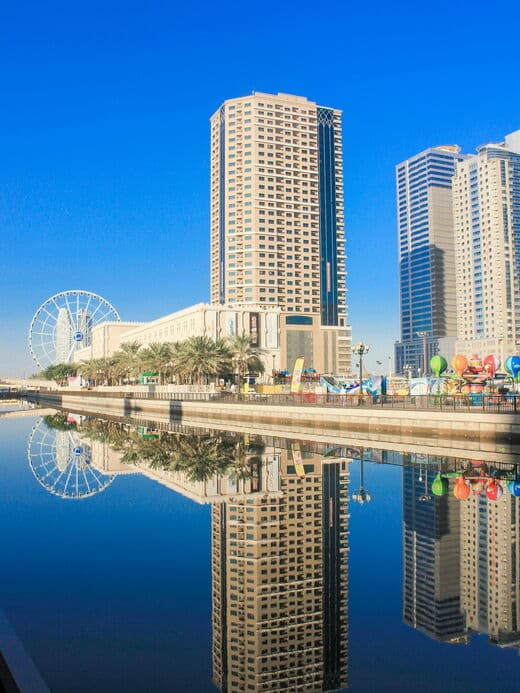
The most scenic neighborhood in Sharjah, stretching along the Khalid Lagoon. Home to Al Majaz Waterfront Park and its famous musical fountain with evening light shows. The promenade is lined with restaurants and cafes. The area is split into Majaz 1, 2, and 3 -- all equally comfortable.
Pros: best lagoon views, walkable infrastructure, restaurants within walking distance, close to Al Qasba
Cons: slightly pricier than other areas, evening parking can be a struggle
Budget: $$ (hotels from $50-80/night, apartments from $40)
Al Khan -- Beach, Aquarium, Peace and Quiet
A coastal neighborhood with its own beach and views of the Persian Gulf. Sharjah Aquarium and the Maritime Museum are here, and Al Khan Beach is one of the best free beaches in the emirate. Quieter than Al Majaz, better suited for travelers who want to be near the sea.
Pros: beach within walking distance, quiet, beautiful sunsets over the Gulf
Cons: fewer restaurant options, 10-15 minutes by car to the city center
Budget: $$ (hotels from $45-70, apartments from $35)
Al Nahda -- Dubai Border, Best of Both Cities
Sitting right on the Sharjah-Dubai border, Al Nahda is the ideal choice if you plan to split your time between the two cities. Residential towers, shopping malls (Sahara Centre is one of the largest in the region), and the nearest Dubai Metro station is just 15-20 minutes away. The neighborhood is lively and multinational: Indian restaurants, Filipino cafes, Pakistani eateries -- all on the same street.
Pros: close to Dubai, budget accommodation, endless food options
Cons: rush-hour traffic at the border crossing can be brutal, not the most picturesque area
Budget: $ (hotels from $30-50, apartments from $25)
Heritage Area (Heart of Sharjah) -- History and Culture
A restored historic quarter of mud-brick houses, wind towers, and narrow alleyways. The Sharjah Museum of Islamic Civilization, Heritage Museum, and oldest market Souq Al Arsah are here. The atmosphere is like a time machine: glass towers to 19th-century homes in a single turn. Beautifully lit in the evening.
Pros: authentic atmosphere, museums next door, incredibly photogenic
Cons: very few hotels within the district itself, narrow streets
Budget: $$ (nearest hotels from $40-60)
Muwaileh -- Students, Budget, University City
Located near the university campus, Muwaileh is the most budget-friendly option. Cheap cafes and canteens abound, priced for students: karak tea for under a dollar, shawarma for $2, a full lunch for $4-5. The neighborhood is developing fast but still has that local, non-touristy feel.
Pros: lowest prices in the city, tons of food options, youthful energy
Cons: far from main attractions, you will need a car or ride-hailing app
Budget: $ (apartments from $20-30, hotels from $25-40)
Al Taawun -- Towers with a Gulf View
A modern district on the Dubai border, lined with high-rises offering panoramic views of the Persian Gulf. If you want a Dubai-style skyline experience at Sharjah prices, this is your spot. The Corniche waterfront, shopping malls, and quick highway access (E11) to Dubai are all nearby.
Pros: modern infrastructure, Gulf views, easy Dubai access
Cons: little historic character, rush-hour traffic
Budget: $$ (hotels from $45-75, apartments from $35)
Best Time to Visit Sharjah
Peak season: November through March. Temperatures hover around 68-82F (20-28C) -- perfect for walking all day, swimming in the Gulf, and dining on outdoor terraces. This is high season, so hotel prices are 30-50% above baseline, but the comfort is worth it.
Shoulder season: October and April. Daytime 86-95F (30-35C), but mornings and evenings are pleasant. Prices drop, crowds thin out, sea still warm. Best balance of cost and comfort for budget-minded travelers.
Summer: May through September. Temperatures hit 104-118F (40-48C) with humidity up to 90%. Walking outside during the day is physically punishing. However: hotel rates drop by 50-70%, every mall and museum is blasting AC, and evenings (after 8 PM) become tolerable. If you are heat-tolerant and plan mostly museums and shopping, summer can work.
Festivals and events worth planning around:
- Sharjah Light Festival (February) -- stunning projection shows on landmark buildings across the city, completely free. Reason enough to time your visit.
- Sharjah Heritage Days (April) -- a celebration of Emirati culture in the Heritage Area: craft workshops, traditional food, live music, and storytelling
- Sharjah International Book Fair (November) -- one of the largest book fairs in the Middle East, drawing over 2 million visitors. If you love books, this is extraordinary.
- Ramadan (dates shift annually) -- most restaurants close during daylight hours, but evening iftar meals and the night-time atmosphere are magical. Check dates before booking.
When to book: Peak season (December-January) -- 2-3 months ahead. Light Festival -- a month out. Rest of year -- a week is fine.
Sharjah Itinerary: From 3 to 7 Days
3 Days in Sharjah: The Essentials
Day 1: Culture and History
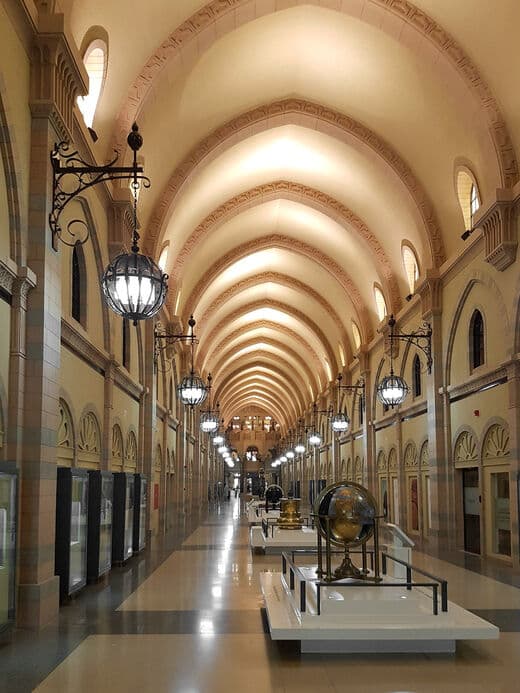
9:00-11:30 AM -- Sharjah Museum of Islamic Civilization. Start here while it is cool and uncrowded. Over 5,000 artifacts, from ancient Quran manuscripts to astrolabes. Do not miss the gilded mosaic dome hall and the Islamic science collection. Allow at least two hours.
11:30 AM-1:00 PM -- Walk through the Heritage Area (Heart of Sharjah). Restored mud-brick houses, wind towers, narrow lanes. Visit Bait Al Naboodah, a pearl merchant's house from the 19th century. Nearby: Souq Al Arsah, one of the oldest markets in the UAE.
1:00-2:30 PM -- Lunch in the Heritage district. Try machboos (spiced rice with meat) at a local spot. 25-35 AED ($7-10) per person.
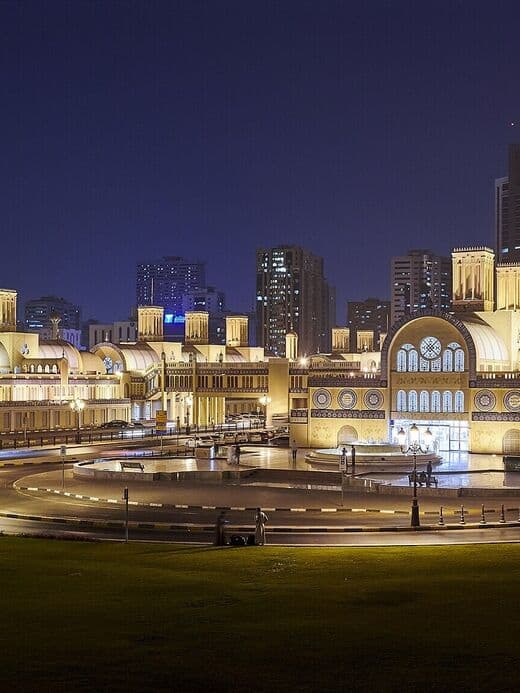
3:00-5:00 PM -- Blue Souk (Central Souk). The most iconic building in Sharjah, covered in blue tiles and housing over 600 shops selling carpets, gold, souvenirs, and spices. Bargaining is expected -- start at 50% of the asking price and work toward the middle.
6:00-9:00 PM -- Al Qasba waterfront. Ride the Eye of the Emirates wheel (60 m, 30 AED / $8) for the best dusk view of Sharjah. Dinner at Shababeek (Lebanese) or Jones the Grocer (international).
Day 2: Nature and Modern Sharjah
8:00-10:30 AM -- Al Khan Beach. Mornings here are calm and quiet. The water is clear, entry is free. The nearby fish market is worth a visit to see the morning catch being auctioned.
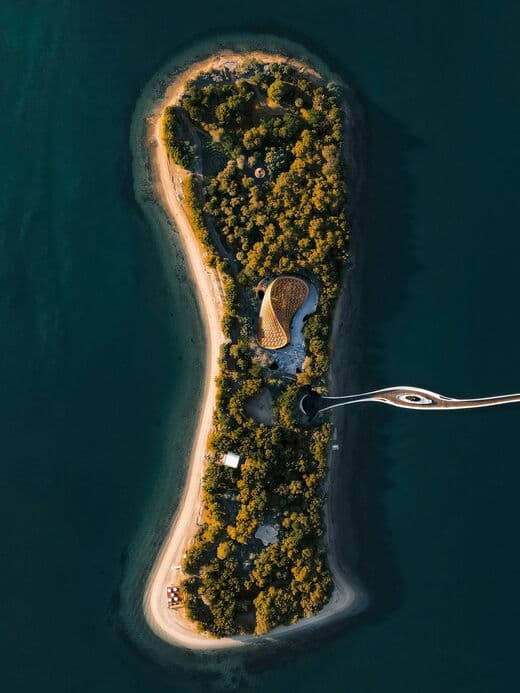
11:00 AM-1:00 PM -- Al Noor Island. A landscaped island in Khalid Lagoon with a butterfly garden, light installations, and art sculptures. Admission: 35 AED ($10). Especially beautiful near sunset, but mornings are less crowded.
1:30-2:30 PM -- Lunch in Al Majaz. Fen Cafe near Sharjah Art Foundation -- creative dishes and old quarter views.
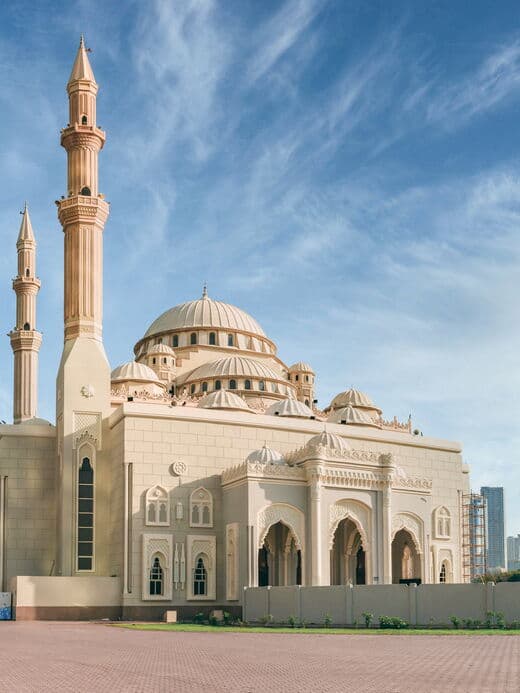
3:00-5:00 PM -- Al Noor Mosque. Modeled after Istanbul's Blue Mosque, it is open to non-Muslims on Mondays for free guided tours. Dress code applies -- abayas provided for women. The interior mosaics and calligraphy are stunning.
6:00-9:00 PM -- Al Majaz Park and fountain. Evening walk along the lagoon, musical fountain every 30 minutes after sunset. Finish with luqaimat and karak tea.
Day 3: East Coast Day Trip
8:00 AM -- Head to Sharjah's east coast (1.5-2 hours by car). Rent a car (from 80 AED / $22/day) or book an excursion.
10:00 AM-12:00 PM -- Khorfakkan: the man-made waterfall at the amphitheater, a beach with turquoise Gulf of Oman water. Snorkeling around Shark Island (boat trip from 100 AED / $27).
12:30-2:00 PM -- Seafood lunch in Khorfakkan. Fresh fish, grilled squid, prawns for 40-60 AED ($11-16).
2:30-4:00 PM -- Kalba: mangrove reserve and kayaking (from 80 AED / $22). You may spot herons, kingfishers, and sea turtles.
4:30-5:30 PM -- Al Hefaiyah Mountain Conservation Centre, a mountain reserve home to Arabian oryx and gazelles.
6:00 PM -- Drive back to Sharjah. Dinner in the Rolla district -- cheap and delicious.
5 Days in Sharjah: No Rush
Days 1-3: follow the itinerary above. Then add:
Day 4: Desert and Safari
8:00 AM-1:00 PM -- Sharjah Safari Park, the largest safari park outside Africa. Lions, giraffes, rhinos, elephants in naturalistic enclosures. Admission: 40 AED / $11. Arrive at opening -- animals are most active in morning coolness.
2:00-3:30 PM -- Lunch and rest at hotel (essential in hot months).
4:00-8:00 PM -- Mleiha: archaeological center and desert safari. Dune bashing in a 4x4, sandboarding, sunset from the dunes, and evening picnic under the stars (packages from 200 AED / $55). Also a significant archaeological site with finds dating back 130,000 years.
Day 5: Art, Shopping, and Food
9:00-11:00 AM -- Sharjah Art Foundation and Al Mureijah district. Contemporary art in restored traditional buildings. Most exhibitions are free.
11:00 AM-12:30 PM -- Sharjah Calligraphy Museum, the only Arabic calligraphy museum in the region. Small but impressive.
1:00-2:30 PM -- Lunch in Rolla: best budget food in Sharjah. Indian, Pakistani, Lebanese -- all within 500 meters.
3:00-6:00 PM -- Mega Mall or Sahara Centre for shopping. Sahara Centre on the Dubai border has 350+ shops, an ice rink, and a cinema.
7:00-9:00 PM -- Farewell dinner on the Al Qasba waterfront. Order the mixed grill with a view of the canal.
7 Days in Sharjah: With Day Trips
Days 1-5: follow the itinerary above. Then add:
Day 6: Dubai Day Trip
A day trip to Dubai (20-30 minutes from Sharjah). Hit Dubai Mall, go up the Burj Khalifa, explore the Al Fahidi historic district, and take an abra across Dubai Creek for 1 AED. Return in the evening -- and yes, you can grab a drink in Dubai if you want one.
Day 7: Ajman and Umm Al Quwain
9:00 AM-12:00 PM -- Ajman (15 minutes from Sharjah): a quiet beach, a fish market, and the Ajman Museum in an old fort. Ajman has licensed hotels with bars -- less strict rules than Sharjah.
1:00-5:00 PM -- Umm Al Quwain (45 minutes): Dreamland Aqua Park (from 100 AED / $27), mangrove forests, and an atmospheric abandoned old town. The most untouched emirate -- virtually no tourists.
Where to Eat in Sharjah: Restaurants and Cafes
Street Food and Markets
Sharjah is a street food paradise, and prices will make you smile after Dubai sticker shock. Main areas: Rolla, Al Wahda, and University City. Shawarma costs 5-10 AED / $1.40-2.70 (vs 15-25 AED in Dubai), karak tea is 2-3 AED, and a full lunch runs 15-25 AED / $4-7.
At Sharjah Fish Market, buy fresh fish and take it to neighboring restaurants -- they cook it for 10-15 AED / $3-4. Best time: early morning (6:00-9:00 AM) when fishermen bring the catch.
The Fruit and Vegetable Market is a massive domed building where a kilo of mangoes costs 5-8 AED / $1.50-2.20 and a whole watermelon is 3-5 AED. Rows of spice, nut, and dried fruit vendors next door.
Local Eateries
The golden rule: look for places where taxi drivers and construction workers eat. In the Rolla district, street after street is packed with Indian, Pakistani, and Yemeni hole-in-the-walls. Biryani for 12-15 AED / $3-4, hummus with bread for 5 AED / $1.40. Do not be put off by places without English signage -- those often have the best food.
Project Chaiwala and Tea Break serve the best karak tea in the city. A paratha with egg plus karak chai makes a filling breakfast for 8 AED / $2.20.
Mid-Range Restaurants
Shababeek (Al Qasba) -- Lebanese cuisine with canal-side view. Mezze, charcoal grill, fresh juices. Check: 80-120 AED / $22-33 for two.
Sanobar Restaurant -- family-run Lebanese since 1983. Seafood, grilled meats, biryani. Massive portions. Check: 60-90 AED / $16-25.
Shakespeare and Co. -- Victorian decor, all-day breakfast, Middle Eastern and international menu. Check: 70-100 AED / $19-27.
71 Steak and Grill -- wood-fired grill. Steaks, ribs, tomahawk. Check: 100-150 AED / $27-41.
Fine Dining
Casa Samak -- seafood with Gulf views. Lobster, grilled octopus, fish of the day. Check: 150-250 AED / $41-68 for two. Book ahead on weekends.
The Twisted Olive (Sharjah Golf and Shooting Club) -- Mediterranean overlooking the golf course. Check: 150-200 AED / $41-55.
Jones the Grocer (Flag Island) -- Australian brand, waterfront views. Brunch, salads, specialty coffee. Check: 100-150 AED / $27-41.
Cafes and Breakfast Spots
Fen Cafe (Al Mureijah) -- hipster cafe next to Sharjah Art Foundation. Ube lattes, chia bowls, kale salads. Check: 40-60 AED / $11-16.
Al Zawaya Walk -- hidden cafe complex around a small artificial lake. Quiet, cozy, excellent coffee.
For a budget breakfast, head to any local cafeteria (in the UAE, a 'cafeteria' is not self-service -- it is a small neighborhood cafe). Omelet, bread, and tea for 10-15 AED / $3-4.
What to Try: Sharjah's Must-Eat Foods
Machboos -- the signature dish of the Emirates. Fragrant rice with meat (lamb, chicken, or fish), seasoned with cardamom and dried lime (loomi). Price: 25-40 AED / $7-11. Best served with daqoos, a spicy tomato sauce.
Harees -- a porridge of wheat and slow-cooked meat, simmered for hours until silky smooth. A traditional Ramadan dish, served year-round. Price: 15-25 AED / $4-7. Comforting, finished with cinnamon.
Luqaimat -- crispy dough balls drizzled with date syrup and sesame seeds. The quintessential Emirati dessert. Price: 10-15 AED / $3-4. Best piping hot, straight from the fryer.
Balaleet -- sweet vermicelli with cardamom, rose water, and saffron, topped with a thin egg omelet. The sweet-savory combination surprises most Western palates, but it works. Price: 15-20 AED / $4-5.
Shawarma -- yes, basic, but Sharjah shawarma is on another level. Fresh bread, spit-roasted meat, garlic sauce, pickled vegetables. Rolla district has the best. Price: 5-10 AED / $1.40-2.70.
Regag -- paper-thin crispy crepes cooked on a large round griddle. Fillings: egg, cheese, honey, or fish sauce. Price: 5-10 AED / $1.40-2.70.
Karak Tea -- strong black tea with milk, cardamom, and sugar. The number-one beverage in the UAE. Costs 2-3 AED (under a dollar). Try it at Project Chaiwala or any cafeteria.
Gahwa (Arabic Coffee) -- cardamom-infused coffee from a traditional dallah in tiny cups. Paired with dates. Free in museums and shops (a gesture of hospitality); in cafes, 5-10 AED.
What NOT to order: sushi at cheap restaurants (quality is unpredictable), and 'traditional Emirati cuisine' at tourist restaurants (inflated prices, mediocre food). Eat where locals eat.
Vegetarians: no problems. Indian restaurants on every corner with extensive veg menus. Hummus, falafel, and ful medames everywhere.
Allergies: nuts in many desserts, dairy in every other dish. Always ask -- staff usually know ingredients.
Sharjah Secrets: Tips the Locals Know
1. Border traffic is real. Mornings Sharjah-to-Dubai and evenings back can add an hour to a 20-minute drive. Cross before 7:00 AM or after 10:00 AM. Workaround: taxi to the border (10-15 AED / $3-4), walk across, hop on Dubai Metro.
2. Friday is not Sunday. Many shops and markets open only after midday prayer (1:30-2:00 PM). Museums often have modified schedules. Plan Friday mornings for the beach, sightseeing for the afternoon.
3. Bargain at souks, not at malls. At the Blue Souk, the listed price is an opening offer. Counter at 50% and meet in the middle. In malls, prices are fixed.
4. Free Wi-Fi is almost everywhere. Malls, cafes, parks -- all connected. For a SIM card, Etisalat or du tourist packages start at 55 AED / $15. eSIM via Airalo works perfectly.
5. The dress code is stricter than Dubai. Sharjah is the most conservative emirate. Shoulders and knees covered in public places -- not optional. At the beach, swimwear is fine, but cover up for the walk to the car. No fines, but police may ask you to cover up.
6. Photograph buildings, not people. Photos of mosques, markets, skylines -- fine. Photos of local women without permission -- a serious offense. Photos of police or military installations -- illegal. Always ask before photographing anyone.
7. Alcohol means zero. Sharjah has no bars, no liquor stores, no restaurant licenses for alcohol. Not even in hotels. Bringing your own is also prohibited. If you want a drink, Ajman is 15 minutes away and Dubai is 25 minutes.
8. Ladies' Day at museums. Some museums host women-only days (often Wednesdays). Check schedules in advance.
9. Air conditioning is your best friend and worst enemy. Even in winter, carry a light sweater. Indoor AC in the UAE is aggressive -- the contrast between 104F (40C) outside and 64F (18C) inside is a recipe for a cold.
10. Tap water is desalinated, not for drinking. A 1.5-liter bottle costs 1-2 AED ($0.50) at any store. Stock up.
11. Cash still matters. Markets and small cafeterias often accept cash only. ATMs are everywhere, but expect a 5-10 AED fee for foreign card withdrawals. Carry 100-200 AED in small bills.
Transport and Connectivity
From the Airport to the City Center
Sharjah International Airport (SHJ) is about 10 miles (15 km) from the city center. Your options:
- Taxi -- 30-50 AED / $8-14 to central Sharjah, 15-20 minutes. The most convenient option. Metered fares are standard.
- Bus -- Route 111 to the city center, 5 AED / $1.40. Runs every 30-40 minutes. Stop is right outside the terminal.
- Private transfer -- from 80 AED / $22. Book through the Careem app.
- Car rental -- desks at the airport. From 80 AED / $22 per day. International driving permits and US/UK/CA/AU licenses accepted.
Tip: Many fly into Dubai International (DXB) instead. Sharjah is 20-40 minutes by taxi (60-100 AED / $16-27) or bus E303 (10 AED / $2.70). Dubai often has cheaper flights, so compare both.
Getting Around the City
Taxis are the primary transport. Starting fare: 3.5 AED + 1 AED/km. A cross-city ride costs 15-30 AED / $4-8. Use ride-hailing apps:
- Careem -- the most popular ride-hailing app in the UAE, with fixed upfront pricing and card payment
- Uber -- available but with fewer car options than in Dubai
- S'hail -- the official UAE public transport app for bus routes and schedules
Buses -- Mowasalat Sharjah network, cheap (3-5 AED) but limited routes and 20-40 minute intervals. Most useful for Sharjah-Dubai routes (E303, E306 -- 10 AED / $2.70).
Car rental is the best option for the east coast or desert safari. International chains (Hertz, Budget, Avis) and local companies (cheaper) are available. From 80 AED / $22 per day. Fuel is affordable at 2.5-3 AED per liter ($3.50-4.30 per gallon).
Metro -- Sharjah has no metro. Nearest stations are on the Dubai Metro (Al Nahda or Stadium). Bus or taxi to the border, then connect.
Internet and Communications
SIM cards: Etisalat and du are the two carriers. Tourist SIMs at the airport and malls. 7-day package: 55-75 AED / $15-20 (1-3 GB + calls). eSIM via Airalo or Etisalat app from 35 AED / $10 for 1 GB. 5G coverage is excellent.
Wi-Fi: Free in most hotels, malls, cafes, and parks. Speeds: 10-50 Mbps.
Essential apps:
- Careem -- ride-hailing and food delivery, the go-to app in the UAE
- Talabat -- food delivery, huge selection, 30-60 minute delivery
- Google Maps -- works perfectly, up-to-date POIs
- Visit Sharjah -- official tourism app with maps, events, discounts
- Nol Card app -- top up your Dubai Metro card
Important: VoIP calls (WhatsApp calls, FaceTime, Skype) are officially blocked in the UAE. Use Botim (a paid app, around 50 AED / $14 per month) or regular cellular calls. Text messaging and WhatsApp messages work fine -- only voice and video calls over the internet are restricted.
Who Is Sharjah For: Final Thoughts
Sharjah is a different Emirates. No alcohol, no record-breaking skyscrapers, no flashy luxury. Instead: genuine culture, honest prices, and an atmosphere Dubai lost decades ago. In 2-3 days you see the highlights, in 5 you may fall for the place, in a week you feel at home.
Perfect for: families with children (safe, tons of parks), history and culture enthusiasts, budget travelers (great UAE base), photographers (architecture, markets, light).
Not ideal for: nightlife seekers, luxury beach resort fans (Dubai is better), or hardcore shopaholics (Dubai has more variety).
How many days: minimum 2 (city only), ideal 4-5 (with east coast and desert), maximum 7 (with Dubai and neighboring emirates).
Current as of 2026. Prices may vary by season.