Sanya
Sanya 2026: What You Need to Know Before You Go
Sanya is not what most people expect from China. There are no ancient hutongs, no smog-choked skylines, no Great Wall photo ops. Instead, picture coconut palms lining white-sand beaches, turquoise water warm enough to swim in year-round, and a seafood dinner that costs less than a sandwich in most Western airports. Sitting at the southern tip of Hainan Island, Sanya is China's answer to Thailand or Bali - a full-blown tropical resort city that has quietly become one of Asia's most compelling beach destinations.
Here is what you need to know upfront: Sanya is easy. Surprisingly easy for China. Hainan has a generous visa-free policy granting 30 days to citizens of dozens of countries. Alipay now offers a Tour Pass that lets foreigners link international cards and pay like locals. The airport is modern, the highways are smooth, and the resorts range from $30-a-night guesthouses to Park Hyatts and Editons. You do not need to speak Mandarin, though it certainly helps outside the resort bubbles.
Who is Sanya for? Beach lovers who want warm water and soft sand without the backpacker chaos of Southeast Asia. Families looking for resort infrastructure with Chinese-scale entertainment. Couples after a romantic getaway with world-class sunsets. Divers and snorkelers chasing clear South China Sea visibility. Foodies ready to explore one of China's most underrated regional cuisines. And increasingly, digital nomads drawn to the surf village of Houhai.
The honest pros: Gorgeous beaches, excellent seafood at absurd prices, modern infrastructure, duty-free shopping that is genuinely cheaper than Hong Kong, and a tropical climate that delivers when European winters drag on. The honest cons: The language barrier is real once you leave resort areas, domestic Chinese tourism crowds can be intense during holidays, the internet firewall means you need a VPN for Google and Instagram, and some attractions lean heavily into the Chinese domestic tourism aesthetic of loud speakers and crowded photo spots. But if you come prepared - and this guide will prepare you - Sanya delivers a tropical holiday that punches well above its price point.
Sanya Neighborhoods: Where to Stay
Sanya stretches along roughly 40 kilometers of coastline, and where you base yourself fundamentally shapes your trip. Each bay has its own personality, price bracket, and vibe. Here is an honest breakdown of all six areas worth considering.
Yalong Bay - The Premium Beach
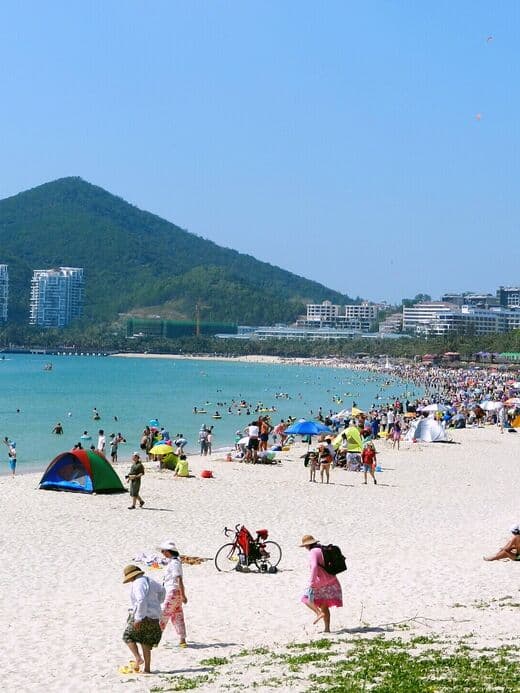
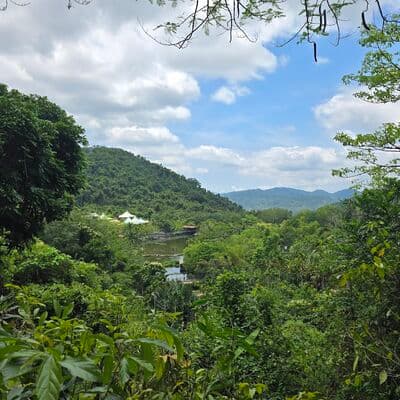
Yalong Bay is Sanya's crown jewel and the beach that makes travel magazines. The water here is the clearest along the Sanya coast, the sand is fine and pale, and the bay curves in a photogenic crescent backed by lush green hills. This is where you will find the Ritz-Carlton, the St. Regis, and other five-star properties with private beach access. The downside? It is a resort corridor - beautiful but somewhat sterile. Restaurants and nightlife outside hotels are limited, and you will need a taxi to reach the city center (about 25 minutes, 40-60 CNY / $5-8). Best for couples and travelers who want a polished, quiet beach holiday and do not mind paying resort prices for food and drinks. The Yalong Bay Tropical Paradise Forest Park is right behind the bay - worth a morning visit for the canopy walkways and valley views.
Haitang Bay - Luxury Plus Entertainment
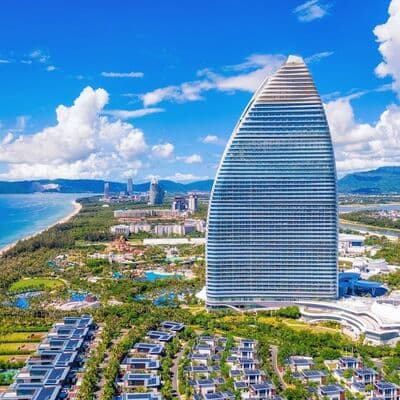
Haitang Bay is where Sanya goes big. This is the newest and most developed stretch, anchored by the unmistakable Atlantis resort with its Aquaventure Waterpark and The Lost Chambers Aquarium. The beach itself is long and wide with coarser sand than Yalong Bay but fewer crowds. The real draw here is the CDF Haitang Bay Duty Free complex - the largest duty-free shopping center in the world, and that is not marketing hyperbole. Perfume, cosmetics, electronics, and luxury goods at prices that undercut Hong Kong and Singapore. Haitang Bay is further from the city center (40 minutes by taxi) but has enough self-contained entertainment that many visitors never feel the need to leave. Best for families with kids, shoppers, and anyone who wants a resort experience with plenty to do on rainy days.
Dadonghai - Budget-Friendly and Fun
Dadonghai Beach is Sanya's most democratic stretch of sand. The beach is public, the surrounding streets are packed with restaurants, bars, and small hotels, and the vibe is more lively than polished. This has historically been the hub for Russian tourists - you will see Cyrillic signs on restaurants and hear Russian spoken on the beach. Budget hotels start around 150-300 CNY ($20-40) per night, and a full seafood dinner at nearby restaurants runs 80-150 CNY ($11-20) per person. The water is not as clear as Yalong Bay, and the beach gets crowded, but the energy is infectious. Walking distance to bars, convenience stores, massage parlors, and the #25 bus to the city center. Best for solo travelers, budget-conscious visitors, and anyone who wants walkable nightlife without resort prices.
Sanya Bay - Sunsets and Airport Proximity
Sanya Bay runs for over 20 kilometers along the western coast, and its defining feature is the sunsets - some of the most spectacular you will see anywhere in China. The beach is wide and sandy, though the water is murkier than the eastern bays. The coconut palm-lined promenade (Coconut Dream Corridor) is perfect for evening strolls and cycling. The big practical advantage is proximity to Phoenix Airport - just 10-15 minutes by taxi, making it ideal if you have an early flight or late arrival. Hotels here range from budget to upper mid-range, with fewer international luxury brands. The area also offers easy access to Tianya Haijiao and Daxiaodongtian Scenic Area. Best for travelers who prioritize convenience and sunset views over premium swimming water.
City Center (Sanya Downtown) - Authentic and Affordable
Most tourists skip Sanya's downtown entirely, and that is a mistake if you care about food. The city center is where locals actually live, eat, and shop. First Market (Diyi Shichang) is here - the legendary seafood market where you pick your own live fish, crabs, and shellfish downstairs and carry them to a cooking stall upstairs where they prepare your choices in any style for 30-50 CNY ($4-7) per dish. The streets around the market are crammed with Hainanese chicken rice shops, tropical fruit stalls, and qingbuliang dessert vendors. Hotels in the city center are basic but cheap (100-200 CNY / $14-28 per night). No beach access, but taxis and buses reach all bays within 15-30 minutes. Best for foodies, budget travelers, and anyone wanting to experience actual Chinese city life alongside the resort bubble.
Houhai - The Surfing Village
Houhai is Sanya's open secret. This small fishing-village-turned-surf-community sits at the far end of Haitang Bay, where the coast curves around a headland. The waves are gentle enough for beginners, surf schools charge around 200-300 CNY ($28-42) for a lesson, and the village has filled up with hipster cafes, yoga studios, and guesthouses with ocean-view rooftops. The crowd is young, international, and increasingly made up of digital nomads who have discovered that Sanya's cost of living and reliable internet make it a viable remote work base. Accommodation ranges from basic rooms (80-150 CNY / $11-20) to boutique stays (300-600 CNY / $42-84). The village is small enough to walk everywhere but remote enough that you will need a scooter or taxi to reach other bays. Best for surfers, digital nomads, backpackers, and travelers seeking community over luxury.
Best Time to Visit Sanya
Sanya is tropical, which means warm year-round, but the difference between high and low season is dramatic - not just in weather, but in crowds and prices.
High Season: November through March
This is when Sanya shines brightest. Temperatures hover around 24-28°C (75-82°F), humidity drops to comfortable levels, rain is rare, and the sea is calm with excellent visibility for diving and snorkeling. It is also when half of northern China migrates south to escape sub-zero winters, so hotel prices spike - expect to pay 50-100% more than low season rates, and popular attractions get genuinely crowded. Chinese New Year (late January or February) is the absolute peak: prices triple, beaches are packed shoulder-to-shoulder, and restaurant waits stretch past an hour. If you come during high season, book accommodation at least a month in advance and avoid the Chinese New Year week unless you specifically want that festive atmosphere.
Shoulder Season: April to May and October
The sweet spot. April and May bring warmer temperatures (28-32°C / 82-90°F) but crowds thin dramatically after the winter rush. October is lovely - the summer rains taper off, temperatures cool slightly, and Golden Week (first week of October) aside, tourist numbers drop. Prices return to reasonable levels, and you can often negotiate hotel rates 20-30% below rack price. The water is still warm and swimmable. This is when I would recommend Sanya to most first-time visitors - you get the tropical experience without fighting for a beach chair.
Low Season: June through September
Summer in Sanya is hot, humid, and wet. Temperatures push 33-35°C (91-95°F), afternoon thunderstorms are almost daily, and typhoon season runs from July through October - though direct hits on Sanya are rare, nearby storms can bring days of grey skies and rough seas. The upside? Hotel prices crater by 40-60%, beaches are empty, and if you can handle the heat, you will have Sanya largely to yourself. Just keep your schedule flexible - a typhoon warning can cancel island excursions and ferry services with no notice.
Festivals Worth Timing Around
The Sanya International Music Festival (typically December) brings big-name Chinese and some international artists to the beach. The Li and Miao Ethnic Minorities Festival (March 3rd on the lunar calendar, usually April) offers authentic cultural performances, traditional food, and dance - a rare window into Hainan's indigenous culture that most tourists miss entirely. And the Hainan International Film Festival (December) has been growing steadily, with screenings and events centered around Haitang Bay.
Sanya Itinerary: 3 to 7 Days
These itineraries assume you are reasonably active and want to balance beaches, culture, nature, and food. Adjust pacing to your preference - Sanya rewards both exploration and doing absolutely nothing on a sun lounger.
3 Days: The Essential Sanya
Day 1 - Beach and Seafood Baptism
Arrive at Phoenix Airport and taxi to your hotel (30-60 minutes depending on bay). Settle in, then head to your nearest beach for an afternoon swim. If you are in Yalong Bay or Haitang Bay, the hotel beach will be excellent. If Dadonghai, grab a sun lounger (free at most spots, vendors will offer drinks). In the evening, taxi to First Market in Sanya city center. Walk the ground floor, pick your seafood - look for live mantis shrimp, flower crabs, sea urchins, and whatever scallops look freshest. Carry your haul upstairs to a cooking stall (the ones with the longest queues are usually best). A feast for two with beer runs 200-400 CNY ($28-55). After dinner, stroll the lively market streets and grab a cup of qingbuliang - the iced coconut milk dessert that Hainan does better than anywhere else.
Day 2 - Island Adventure
Start early. Take a taxi or arrange transport to the Wuzhizhou Island ferry terminal (first boat at 8:00, get there by 7:30 to beat queues). The island is Sanya's best spot for diving and snorkeling - visibility reaches 15 meters on good days, and the coral is healthier than anywhere along the mainland coast. If you do not dive, the island has clear-bottom boats, jet skis, parasailing, and walking trails around the perimeter with stunning viewpoints. Budget 4-6 hours on the island. Entrance plus ferry is about 136 CNY ($19). Back on the mainland by mid-afternoon, head to Dadonghai for sunset drinks at one of the beachfront bars - cold Tsingtao with your feet in the sand, watching the sky turn orange.
Day 3 - Culture, Views, and Farewell
Morning: Visit Nanshan Cultural Tourism Zone (open 8:00, arrive early to avoid tour groups). The 108-meter Guanyin statue rising from the sea is genuinely breathtaking regardless of your religious background - it is the fourth-tallest statue in the world. The temple grounds are vast and peaceful if you wander away from the main paths. Do not skip the vegetarian buffet inside the complex - at 58 CNY ($8) per person, it is one of the best value meals in Sanya and surprisingly delicious. Afternoon: Stop at Tianya Haijiao (End of the Earth) on the way back - the rocks inscribed with classical Chinese poetry are more atmospheric than they sound, especially in late afternoon light. End your trip with a coconut chicken hotpot dinner (see food section below) - the quintessential Hainan farewell meal.
5 Days: Going Deeper
Days 1-3: Follow the 3-day itinerary above.
Day 4 - Rainforest and Highlands
Rent a car or hire a driver for the day (250-400 CNY / $35-55) and head to Yanoda Rainforest Cultural Tourism Zone, about 45 minutes north of Yalong Bay. This is Hainan's best rainforest experience - think elevated walkways through dense canopy, waterfalls you can wade into, and zip-lines over gorges. The park staff greet everyone by shouting 'Yanoda!' - it means '1-2-3' in the Li minority language and is the park's signature. Plan 4-5 hours here. The trails range from easy boardwalks to moderately strenuous jungle paths. On the way back, detour through the betel nut plantations and Li minority villages that dot the inland roads - a completely different Hainan from the beach resort strip. Evening: Head to Houhai village for dinner at one of the surf-shack restaurants, then catch the sunset from the headland above the village.
Day 5 - Slow Day and Duty-Free
You have earned a rest day. Spend the morning at Yalong Bay if you have not been yet - the swimming here is the best in Sanya. After lunch, taxi to CDF Haitang Bay Duty Free mall. Even if you are not a big shopper, the scale is worth experiencing - this place does billions in annual sales. International perfume and cosmetics are typically 20-40% cheaper than mainland China prices and often beat airport duty-free. The annual tax-free allowance is 100,000 CNY ($14,000) per person. Pick up gifts, skincare, or that bottle of whisky you have been eyeing. Evening: Return to your neighborhood for a relaxed final dinner.
7 Days: The Complete Experience
Days 1-5: Follow the 5-day itinerary above.
Day 6 - West Island and Luhuitou Sunset
Morning: Take a trip to West Island, a smaller and less commercialized alternative to Wuzhizhou. The diving here is solid, the beaches are quieter, and the overall vibe is more relaxed. The island is accessible by a short speedboat ride from the west coast. Spend the morning snorkeling or simply lounging on the beach. Afternoon: Visit Daxiaodongtian Scenic Area, an ancient Taoist site with dramatic coastal rock formations, 800-year-old dragon blood trees, and cliff-top temples. It is one of Sanya's oldest attractions and far less crowded than Nanshan. Late afternoon: Head to Luhuitou Park for sunset. This hilltop park overlooks all of Sanya Bay and the city skyline. The deer statue at the summit tells the local Li legend of a hunter who chased a deer to the cliff edge, where it turned its head and transformed into a beautiful woman. Kitschy, yes, but the panoramic view at golden hour is spectacular. Take the shuttle bus up the hill (40 CNY) and walk down through the forest paths.
Day 7 - Your Choice
Use this day for whatever called to you most. Some suggestions: Return to First Market for one more legendary seafood meal. Spend a half-day learning to surf in Houhai (lessons typically 2-3 hours, 200-300 CNY / $28-42). Explore the Yalong Bay Tropical Paradise Forest Park for canopy bridges and mountain views - if you have seen the Chinese film 'Non-Stop' (Fei Cheng Wu Rao 2), the famous bridge scene was filmed here. Or simply claim your favorite beach spot one last time, order a fresh coconut, and do absolutely nothing. You have earned it.
Where to Eat in Sanya: Restaurants and Cafes
Sanya's food scene divides neatly into tiers, and the best meals are often the cheapest. Here is where to eat at every budget level.
Street Food and Markets
First Market (Diyi Shichang) is the essential Sanya food experience and deserves a full section. The ground floor is a wet market selling live seafood - prawns, crabs, clams, grouper, lobster, sea urchin, mantis shrimp, and more. You select what you want, haggle on price (always haggle - start at 60% of the asking price), then carry your purchases upstairs where dozens of small restaurants will cook them for you. Cooking fees run 30-50 CNY ($4-7) per dish depending on preparation style. Spicy stir-fry, garlic steamed, salt-and-pepper fried - you choose. A full seafood spread for two people including beer typically runs 200-400 CNY ($28-55) total. Go between 5:00-6:00 PM to beat the dinner rush.
Beyond First Market, the streets of downtown Sanya are dotted with excellent cheap eats. Look for Hainanese chicken rice shops (usually a whole boiled chicken hanging in the window - that is your sign). Portions cost 15-30 CNY ($2-4). Tropical fruit stalls sell mango, dragon fruit, coconut, and jackfruit at prices that make Western supermarkets feel criminal. Fresh coconuts are everywhere - 8-15 CNY ($1-2) for a whole green coconut with a straw.
Local Restaurants
For Hainanese cuisine beyond the markets, seek out the restaurants that locals actually eat at. Coconut chicken hotpot restaurants are scattered throughout the city - you will recognize them by the clay pots bubbling in the window. A pot for two with coconut broth, fresh chicken, and various dipping vegetables runs 120-180 CNY ($17-25). Ask for the dipping sauce with kumquat and chili - it is essential. For Wenchang chicken done properly, look for small family restaurants in the city center rather than tourist-oriented places near the beaches. The markup at beachside restaurants is typically 2-3x city center prices for identical food.
Houhai village has developed its own food scene - a mix of Sichuan-style barbecue joints, Hainanese seafood restaurants, and a few international options catering to the surf crowd. Prices are higher than downtown but lower than resort areas. The grilled skewers (chuan'r) at the night stalls along the village main road are excellent and cheap - 2-5 CNY ($0.30-0.70) per skewer.
Mid-Range and Hotel Dining
The resort bays have plenty of mid-range options, though you will pay a location premium. Yalong Bay's restaurant strip along the main road behind the hotels offers Chinese, Southeast Asian, and some Western food at 80-200 CNY ($11-28) per person. Haitang Bay's Atlantis resort has several restaurants open to non-guests, including a solid Japanese option and the underwater restaurant where you eat surrounded by aquarium glass - a splurge at 500-800 CNY ($70-112) per person but genuinely memorable. For hotel buffets, the five-star properties along Yalong Bay run breakfast buffets in the 200-400 CNY ($28-55) range - lavish but not essential when better food exists at a fraction of the price downtown.
Cafes and Coffee
Hainan is actually one of China's coffee-growing regions, and Sanya has embraced this identity. You will find specialty coffee shops in Houhai village serving single-origin Hainan-grown beans for 25-45 CNY ($3.50-6.30) per cup. Dadonghai has a string of cafes along the beach road - decent espresso, ocean views, and air conditioning when you need a break from the heat. Chain options like Luckin Coffee and Manner are everywhere in the city center, with lattes around 12-20 CNY ($1.70-2.80). For a genuinely local experience, try laoba cha (old-dad tea) - Hainan's traditional teahouse culture where elderly men spend entire mornings over tea, dim sum, and gossip. Look for these in the city center; they open early (6:00-7:00 AM) and the food is surprisingly good.
What to Try: Sanya Food Guide
Hainanese cuisine is one of China's great underappreciated regional traditions. It is lighter, more coconut-forward, and more seafood-driven than what most foreigners associate with Chinese food. Here are the dishes you absolutely must try.
Wenchang Chicken (Wenchang Ji) - The most famous Hainanese dish and the ancestor of Singapore and Malaysian chicken rice. The chicken is free-range, poached to silky perfection, served at room temperature with a ginger-scallion sauce and fragrant oily rice cooked in chicken fat. It looks deceptively simple. It is transcendent. A half chicken runs 58-88 CNY ($8-12). Find it at any restaurant with whole chickens in the window.
Hele Crab (Hele Xie) - Named after the town of Hele on Hainan's east coast, these crabs are prized for their sweet, dense meat and rich roe. Steamed with ginger is the traditional preparation. Expect to pay 80-150 CNY ($11-21) per crab depending on size and season. First Market is the best place to try them - pick your crab live and have it steamed upstairs.
Coconut Chicken Hotpot (Yezi Ji Huoguo) - Sanya's signature communal meal. A clay pot filled with fresh coconut water and coconut milk comes to a boil, then you add sliced free-range chicken and watch it cook in the sweet, fragrant broth. Dip the cooked pieces in a kumquat-chili sauce. Once the chicken is done, add vegetables, tofu, and noodles to the remaining broth. A pot for two costs 120-180 CNY ($17-25). This is the meal to have on your last night - it captures Hainan in a single pot.
Dongshan Lamb (Dongshan Yang) - The third of Hainan's Four Great Dishes. This lamb, from the Dongshan area, is notably lean and not gamey. It is typically braised or served in a clear soup. Around 60-90 CNY ($8-13) per portion. Less common in Sanya than the chicken and crab, but worth seeking out at Hainanese specialty restaurants.
Jiaji Duck (Jiaji Ya) - The fourth great dish. Similar in preparation to Wenchang chicken but with duck - boiled, served at room temperature, with a slightly fattier, richer flavor. About 68-98 CNY ($10-14) for a half duck. Often served alongside chicken at the same restaurants.
Qingbuliang - Hainan's beloved dessert and the perfect antidote to tropical heat. A bowl of shaved ice or chilled coconut milk topped with red beans, lotus seeds, taro, sago pearls, jelly cubes, and sometimes fresh fruit. Every stall has its own combination. Costs 10-20 CNY ($1.40-2.80). Available at street stalls throughout the city center and night markets. Completely vegetarian and utterly refreshing.
Baoluo Rice Noodles (Baoluo Fenr) - Hainan's answer to Vietnamese pho. Thick rice noodles in a rich, savory broth topped with beef, dried shrimp, peanuts, and pickled bamboo. Breakfast of champions for locals - a bowl costs 12-20 CNY ($1.70-2.80) at morning noodle shops.
Grilled Seafood (Shaokao) - Night market culture in Sanya revolves around grilled seafood skewers. Oysters with garlic, squid on sticks, grilled scallops with vermicelli, prawns with cumin - all cooked over charcoal by street vendors after dark. Individual skewers run 5-15 CNY ($0.70-2.10). The best night market action is along Jiefang Road in the city center.
Vegetarian note: The Nanshan Temple vegetarian buffet (58 CNY / $8) is excellent and entirely plant-based. Buddhist vegetarian restaurants exist in the city center. Coconut-based dishes and qingbuliang are naturally vegetarian. However, strict veganism is hard - many broths use seafood or meat stock even in seemingly vegetable dishes. Communicate clearly or stick to temple food for guaranteed plant-based meals.
Sanya Secrets: Local Tips
These are the things nobody puts in the glossy brochures but everyone wishes they had known before arriving.
1. Haggle at First Market, but know the floor. Vendors at the seafood market will quote foreigners 2-3x the local price. This is expected - bargaining is part of the game. Start at 40-50% of their asking price and settle around 60-70%. Check prices on your phone using Meituan or Dianping apps to know what locals pay. Do not feel guilty about haggling; the vendors enjoy it.
2. Download your VPN before you land. China's Great Firewall blocks Google, Gmail, WhatsApp, Instagram, Facebook, YouTube, and most Western social media. VPN apps and websites are also blocked inside China, so you cannot download one after arrival. Install and test your VPN before boarding your flight. Paid VPNs are more reliable than free ones - expect occasional slowdowns but generally functional service.
3. Set up Alipay Tour Pass before arrival. China runs on mobile payments, and many small vendors no longer carry change for cash. Alipay's Tour Pass lets foreigners link a Visa or Mastercard and pay via QR code everywhere locals do. Set this up before your trip - you will need your passport information and an international phone number. WeChat Pay also works for foreigners but is slightly harder to set up.
4. Sunscreen is not optional. Sanya sits at roughly the same latitude as Hawaii, and the tropical sun is fierce even on overcast days. Apply SPF 50+ every two hours, wear a rash guard for extended water activities, and bring sunscreen from home - local brands are fine but imported sunscreen in resort shops carries a hefty markup.
5. Taxis use meters - mostly. Licensed taxis in Sanya are generally honest and metered. Starting fare is 8 CNY ($1.10). If a driver refuses the meter or quotes a flat rate, politely decline and find another cab. DiDi (China's Uber) is cheaper and more convenient - the app works in English and shows the fare upfront. For airport transfers, DiDi typically runs 40-80 CNY ($5.50-11) depending on your bay.
6. The duty-free limit is per person, per year. CDF Haitang Bay allows up to 100,000 CNY ($14,000) in tax-free purchases per person per calendar year. You collect your purchases at the airport departure hall on your way out. Keep your receipts and passport handy. The savings on cosmetics and skincare are substantial - 30-40% below mainland retail prices on brands like La Mer, SK-II, and Estee Lauder.
7. Avoid holiday weeks. Chinese New Year (late January/February), National Day Golden Week (October 1-7), and Labor Day (May 1-5) bring enormous domestic tourist crowds. Hotel prices triple, beaches are sardine-packed, and attraction queues stretch for hours. If your dates are flexible, avoid these periods entirely.
8. Coconuts have a grading system. Street coconut vendors sell by size: small (8 CNY), medium (10-12 CNY), and large (15 CNY). The golden-husked coconuts are sweeter and more aromatic than the green ones. After drinking the water, ask the vendor to hack it open so you can eat the flesh with a spoon - that is the best part.
9. Water safety varies by bay. Yalong Bay and Wuzhizhou Island have the clearest, safest swimming water. Dadonghai is fine but occasionally has jellyfish in summer. Sanya Bay is better for walks than swimming - the water is murky and the undertow can be strong. Always swim where you see other people, and respect red-flag warnings.
10. Learn three phrases. 'Duo shao qian?' (how much?), 'Tai gui le' (too expensive), and 'Xie xie' (thank you) will cover 80% of your market interactions and earn genuine smiles. Chinese people deeply appreciate any attempt at Mandarin, no matter how butchered your pronunciation.
Transport and Connectivity
Getting to Sanya
Sanya Phoenix International Airport (SYX) sits just 11 kilometers from the city center - one of the most conveniently located airports for any Chinese resort city. Direct flights connect Sanya to Beijing (4 hours), Shanghai (3.5 hours), Guangzhou (1.5 hours), Chengdu (3 hours), Hong Kong (1.5 hours), and a growing number of international destinations including Singapore, Seoul, Bangkok, and Kuala Lumpur. International routes have been expanding steadily since 2023 - check current schedules as new connections are added regularly.
The Hainan high-speed rail also connects Sanya to Haikou (the island's capital, 1.5 hours, about 100 CNY / $14) if you want to explore the rest of Hainan Island. The train station is in the city center and is modern and efficient.
Airport Transfers
From Phoenix Airport: taxi to Sanya Bay takes 15-20 minutes (30-40 CNY / $4-5.50), to Dadonghai 20-25 minutes (40-60 CNY / $5.50-8), to Yalong Bay 30-40 minutes (70-100 CNY / $10-14), and to Haitang Bay 45-60 minutes (120-160 CNY / $17-22). DiDi is about 20% cheaper than licensed taxis. Some hotels offer free airport shuttle buses - ask when booking. Airport bus line 8 runs to the city center for 10 CNY ($1.40), and line 4 runs to Yalong Bay for 25 CNY ($3.50). The buses are comfortable, air-conditioned, and have luggage storage.
Getting Around the City
Taxis and ride-hailing: DiDi is the most convenient option. The app works in English, shows estimated fares, and payment goes through your Alipay or linked card. Licensed taxis are plentiful and metered. Expect to pay 30-80 CNY ($4-11) for most trips between bays. Avoid the unofficial drivers who approach you at tourist spots - they invariably overcharge.
Public buses: Sanya has an extensive bus network connecting all major bays and attractions. Fares are typically 1-4 CNY ($0.14-0.55). Bus #25 runs along the coast through Sanya Bay, Dadonghai, and to the edge of Yalong Bay. Bus #15 goes to Nanshan Temple area. Payment is by exact change, transport card, or Alipay QR code. Google Maps does not work in China - use Gaode Maps (Amap) or Baidu Maps for transit directions.
Scooter rental: Electric scooters can be rented in Dadonghai and Houhai for 50-80 CNY ($7-11) per day. Technically you need a Chinese driver's license, but enforcement is lax in tourist areas. Helmets are mandatory. This is the best way to get around Houhai and explore nearby coastal roads at your own pace.
Car rental: International licenses are not valid in China, so formal car rental requires a Chinese temporary driving permit (obtainable with your passport and home country license, but involves paperwork). Most visitors find it easier to hire a driver for day trips - 300-500 CNY ($42-70) for a full day with a Mandarin-speaking driver through your hotel or Ctrip.
Internet and Connectivity
China's internet firewall blocks Google services, WhatsApp, Facebook, Instagram, Twitter/X, YouTube, and many Western news sites. A VPN is essential and must be downloaded before you arrive - VPN websites and app stores are blocked inside China. Paid options like Astrill or ExpressVPN tend to work (with occasional disruptions), though connection speeds vary. Hotel and restaurant Wi-Fi is widely available and generally fast.
For mobile data, you have two practical options. Option 1: eSIM or international roaming. Many carriers offer China data roaming packages. eSIM providers like Airalo sell China data plans from $5-15 for 1-5 GB. These route through Hong Kong servers, meaning no Great Firewall - you get unrestricted internet without a VPN. This is the easiest option. Option 2: Local SIM card. China Mobile and China Telecom sell tourist SIM cards at airport kiosks. You will need your passport. Plans start around 50-100 CNY ($7-14) for 5-10 GB. Local SIMs are subject to the firewall, so you still need a VPN for Western services.
Essential Apps
Alipay - Payment, everywhere. Set up Tour Pass before departure. DiDi - Ride-hailing, English interface available. Gaode Maps (Amap) - Navigation, bus routes, walking directions. Far more accurate than Apple Maps for China. Ctrip (Trip.com) - Hotel bookings, attraction tickets, train tickets, drivers for hire. Baidu Translate or Google Translate - Camera translation works offline for reading menus and signs (download the Chinese language pack before arriving). Meituan or Dianping - Restaurant reviews and food delivery. Chinese only, but useful for checking prices and ratings even via camera translation.
Who Should Visit Sanya: Final Verdict
Sanya is ideal for travelers who want a tropical beach holiday with excellent food, modern infrastructure, and prices that make Southeast Asia look expensive by comparison. It is perfect for families with children (Atlantis alone justifies the trip for kids), couples seeking a romantic beach escape, food lovers willing to venture beyond hotel restaurants, and anyone curious about seeing a different side of China than the usual Beijing-Shanghai-Great Wall circuit.
Sanya is not ideal if you want a backpacker party scene (try Bali or Thailand), if the internet firewall is a dealbreaker for your work, or if you struggle with language barriers and expect English to work everywhere. It is also not the place for ancient cultural immersion - Sanya is a modern resort city first and foremost.
How many days? Three days covers the highlights. Five days lets you relax and explore properly. Seven days lets you slow down, surf, eat everything, and leave feeling like you genuinely know the place. Budget $50-80 per day for a comfortable mid-range trip, $150+ for luxury resort life, or as little as $25-35 if you stay in Dadonghai or Houhai and eat local.
Sanya surprised me. It might surprise you too.