Miami
Miami 2026: What You Need to Know Before Your Trip
Miami is not just a beach city. It is a bilingual, multicultural, subtropical metropolis where Cuban coffee fuels the mornings, Art Deco buildings glow pink at sunset, and the Everglades begin where the strip malls end. It is equal parts Latin America and the United States, and that tension is exactly what makes it interesting.
What to see in Miami? Start with South Beach and the Art Deco Historic District, then explore Wynwood Walls for street art, eat your way through Little Havana, visit Vizcaya Museum and Gardens, and take a day trip to the Everglades. Miami rewards those who leave the beach.
Who is Miami for? Miami is for people who want a beach vacation with culture, food, and nightlife layered on top. It is for architecture nerds, Latin music lovers, foodies chasing Cuban sandwiches and stone crab claws, and anyone who wants warm water in January. It is a genuinely international city where over 70% of residents speak Spanish at home, and that shapes everything from the restaurant menus to the radio stations.
The honest pros: World-class beaches with warm, clear water. An incredible food scene driven by Cuban, Haitian, Colombian, and Caribbean immigrants. Free public transit in downtown (the Metromover). A nightlife scene that runs until 5 AM. Winter temperatures in the 70s and 80s Fahrenheit. Direct flights from almost everywhere.
The honest cons: It is expensive, especially in South Beach and Brickell. Traffic is terrible and the city is sprawling, so you will need rideshares or a car for anything beyond the beach neighborhoods. Hurricane season runs June through November. The summer heat and humidity (June-September) can be genuinely oppressive. Tourist traps on Ocean Drive are aggressive and overpriced. And yes, the party reputation is earned - some areas are loud and chaotic on weekends.
Miami Neighborhoods: Where to Stay
Miami is not one place. It is a collection of neighborhoods with wildly different personalities, price points, and vibes. Choosing the right base will shape your entire trip. Here is the honest breakdown.
South Beach
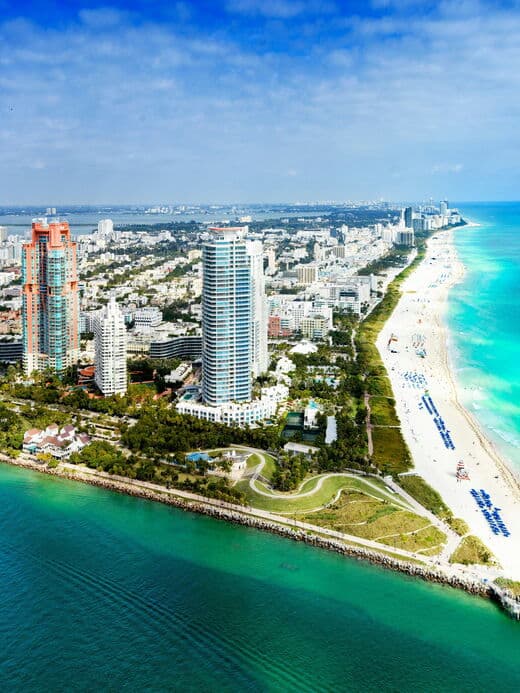
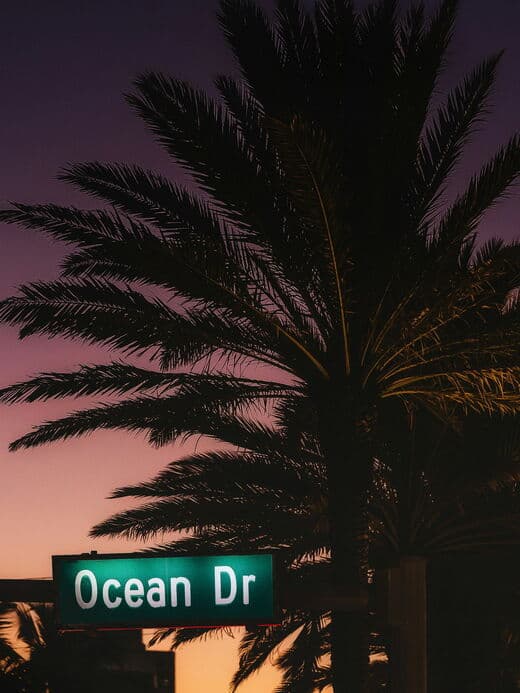
The iconic strip between 1st and 23rd Streets on Miami Beach. This is where the Art Deco Historic District lives, where Ocean Drive runs along the sand, and where most first-time visitors end up. The beach itself is genuinely beautiful - wide, with soft sand and warm turquoise water. The nightlife is intense, with clubs and bars open until 5 AM.
Best for: First-timers, nightlife lovers, architecture fans, people-watching enthusiasts.
Pros: Walkable, beautiful beach, iconic scenery, tons of restaurants and bars.
Cons: Loud at night (especially Thursday-Sunday), tourist traps everywhere on Ocean Drive, parking is a nightmare ($20-40/day), hotels charge resort fees ($30-60/night on top of room rate).
Price range: $200-500/night for a decent hotel. Budget hostels from $40-80/night.
Mid-Beach
The stretch from roughly 23rd to 63rd Streets. Same gorgeous beach, but quieter and more residential. The Faena District around 32nd-36th Streets has become a luxury arts enclave with the Faena Hotel and Faena Forum. The Boardwalk runs through here and is perfect for morning walks or bike rides.
Best for: Couples, families, anyone who wants beach access without the South Beach chaos.
Pros: Quieter, less crowded beaches, still walkable to South Beach, good restaurant scene developing.
Cons: Fewer dining options than South Beach, can feel sleepy at night, still expensive.
Price range: $180-400/night. Better value than South Beach for comparable quality.
Wynwood
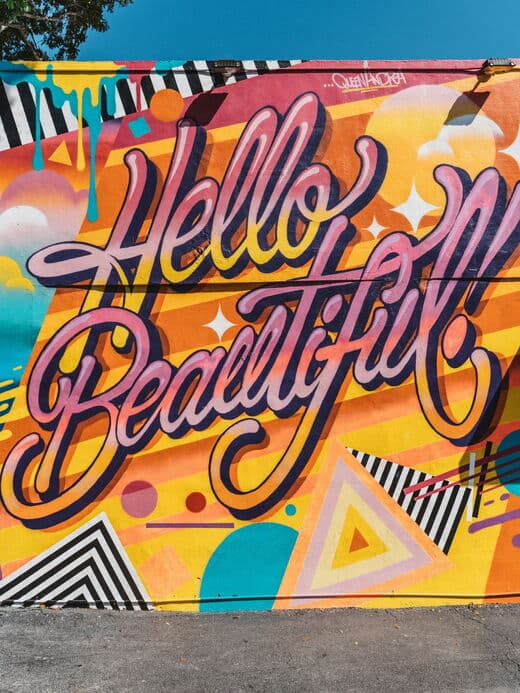
Miami's art district, centered around the Wynwood Walls. Former warehouses transformed into galleries, breweries, restaurants, and boutiques. The entire neighborhood is an open-air museum of street art. Think Brooklyn's Williamsburg but with better weather and more color. The food scene here is excellent and less tourist-oriented than South Beach.
Best for: Art lovers, foodies, younger travelers, Instagram photographers, craft beer enthusiasts.
Pros: Best food scene per square block in Miami, walkable art district, great bars, less pretentious than South Beach.
Cons: No beach (15-20 min drive), can feel deserted on weekday mornings, some blocks still feel industrial, limited hotel options (more Airbnbs).
Price range: $120-250/night. Airbnbs from $80/night.
Brickell
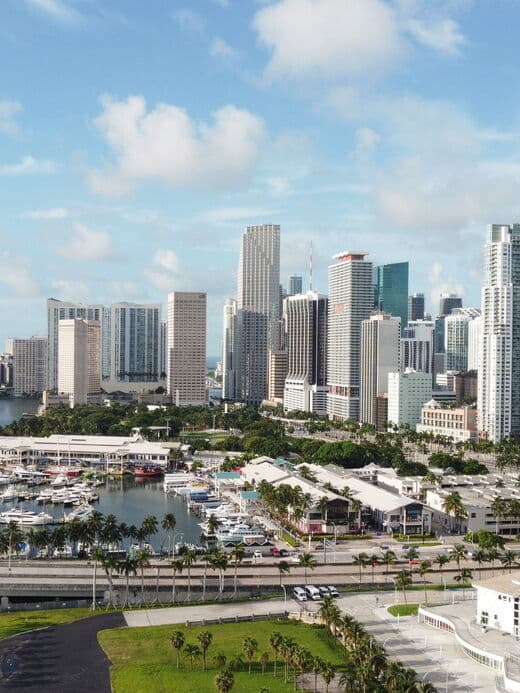
Miami's financial district and the Manhattan of the South. Glass skyscrapers, rooftop bars, upscale restaurants, and Brickell City Centre mall. It has a young professional energy - lots of people in their 20s and 30s who moved to Miami during the post-2020 tech migration. The area around Mary Brickell Village has good nightlife that feels more local than South Beach.
Best for: Business travelers, young professionals, people who prefer city energy to beach energy.
Pros: Walkable, connected to free Metromover, excellent restaurants and rooftop bars, feels more like a real city than a resort.
Cons: No beach (20 min to South Beach), corporate feel during the day, expensive dining, can feel sterile.
Price range: $150-350/night. Good Airbnb options from $100/night.
Downtown Miami
The cultural core with the Perez Art Museum Miami (PAMM), Frost Science Museum, and the Adrienne Arsht Center for performing arts. Connected by the free Metromover elevated train. Bayside Marketplace sits on the waterfront. Downtown has improved dramatically in recent years but still has rough edges compared to Brickell.
Best for: Museum lovers, budget travelers, people who want central access to everything via Metromover.
Pros: Free Metromover, museums, more affordable than South Beach or Brickell, central location.
Cons: Can feel empty after business hours, some blocks still feel sketchy at night, no beach.
Price range: $100-250/night. Best value in central Miami.
Coconut Grove
Miami's oldest continuously inhabited neighborhood, tucked along the waterfront south of Brickell. It has a village-within-a-city feel with banyan trees, sidewalk cafes, and the stunning Vizcaya Museum and Gardens. CocoWalk is the central gathering point with shops and restaurants. It feels more relaxed and leafy than anywhere else in Miami.
Best for: Families, couples, history buffs, anyone who wants a quieter pace with charm.
Pros: Beautiful, walkable village center, Vizcaya, waterfront parks, less tourist-oriented, great for kids.
Cons: No beach (15 min drive), limited nightlife, fewer hotel options, can feel too quiet for younger travelers.
Price range: $130-300/night. Good Airbnbs in residential areas from $90/night.
Coral Gables
The "City Beautiful," planned in the 1920s with Mediterranean Revival architecture, tree-lined boulevards, and the famous Venetian Pool (a spring-fed swimming hole carved from coral rock). Fairchild Tropical Botanic Garden is here. Miracle Mile is the main commercial street with restaurants and shops. It feels like a different city entirely - manicured, quiet, and elegant.
Best for: Families, architecture enthusiasts, garden lovers, people who want suburban calm with urban access.
Pros: Beautiful architecture, Venetian Pool, Fairchild Garden, excellent restaurants on Miracle Mile, safe and walkable downtown area.
Cons: No beach (20 min drive), can feel too suburban, nightlife is limited, not very exciting for younger travelers.
Price range: $150-350/night. The Biltmore Hotel is the landmark luxury option.
Best Time to Visit Miami
Peak season (December-April): This is when Miami is at its best and most expensive. Temperatures hover between 65-82F (18-28C), humidity is manageable, and rain is rare. Hotel prices are 40-100% higher than summer. This is when Art Basel (early December), the South Beach Wine and Food Festival (late February), Ultra Music Festival (late March), and Miami Open tennis (March-April) happen. If you can afford it and book early, this is the time to come.
Shoulder season (May and November): The sweet spot for value. May is warm but not yet brutally humid, and hotel prices drop 20-30% from peak. November is similar - hurricane season is technically still active but most storms have passed, and the winter crowds have not arrived yet. Both months offer comfortable beach weather and lower prices.
Summer (June-September): Hot, humid, and wet. Expect daily afternoon thunderstorms (usually 30-60 minutes, then sunshine again), temperatures in the high 80s to low 90s F (31-35C), and humidity that hits you like a wall when you step outside. The upside: hotel prices drop 30-50% from peak, restaurants are less crowded, and the water is bathtub-warm. This is also hurricane season, which peaks August-October. Travel insurance is strongly recommended.
Hurricane season (June 1 - November 30): The risk is real but often overstated for short trips. Most seasons pass without a direct hit. Monitor forecasts, have travel insurance, and know that hotels will refund if a hurricane forces evacuation. September and October are the highest risk months.
When it is cheapest: Late August through early October. Fewest tourists, lowest hotel prices, but the highest heat and hurricane risk. For the best balance of value and weather, aim for late November or early May.
Key festivals and events:
- Art Basel Miami Beach (first week of December) - the art world descends on Miami, prices spike
- South Beach Wine and Food Festival (late February) - celebrity chefs, tastings, beach events
- Ultra Music Festival (late March) - massive EDM festival in Bayfront Park
- Calle Ocho Festival (mid-March) - the largest Hispanic festival in the US, in Little Havana
- Miami Swim Week (July) - fashion industry event, South Beach fills with models
- Coconut Grove Arts Festival (Presidents Day weekend) - one of America's top outdoor art festivals
Miami Itinerary: 3 to 7 Days
3-Day Itinerary: The Essentials
Day 1: South Beach and Art Deco
Start your morning at 8:00 AM with a walk along Ocean Drive before the crowds arrive. The pastel Art Deco buildings look their best in the soft morning light. Grab a cafecito (Cuban espresso, $1-2) from any ventanita (walk-up window) - David's Cafe on Collins Avenue is a reliable choice. By 9:30 AM, join the Miami Design Preservation League's walking tour of the Art Deco Historic District ($35, 90 minutes, starts at the Art Deco Welcome Center on Ocean Drive at 10th Street). After the tour, head to South Beach for a swim. Rent a chair and umbrella ($20-30) or just bring a towel. For lunch, skip the overpriced Ocean Drive restaurants and walk two blocks west to Pubbelly Sushi on 20th Street or La Sandwicherie on 14th (pressed sandwiches, $10-14, cash only). Spend the afternoon at the beach or exploring the Collins Avenue shops. At 5:30 PM, head to South Pointe Park at the southern tip of South Beach for the best sunset view in Miami - you will see cruise ships passing through Government Cut with Fisher Island in the background. Dinner in South Beach: Juvia on Lincoln Road (rooftop with incredible views, Japanese-Peruvian-French fusion, $60-80 per person) or for something more affordable, grab tacos at Bodega on 16th Street ($4-6 per taco, secret speakeasy bar in the back).
Day 2: Wynwood, Little Havana, and Brickell
Start at 9:00 AM in Wynwood before the afternoon crowds. Walk the Wynwood Walls outdoor museum (free to enter weekdays, $12 on weekends). Then wander the surrounding streets - every building is covered in murals. Breakfast at Salty Donut (artisan doughnuts, $5-8) or Zak the Baker (sourdough everything, $8-14 for brunch). By 11:30 AM, drive or Uber to Little Havana (10 minutes). Walk Calle Ocho (SW 8th Street) between 12th and 17th Avenues. Stop at Domino Park to watch the old-timers play. Lunch at Enriqueta's Sandwich Shop (Cuban sandwich $8, croquetas $1.50 each - cash only, there will be a line, it is worth it). Or try La Camaronera (seafood, known for their fish sandwich, $10-15). After lunch, stop at Ball and Chain (live salsa music starts around 1 PM on weekends, mojitos $14). By 3:00 PM, head to Brickell. Walk around Brickell City Centre, then take the free Metromover for views of the skyline and Biscayne Bay. For dinner, Cerveceria La Tropical in Wynwood (craft brewery with excellent food, $15-25 per plate) or head to Brickell for rooftop cocktails at Sugar (on top of the EAST Miami hotel, no cover, cocktails $18-22) followed by dinner at Komodo (Asian fusion, see-and-be-seen crowd, $40-60 per person).
Day 3: Key Biscayne or Everglades
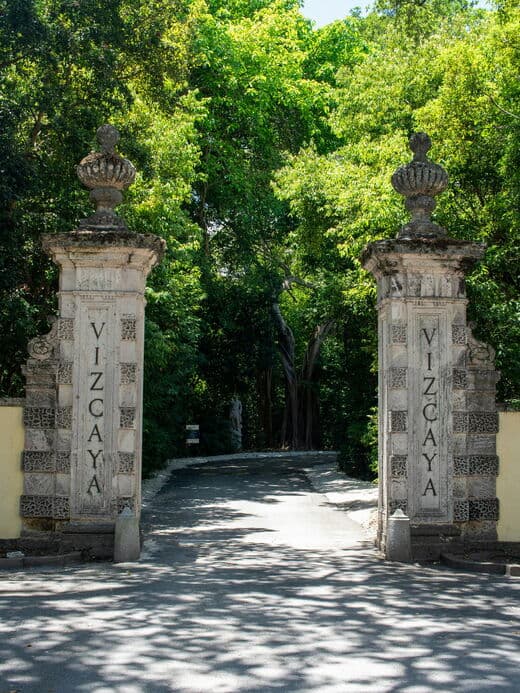
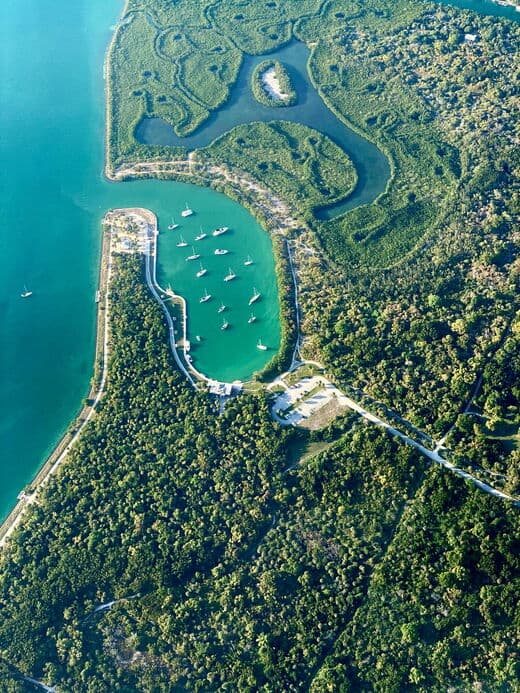
Option A: Key Biscayne. Drive or Uber across the Rickenbacker Causeway ($2.25 toll) to Key Biscayne. Start at Crandon Park Beach ($8 parking) - it is consistently rated one of America's best beaches, with calm water and coconut palms. Less crowded than South Beach and better for swimming. Spend the morning here. For lunch, drive to the southern end of the island to Bill Baggs Cape Florida State Park ($8 entry per vehicle) where you can climb the historic lighthouse and eat at the casual Boater's Grill with waterfront views ($15-25). Return via the causeway and stop at Vizcaya Museum and Gardens in Coconut Grove ($25 admission). This Italian Renaissance-style villa built in 1916 is one of Miami's most stunning attractions - allow 90 minutes.
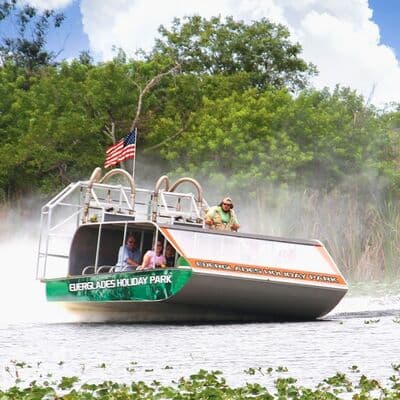
Option B: Everglades. Book an Everglades day trip. Drive 45 minutes west to Shark Valley Visitor Center ($30 per vehicle entry) for the 15-mile tram tour ($29 per person, book ahead) where you will see alligators, birds, and turtles from a safe elevated path. Or go to the Anhinga Trail (easy 0.8-mile boardwalk where alligators sun themselves feet from you - genuinely thrilling). For a more adventurous experience, book an airboat tour with a local operator ($35-50 per person, 1 hour). Return to Miami by mid-afternoon.
5-Day Itinerary: Go Deeper
Follow the 3-day itinerary above, then add:
Day 4: Museums, Design District, and North Beach
Morning at the Perez Art Museum Miami (PAMM, $16 admission, free on first Thursdays and second Saturdays). The building itself, designed by Herzog and de Meuron, is as impressive as the art inside. Walk to the nearby Frost Science Museum ($30, worth it if you have kids or love planetariums). After lunch, Uber to the Design District (15 minutes) - luxury shopping, art installations, and architecture. Browse the Institute of Contemporary Art (ICA, free admission). Then head to Miami Beach north of 63rd Street where the crowds thin out. Haulover Beach has a famous clothing-optional section on the north end and a regular beach on the south end - both are beautiful and far less crowded than South Beach. Dinner at 1-800-Lucky in Wynwood (Asian food hall with 8 vendors, $10-18 per dish) or Mandolin Aegean Bistro in the Design District (Mediterranean garden setting, $30-45 per person).
Day 5: Coral Gables and Coconut Grove
Morning at the Venetian Pool in Coral Gables ($20 adults, $15 children, closed December-February). This is a spring-fed pool carved from a coral rock quarry in 1924, surrounded by waterfalls, caves, and Mediterranean architecture. It feels like swimming in a movie set. After the pool, drive to Fairchild Tropical Botanic Garden ($30, allow 2 hours). Lunch on Miracle Mile - Threefold Cafe (Australian-style brunch, $12-18) or Seasons 52 (fresh seasonal menu, $20-30). Afternoon in Coconut Grove - walk around CocoWalk, visit Vizcaya if you skipped it on Day 3, or rent a kayak on the waterfront ($30/hour). End the day with dinner at Lulu in the Grove (farm-to-table, $25-40) or Spillover (casual waterfront spot, $15-25).
7-Day Itinerary: The Full Experience
Follow the 5-day itinerary, then add:
Day 6: Beach Day and North Miami
Sleep in and have a lazy beach morning. Try a new beach - Crandon Park if you have not been, or Surfside (quiet upscale beach town just north of Mid-Beach). Visit the Ancient Spanish Monastery in North Miami Beach ($10, a 12th-century monastery shipped from Spain and reassembled stone by stone). Afternoon at the Museum of Contemporary Art (MOCA, $10) in North Miami. Evening: catch a show at the Adrienne Arsht Center, or go all-in on Miami nightlife - LIV at the Fontainebleau (expect $30-50 cover plus $20+ drinks), or for something less corporate, try Gramps in Wynwood (dive bar with a backyard, free-$10 cover) or Do Not Sit On The Furniture (intimate house music club in South Beach, $20-30 cover).
Day 7: Markets, Food Tour, and Farewell
If it is a weekend, start at Smorgasburg Miami in Wynwood (Saturday-Sunday, 60+ food vendors, free entry, dishes $8-16). Otherwise, hit the Lincoln Road Farmers Market (Sunday mornings) or the Little Haiti Caribbean Marketplace. Spend the late morning on a self-guided food tour: start at Enriqueta's if you have not been, grab a frita at El Rey de las Fritas on Calle Ocho, pick up guava pastries at Islas Canarias, and finish with stone crab claws at Joe's Stone Crab (seasonal, October 15-May 15, expect a 2-hour wait without a reservation or order takeaway next door for no wait). Afternoon: revisit your favorite beach or neighborhood for a final stroll. Watch the sunset from South Beach one last time.
Where to Eat in Miami: Restaurants and Cafes
Street Food and Markets
Smorgasburg Miami (Wynwood, weekends) - 60+ food vendors in one place, from smash burgers to acai bowls. Free entry, dishes $8-16. Come hungry, eat everything. Arrive before noon to avoid the longest lines.
El Bori Food Truck (rotating locations, check Instagram) - Puerto Rican street food done right. Mofongo, pernil, tostones. Plates $10-15. The kind of food truck where the line tells you everything you need to know.
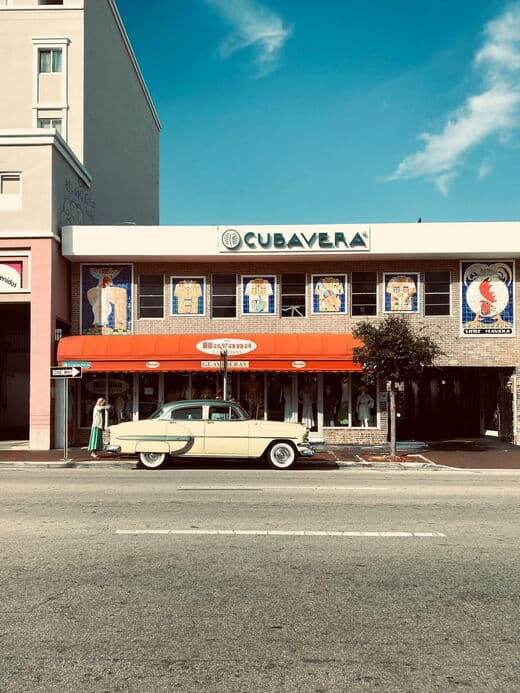
Calle Ocho ventanitas - Walk-up windows along SW 8th Street in Little Havana selling cafecitos ($1-2), croquetas ($1-2 each), and empanadas ($3-5). Versailles Bakery window is the most famous, but any ventanita will do.
Local Joints (Under $20)
Enriqueta's Sandwich Shop (Wynwood-adjacent) - The Cuban sandwich here ($8) is the one locals argue about. Cash only, no frills, fluorescent lighting, and one of the best meals in Miami. The croquetas are also excellent. Opens at 6 AM, closes when they run out.
La Camaronera (Little Havana) - Cuban seafood. Their fried fish sandwich ($12) has been featured on every food show. Paper plates, communal tables, always packed. Cash preferred.
Coyo Taco (Wynwood) - Mexican street tacos ($4-6 each) with a hidden mezcal bar in the back. The al pastor and carnitas are excellent. Open late on weekends.
Pack Supermarket (Little Haiti) - Haitian supermarket with a hot food counter in the back. Griot (fried pork), rice and beans, plantains. Full plate for $10-12. Not a tourist destination, which is exactly the point.
Mid-Range ($20-50 per person)
Ball and Chain (Little Havana) - Cuban food with live salsa music. The food is good (ropa vieja, croquetas, mojitos), but you come for the atmosphere. Music starts early afternoon on weekends. Expect $25-40 with drinks.
Cerveceria La Tropical (Wynwood) - Miami's first brewery, revived. Excellent craft beer ($7-10) and surprisingly great food. The crispy chicken sandwich and empanadas are standouts. $15-25 per person for food.
1-800-Lucky (Wynwood) - Asian food hall with 8 different vendors under one roof. Ramen, dumplings, Thai, sushi, bao buns. Pick a few dishes from different spots. $10-18 per dish. Good for groups who cannot agree on one cuisine.
Fine Dining ($50+)
Joe's Stone Crab (South Beach) - An institution since 1913. Stone crab claws are seasonal (October 15-May 15) and not cheap ($40-80 for a plate). No reservations for dinner - the wait can be 2+ hours. Pro tip: the takeaway counter next door has the same food with no wait. Hash browns are legendary.
Mandolin Aegean Bistro (Design District) - Mediterranean food in a gorgeous garden courtyard. Feels like you have been transported to a Greek island. $30-45 per person. One of Miami's most romantic dinner spots.
Juvia (South Beach) - Rooftop restaurant on Lincoln Road with Japanese, Peruvian, and French cuisine. The views are the real attraction. $60-80 per person with drinks. Reserve a sunset table.
Cafes and Breakfast
Zak the Baker (Wynwood) - Sourdough bread, pastries, and excellent brunch. The shakshuka and avocado toast are great. $8-14. Opens at 7 AM, busy by 9 on weekends.
Threefold Cafe (Coral Gables) - Australian-style cafe with flat whites, avocado toast, and grain bowls. $12-18. The coffee alone is worth the trip.
OTL (Wynwood) - Specialty coffee that rivals any third-wave roaster in Portland or Melbourne. Pour-overs, cold brew, espresso drinks. $5-8 for a coffee, light food available.
What to Try: Miami Food
Miami's food identity is built on Cuban, Caribbean, and Latin American foundations, with layers of everything else on top. Here are the 10 things you absolutely must eat.
1. Cuban Sandwich (Sandwich Cubano) - Pressed ham, roasted pork, Swiss cheese, pickles, and mustard on Cuban bread. The bread is the key - it should be crispy outside and soft inside. Best at: Enriqueta's ($8), Sanguich de Miami ($11), or La Palma ($7). Do not order one that comes with lettuce or tomato - that is a sign they do not know what they are doing.
2. Cafecito - A tiny, strong, sweet Cuban espresso shot. It costs $1-2 at any ventanita and is the fuel that runs Miami. Order a colada ($3-4) to share - it comes with small plastic cups. Drinking a cafecito standing at a ventanita window is a quintessential Miami experience.
3. Croquetas - Fried, breaded rolls filled with ham (most traditional), chicken, or cheese. Every Cuban bakery and restaurant has them. $1-2 each. They are the unofficial snack of Miami. Best at: Islas Canarias or Sergio's.
4. Frita - Miami's Cuban-style burger: seasoned beef and chorizo patty on a soft egg bun, topped with shoestring potato fries. It is messy, delicious, and unique to Miami. Best at: El Rey de las Fritas on Calle Ocho ($6-8) - they have been making them since 1996.
5. Stone Crab Claws - Available October 15 through May 15 only. Fishermen catch the crabs, remove one claw, and return them to the ocean (the claw regenerates). Served cold with mustard sauce. Not cheap ($30-80 per order depending on size), but a true Miami delicacy. Best at: Joe's Stone Crab (the original since 1913) or Truluck's.
6. Tostones con Mojo - Twice-fried green plantain discs served with garlic mojo sauce. Crunchy, salty, addictive. Found on virtually every Cuban and Caribbean menu. $5-8 as a side. Also try maduros (sweet fried ripe plantains) for contrast.
7. Arepas - Grilled or fried corn cakes stuffed with cheese, beans, meat, or avocado. Originally Venezuelan and Colombian, they are everywhere in Miami. Best at: Doggi's Arepa Bar ($6-10) or any place with a line of Venezuelans out front.
8. Key Lime Pie - Tangy, sweet, and creamy. Made with key limes from the Florida Keys. Should be yellow (not green - if it is green, they used food coloring). Best at: Joe's Stone Crab (frozen, chocolate-dipped, legendary), Fireman Derek's Bake Shop, or any restaurant that makes it in-house.
9. Mofongo - Mashed fried green plantains with garlic, pork cracklings, and olive oil, usually served with a broth. Puerto Rican comfort food at its finest. Best at: El Bori Food Truck ($12-15) or any Puerto Rican restaurant in Allapattah.
10. Griot - Haitian fried pork shoulder, marinated in citrus and Scotch bonnet peppers, then braised and fried until crispy. Served with rice, beans, and pikliz (spicy pickled cabbage). Best at: Pack Supermarket in Little Haiti ($10-12) or Chef Creole ($12-15).
What to avoid: Any restaurant on Ocean Drive between 5th and 15th Streets. The food is mediocre at best, portions are small, and prices are 30-50% higher than two blocks inland. The aggressive hosts trying to pull you in from the sidewalk are a red flag, not an invitation. Walk two blocks west to Collins or Washington Avenue for much better food at much better prices.
Vegetarian and vegan: Miami has a growing plant-based scene. Planta (South Beach and Design District, upscale vegan, $25-40), Love Life Cafe (organic, raw, vegan, $12-18), and most Cuban restaurants will make you a "Vegetariana" plate with rice, beans, maduros, and salad for $8-12.
Allergies: Miami restaurants are generally good about accommodations, but language barriers can be an issue at smaller Cuban and Haitian spots. If you have serious allergies, write them down in Spanish ("Soy alergico/a a...") and show your server.
Miami Secrets: Local Tips
1. The Metromover is free. This elevated monorail loops through Downtown, Brickell, and the Omni district. It runs every 90 seconds during peak hours and offers great views of Biscayne Bay. Use it to get between Downtown museums, Brickell restaurants, and the Adrienne Arsht Center. No ticket needed - just walk on.
2. South Pointe Park for sunsets, not Ocean Drive. Walk to the very southern tip of South Beach. There is a grassy park with benches and an unobstructed view of Fisher Island, cruise ships, and the sunset. Vastly better than watching the sunset blocked by hotels on Ocean Drive. Free, and never too crowded.
3. Over 70% of Miami-Dade County speaks Spanish. You will hear more Spanish than English in most neighborhoods outside of tourist zones. Learn a few phrases - "un cafecito por favor" will get you far. Menus are often in Spanish first. This is not a problem, it is part of what makes Miami unique.
4. Never eat on Ocean Drive. This is worth repeating. Walk to Collins Avenue, Washington Avenue, or Espanola Way instead. You will save 30-50% and eat better food. The only exception is the Palace Bar (drag brunch on weekends) where you are paying for the show, not the food.
5. Wynwood is best on weekday mornings. On weekend afternoons, the Wynwood Walls area is packed with Instagram tourists and bachelorette parties. Visit Tuesday or Wednesday morning for the same murals with a fraction of the crowd. Many galleries are closed Mondays.
6. Tipping is 18-20% and not optional. Florida service workers depend on tips. At restaurants, 18% is the floor for acceptable service, 20% for good service, 25% for excellent. Many restaurants in Miami now add an automatic 18-20% gratuity for all parties - check your bill before adding more. Tip bartenders $1-2 per drink. Uber and Lyft drivers appreciate $2-5.
7. Free trolleys exist. The City of Miami runs free trolley routes through Brickell, Wynwood, Little Havana, Coconut Grove, and Coral Gables. They are not fast, but they are free and air-conditioned. Download the Miami Trolley app for real-time tracking.
8. Apply sunscreen obsessively. The subtropical sun in Miami is no joke, even on cloudy days. You can burn in 20 minutes. Apply SPF 50+ every two hours, wear a hat, and do not be fooled by overcast skies. The UV index regularly hits "extreme" levels from April through October.
9. Happy hours are your friend. Miami is expensive, but happy hour culture is strong. Many restaurants offer 50% off drinks and discounted food 4-7 PM. Brickell and Wynwood have the best options. Sweet Liberty in South Beach has one of the best happy hours in the city.
10. The Everglades are closer than you think. The eastern edge of the Everglades is just 40 minutes from Downtown Miami. You do not need to book an expensive tour - drive to Shark Valley and do the tram ride or rent a bike ($10/hour) along the 15-mile loop trail. You will see alligators, guaranteed.
11. Beach chairs and umbrellas are a racket. Hotels charge $30-60 per day for lounge chair setups on the beach. Bring your own towel and sit on the sand for free - all Miami beaches are public up to the high-water line. If you want a cheap chair, buy a foldable one at CVS or Walgreens for $15.
12. Download the apps before you arrive. Uber and Lyft for transport, Citi Bike for bikeshare, the Miami Trolley app for free trolleys, and 305 Cafecito (a local guide to the best coffee windows). Also save offline Google Maps of the Miami area - cell service can be spotty in parking garages and the Everglades.
Transportation and Connectivity
Getting from Miami International Airport (MIA) to the City
Metrorail - The cheapest option. Follow signs to the MIA Mover (free people-mover) which connects the airport to the Metrorail station. Take the Orange Line south to Brickell or Downtown. Cost: $2.25. Time: about 15-20 minutes to Downtown. The trains run every 15 minutes during the day. This is the best option if you are staying in Downtown or Brickell.
Uber/Lyft - $15-30 to South Beach depending on traffic and surge pricing. $12-20 to Downtown or Brickell. Pickup is on the third level of the parking garage (follow signs to Rideshare Pickup). During rush hour (4-7 PM) or events, prices can double.
Taxi - Flat rate of $35 to Miami Beach/South Beach. $22 to Downtown. No negotiation, no meter - it is a fixed fare. Taxis line up outside the arrivals level. Tips: 15-20%.
Rental car - All major agencies are at the MIA Rental Car Center, connected by the free MIA Mover. A compact car runs $40-80/day depending on season. Be warned: parking in South Beach is $20-40/day, and traffic is often terrible. Most visitors do not need a car unless they are planning trips to the Everglades, Keys, or Fort Lauderdale.
Getting Around Miami
Metromover (free) - The elevated monorail covers Downtown, Brickell, and the Omni/Edgewater area. Three loops with 21 stations. Runs 5 AM to midnight daily. This is the single best piece of public transit in Miami and it costs nothing.
Metrorail ($2.25) - Two lines running north-south from the airport through Downtown to South Miami and Dadeland. Useful for getting to Coconut Grove, Coral Gables, and Dadeland Mall. Buy an EASY Card ($2 reloadable card) at any station to avoid buying single tickets.
Free trolleys - Multiple routes covering Brickell, Wynwood/Midtown, Health District, Coral Way, Little Havana, Coconut Grove, and more. Slow but free and air-conditioned. Runs roughly 6:30 AM to 11 PM on most routes.
Uber/Lyft - The default transportation for most visitors. Rides within Miami are typically $8-20. To Miami Beach from the mainland expect $15-25. Surge pricing during events and weekend nights can triple prices. Always check both apps and compare prices.
Citi Bike - Miami's bikeshare system with stations throughout South Beach, Downtown, Brickell, Wynwood, and Coconut Grove. Single ride: $3.50 for 30 minutes. Day pass: $24 for unlimited 30-minute rides. Annual membership: $180. The bike lanes in South Beach are decent. On the mainland, biking can be harrowing - drivers are aggressive.
Driving - Miami is a car city for locals, but not ideal for tourists. Traffic on I-95, the MacArthur Causeway (to Miami Beach), and US-1 can be horrendous during rush hours. Parking in South Beach ranges from difficult to impossible on weekends. Use ParkMobile app for street metered parking ($4/hour in most of South Beach).
Internet and SIM Cards
WiFi - Available at nearly all hotels, restaurants, and cafes. Starbucks and McDonald's have reliable free WiFi. Lincoln Road Mall and many public areas have free city WiFi (slow but functional).
SIM cards - If you need a US number or data, grab a prepaid SIM at any T-Mobile, AT&T, or Mint Mobile store. T-Mobile prepaid plans start at $30/month for 5GB data. Alternatively, buy an eSIM through Airalo or Holafly before you arrive ($10-20 for 5-10GB). International visitors: check if your home carrier has a US roaming package - it is often cheaper than buying a local SIM for short trips.
Essential Apps
- Uber / Lyft - ride-hailing (download both, compare prices)
- Citi Bike Miami - bikeshare
- Miami Trolley Tracker - real-time free trolley locations
- ParkMobile - pay for street parking from your phone
- Google Maps - navigation and transit directions (save offline maps)
- OpenTable / Resy - restaurant reservations (essential for popular spots)
- Yelp - restaurant reviews (more reliable than Google in Miami)
Who Miami Is For: Summary
Miami is a city that operates on its own frequency. It is loud, colorful, expensive, bilingual, and unapologetically itself. Three days gives you the highlights; five days lets you breathe; seven days makes you understand why people move here.
Ideal for: Beach lovers who want culture too. Foodies chasing Latin American and Caribbean flavors. Nightlife enthusiasts. Architecture fans. Anyone escaping a northern winter. Couples looking for a mix of relaxation and energy. Art lovers (especially during Art Basel season).
Not ideal for: Budget travelers (Miami is expensive across the board). People who hate heat and humidity (skip June-September). Travelers seeking quiet, off-the-grid solitude. Anyone expecting a purely "American" experience - Miami is its own thing.
How many days: 3 days minimum, 5 days recommended, 7 days if you want to include the Everglades, Coral Gables, and multiple neighborhoods without rushing. If you only have a weekend, focus on South Beach, Wynwood, and Little Havana.