Mallorca
Mallorca 2026: What to Know Before You Go
Mallorca is not what you think it is. Yes, there are package-holiday resorts and all-inclusive buffets along the southern coast, but that is maybe fifteen percent of the island. The rest is a stunning, surprisingly diverse place with a UNESCO-protected mountain range, hidden coves accessible only on foot, medieval villages where time genuinely seems to have stopped, and a food scene that has earned multiple Michelin stars in recent years. I have spent a combined eight months on this island over the past few years, and I am still finding new corners that make me stop and stare.
Here is what matters in 2026. First, the Mallorca Pledge - a voluntary moral code for tourists introduced in 2025 - is now prominently displayed at the airport, hotels, and rental car agencies. It asks visitors to respect the environment, keep noise down in residential areas, and avoid overcrowded spots during peak hours. Nobody will fine you for ignoring it, but locals genuinely appreciate when visitors take it seriously. The island has been pushing back against overtourism, and this is part of that effort.
Second, prices have gone up noticeably since 2023. A decent hotel room in Palma runs EUR 150-250 per night in summer (roughly USD 165-275), restaurant meals average EUR 15-25 per person for lunch, and a rental car in July costs EUR 40-60 per day. That said, Mallorca remains significantly cheaper than Ibiza or the south of France, and the value you get - especially in shoulder season - is genuinely excellent.
Third, and this surprises people: Mallorca is not just a summer destination. The almond trees bloom in January and February, painting the entire Pla region in white and pink. Autumn brings perfect hiking weather in the Serra de Tramuntana. Even December is mild enough for long coastal walks. The only month I would actively avoid is November, when many businesses close and the weather can be persistently grey.
Areas of Mallorca: Where to Stay
Choosing where to base yourself on Mallorca matters more than on most islands. The character changes dramatically from one area to the next, and the island is large enough (roughly 75 km east to west) that you cannot easily do everything from one base. Here is my honest breakdown of the seven best areas.
Palma de Mallorca: The Capital
Palma is a proper city, not a tourist town. It has a population of over 400,000, a thriving arts scene, excellent restaurants, and a genuinely beautiful old town anchored by the imposing Cathedral of Mallorca. If you want culture, nightlife, and the best dining on the island, this is your base. The downside: beaches near the city (Playa de Palma, Can Pere Antoni) are fine but nothing special compared to what you will find elsewhere. Budget EUR 120-200 per night for a good hotel, or EUR 80-130 for a well-located apartment.
Palma Old Town
The historic centre deserves its own mention because staying inside the old walls is a completely different experience from staying in greater Palma. Narrow limestone streets, Gothic churches, hidden courtyards with orange trees, and the Almudaina Royal Palace around the corner. You will be walking distance from the cathedral, the Arab Baths, and the best tapas bars. The trade-off: parking is a nightmare, some streets are noisy at night, and you will pay a premium - expect EUR 180-300 for a boutique hotel. Worth it for a first visit.
Santa Catalina
This is my favourite neighbourhood in Palma. A former fishing district just west of the old town, Santa Catalina has become the island's trendiest area without losing its character. The Santa Catalina Market (Mercat de Santa Catalina) is the heart of the neighbourhood - smaller and more local than Mercat de l'Olivar, with excellent produce stalls and a few bars where you can eat lunch at the counter. The streets around it are packed with independent restaurants, wine bars, and coffee shops. You are fifteen minutes on foot from the cathedral but in a completely different atmosphere. Hotels here tend to be boutique and stylish, EUR 140-220 per night.
Soller Valley
The town of Soller sits in a valley surrounded by citrus groves and the Tramuntana mountains. It is one of the most beautiful settings on the island. The main square (Placa de la Constitucio) has a gorgeous modernist church, and the port (Port de Soller) is a crescent-shaped bay perfect for swimming. Getting here is half the fun - the historic wooden tram from Palma costs EUR 25 one way and takes about an hour through tunnels and mountain scenery. Stay here if you want hiking access, mountain scenery, and a quieter pace. Hotels run EUR 100-180 per night, and there are excellent fincas (country houses) for rent in the surrounding hills.
Alcudia and Pollenca
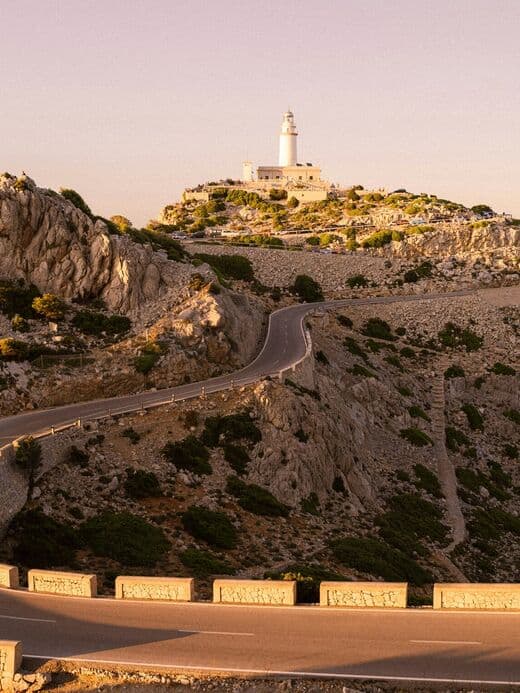
The northeast corner of the island is where families tend to gravitate, and for good reason. Alcudia has a beautiful medieval walled town, a long sandy beach, and the massive S'Albufera wetland nature reserve for birdwatching. Neighbouring Pollenca is more upscale, with a charming old town and the famous 365-step stairway to Calvary chapel. This area is also your base for reaching Formentor Lighthouse and the dramatic Es Colomer Viewpoint. Important note: the road to Cap de Formentor is restricted from May 15 to October 15. During this period, private cars are banned between 10am and 10pm, and you must take the shuttle bus (EUR 3 return). Outside these hours, or outside the restricted season, you can drive yourself. Hotels in Alcudia run EUR 90-160 per night - good value for what you get.
Deia
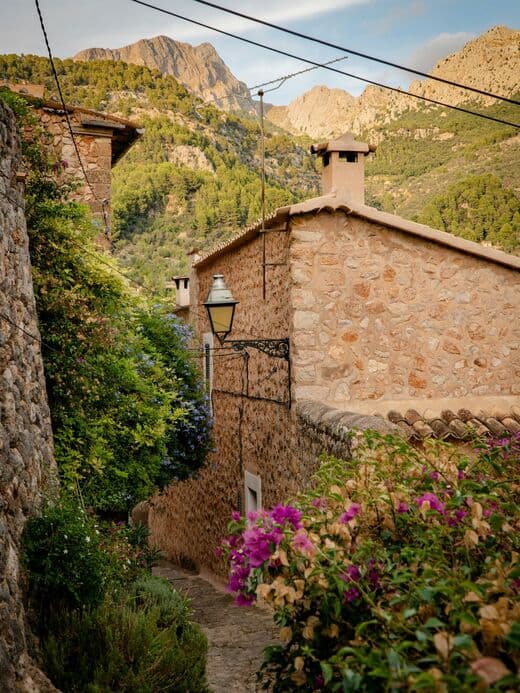
The village of Deia is perhaps the most famous on the island, thanks largely to Robert Graves, who lived here from 1929 until his death in 1985. It clings to a hillside above the sea, with stone houses draped in bougainvillea and one of the most photographed settings in the Mediterranean. The small rocky cove (Cala Deia) has a couple of restaurants right on the water. The problem with Deia: it is expensive. The legendary Hotel La Residencia charges EUR 500+ per night, and even modest accommodation runs EUR 150-250. It is also tiny - you can see everything in half a day. I recommend staying two or three nights maximum, or visiting as a day trip from Soller or Palma. But for sheer beauty, it is hard to beat.
Santanyi and the Southeast
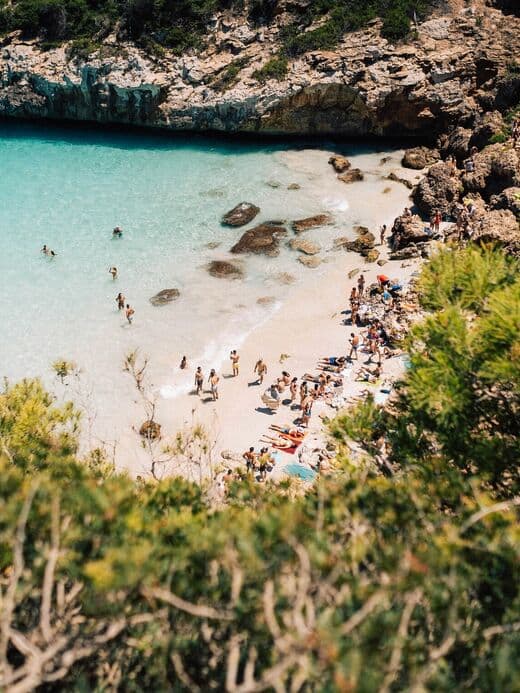
If beaches are your priority, the southeast coast is where you want to be. Santanyi is a honey-coloured stone town with a good Saturday market and access to some of the island's most stunning coves, including Calo des Moro and Cala Llombards. Es Trenc Beach, the longest undeveloped beach on the island, is also within easy reach. This area is quieter and more residential than the north, with fewer big hotels and more villa rentals. It is ideal for couples or groups with a car. Expect EUR 100-180 per night for a good rental property, less outside summer.
Best Time to Visit Mallorca
The short answer: May, June, September, and early October. These months give you warm swimming weather (22-26 degrees Celsius water temperature), manageable crowds, and lower prices than peak summer. But let me break it down properly, because each season has a genuinely different personality.
January-February is the secret season. The almond trees bloom across the central plain, creating landscapes that look almost Japanese. Temperatures hover around 12-15 degrees Celsius during the day - perfect for hiking, cycling, and exploring villages without a single other tourist in sight. Many coastal hotels close, but Palma is fully operational, and accommodation is at its cheapest (EUR 60-100 for a good hotel). This is when professional cycling teams train here, so the roads are full of lycra-clad riders.
March-April is wildflower season. The whole island turns green, the mountains are at their most dramatic, and Easter brings colourful processions through Palma's old town. Sea temperature is still too cold for most swimmers (around 15-17 degrees), but the weather is ideal for sightseeing and outdoor dining.
May-June is the sweet spot. Everything is open, the sea is warm enough for swimming, days are long, and summer crowds have not yet arrived. Prices are 20-30% lower than July-August. If I had to pick one month, it would be late May.
July-August is peak season. Temperatures hit 32-36 degrees, popular beaches are packed by 11am, and prices are at their highest. That said, if you stay in the mountains, explore early in the morning, and have a car to reach less accessible coves, it is still a fantastic time. Book restaurants at least a few days ahead - the popular ones fill up fast.
September-October might be even better than May-June. The sea is at its warmest (25-26 degrees from summer heating), summer crowds thin out rapidly after the first week of September, and the light takes on that golden Mediterranean quality that makes everything look like a painting. Late October can bring rain, but it is usually short-lived.
Key festivals worth planning around: Sant Sebastia (January 19-20, Palma's biggest street party with bonfires and barbecues), Semana Santa (Easter week processions), Nit de Sant Joan (June 23, midsummer bonfires on every beach), and the Deia International Music Festival (June-September, classical concerts in a village church - genuinely magical).
Booking tip: For July-August, book accommodation at least two to three months ahead, especially in Deia, Soller, and the southeast coast. For May-June or September, three to four weeks is usually fine. Car rental should always be booked in advance - prices double or triple if you wait until arrival in summer.
Mallorca Itinerary: 3 to 7 Days
I have designed this itinerary so you can follow the first three days for a short trip, or continue through all seven for a deeper experience. It assumes you have a rental car from Day 2 onward - public transport works but limits you significantly outside Palma.
Day 1: Palma de Mallorca
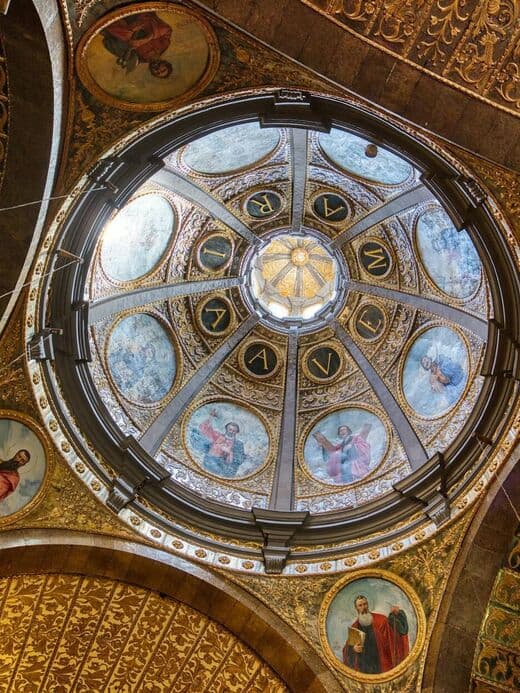
Morning (9:00-12:30). Start at Mercat de l'Olivar (Palma's main market, open from 7am) for breakfast - grab a coffee and an ensaimada at one of the bakery stalls. Then walk to the Cathedral of Mallorca (entry EUR 10, opens 10am Monday to Saturday). The interior is extraordinary - Gaudi worked on the renovation of the chapel, and Miquel Barcelo's ceramic mural in the Chapel of the Holy Sacrament is one of the most striking pieces of contemporary art in any European church. Allow an hour. From the cathedral, walk through the old town to the Almudaina Royal Palace (EUR 7 entry) and then wander the narrow streets towards Placa Major.
Lunch (13:00-14:30). La Boveda, a tapas institution near the Llotja (the old maritime exchange). It is not fancy, it is perpetually crowded, and the patatas bravas and grilled octopus are excellent. Budget EUR 20-25 per person with a drink. Get there right at 1pm or expect a wait.
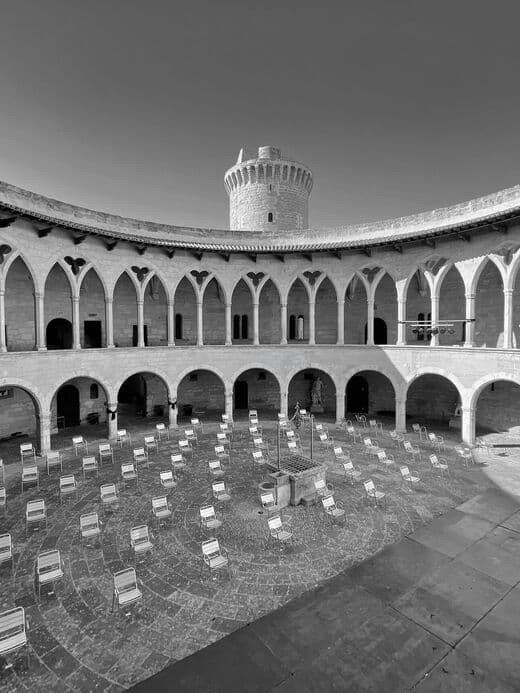
Afternoon (15:00-18:00). Walk to Bellver Castle - it takes about 25 minutes uphill from the city centre, or you can grab a taxi for EUR 8-10. The castle is unique: perfectly circular, 14th century, with panoramic views over Palma Bay from the roof terrace. Entry is EUR 4 (free on Sundays). Afterward, head to Santa Catalina for a wander through the neighbourhood and an aperitivo at any of the bars along Carrer de Sant Magines.
Dinner (20:30). Celler Sa Premsa on Placa del Bisbe Berenguer de Palou. This is a traditional Mallorcan celler - a cavernous wine-cellar restaurant with enormous wine barrels lining the walls. It has been open since 1958 and serves classic island dishes (tumbet, frit mallorqui, pork shoulder) at very fair prices: EUR 12-18 for mains. No reservations - queue early or queue long.
Day 2: Serra de Tramuntana and the West Coast
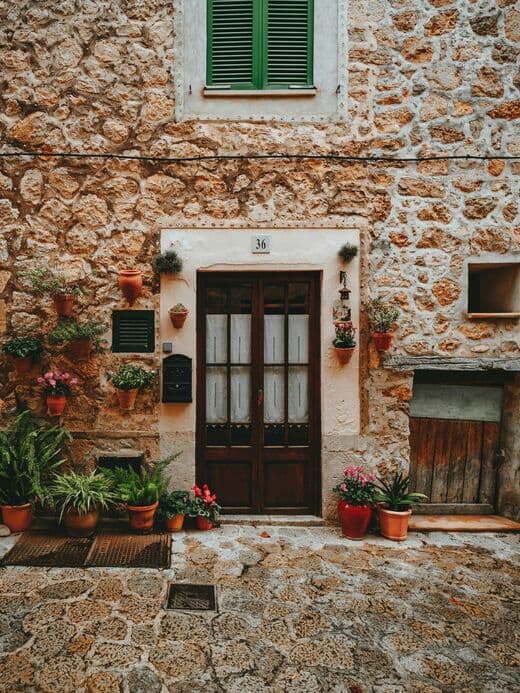
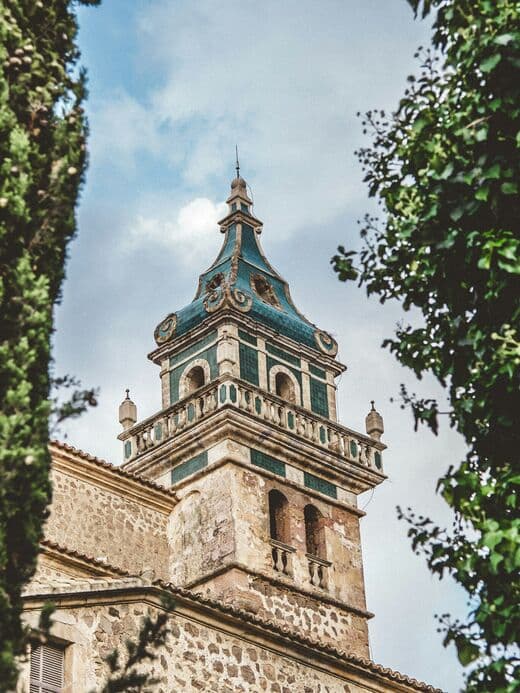
Morning (8:30-12:00). Pick up your rental car and drive to Valldemossa (20 minutes from Palma). Visit the Royal Charterhouse (EUR 10 entry), where Chopin and George Sand famously spent a miserable winter in 1838-39. The village itself is absurdly photogenic - cobblestone streets, green shutters, geranium-filled balconies. Buy a coca de patata (a sweet potato pastry unique to Valldemossa) from any bakery - it is a local specialty you will not find elsewhere.
Late morning (12:00-13:30). Drive the MA-10 coast road to Deia (15 minutes). This is one of the most beautiful roads in Europe - hairpin bends with views over terraced olive groves dropping to the sea. In Deia, park at the top of the village and walk down. If you have time, hike down to Cala Deia (20 minutes each way).
Lunch (13:30-15:00). Ca's Patro March in Cala Deia, built right into the rocks above the cove. The grilled fish and the arroz de bogavante (lobster rice, EUR 38 for two) are outstanding, and eating with your feet practically in the sea is an experience. Book ahead in summer - this place is no secret.
Afternoon (15:30-18:30). Continue on the MA-10 to Soller (20 minutes from Deia). Stop in Fornalutx on the way - consistently voted one of Spain's prettiest villages, and it lives up to the hype. In Soller, walk around the main square, visit the modernist church, and take the vintage tram down to Port de Soller (EUR 8 one way, runs every 30 minutes) for a swim in the bay.
Evening. Dinner in Soller. Luna 36 on Carrer de la Lluna does excellent modern Mallorcan cooking, EUR 25-35 per person.
Day 3: Formentor and the North
Morning (8:00-12:00). Drive to the Formentor Peninsula (about 1.5 hours from Soller via Pollenca). Stop first at Es Colomer Viewpoint - the most dramatic cliff viewpoint on the island, 200 metres above the sea with views of the rocky islet of El Colomer. Continue to Formentor Lighthouse at the tip of the peninsula. Remember: if visiting May 15 to October 15, you will need to take the shuttle bus from the designated parking area between 10am and 10pm. I recommend arriving before 10am to drive yourself and have the road almost empty.
Lunch (12:30-14:00). Pollenca old town. Eat at Il Giardino on Placa Major for good Italian-Mallorcan fusion, or grab a bocadillo and eat in the square watching the world go by.
Afternoon (14:30-17:30). Drive to Alcudia. Walk the medieval walls (free, and you can walk the full circuit on top of the walls in 20 minutes), then hit Alcudia Beach - a long, shallow, family-friendly stretch of sand. If you prefer something wilder, drive 15 minutes south to Coll Baix, a remote beach accessible via a 30-minute hike.
Day 4: Caves and the East Coast
Morning (9:00-12:00). Drive to Drach Caves near Porto Cristo (about 1 hour from Alcudia). Entry EUR 16, tours run hourly from 10am. The caves contain one of the largest underground lakes in Europe (Lake Martel, 177 metres long), and each tour ends with a short classical music concert performed by musicians on boats on the lake. It sounds cheesy. It is actually quite moving. Go early - by midday in summer, the queue can be 45 minutes.
Lunch (12:30-14:00). Porto Cristo is a pleasant harbour town. Eat at Roland on the waterfront - straightforward grilled fish and seafood paella, EUR 15-20 per person.
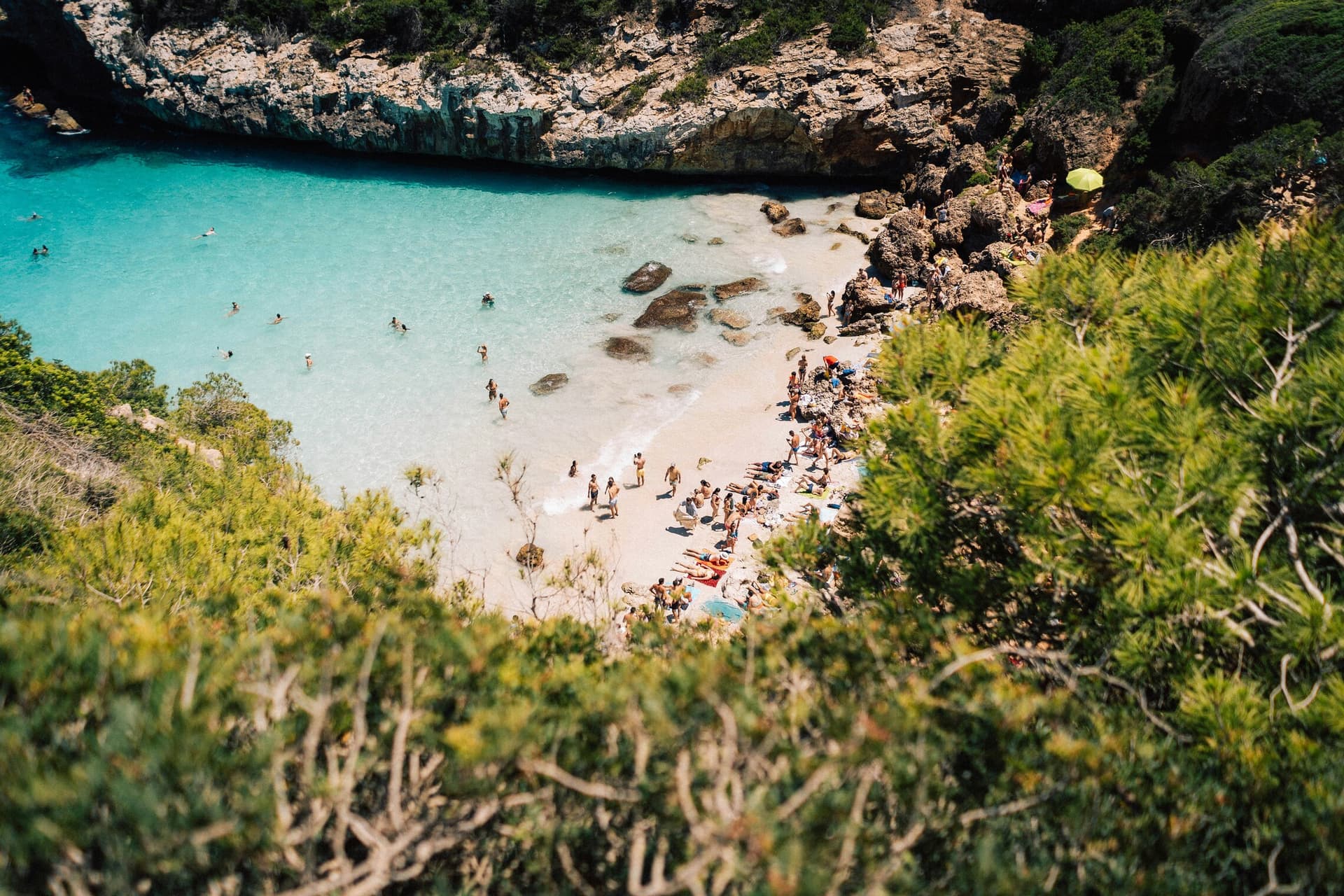
Afternoon (15:00-18:00). Drive south along the coast to the southeast beaches. Calo des Moro is the most Instagram-famous cove on the island - a tiny turquoise inlet between rocky cliffs. It is genuinely beautiful, but the access path is steep and the beach is very small (maybe 30 people fit comfortably). Arrive before 10am or after 4pm to avoid the worst crowds. If it is too busy, continue to Cala Llombards nearby, which is larger and nearly as pretty.
Day 5: Sa Calobra and Mountain Adventures
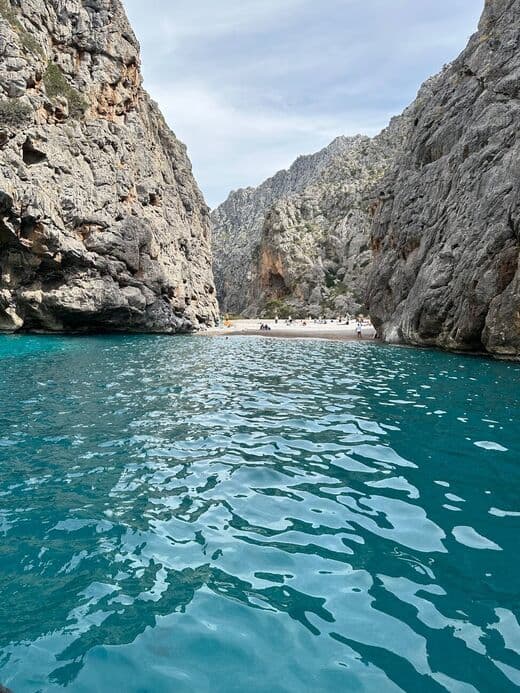
Morning (8:00-12:30). This is a big driving day, but the reward is the most spectacular landscape on the island. Drive to Sa Calobra and Torrent de Pareis. The road down to Sa Calobra is legendary - 12 kilometres of hairpin bends including one where the road loops over itself in a 270-degree turn called the Nus de Sa Corbata (the Tie Knot). At the bottom, walk through the 200-metre tunnel to reach the mouth of the Torrent de Pareis, where a massive gorge opens onto a pebble beach framed by 200-metre limestone cliffs. It is jaw-dropping. Go early - the car park fills by 10:30am in summer, and the afternoon sun makes the walk back up brutally hot.
Afternoon (13:30-17:00). Drive to Sanctuary of Lluc in the heart of the Tramuntana (30 minutes from Sa Calobra). This is Mallorca's most important spiritual site - a 13th-century monastery set in a valley surrounded by holm oak forests. The basilica houses the Black Madonna of Lluc, the island's patron statue. The grounds are peaceful and beautiful, with a botanical garden and several hiking trails starting from the car park. If you are here on a weekday at 11:15am, the Escolania de Lluc (one of Europe's oldest boys' choirs, founded in 1531) performs in the basilica.
Day 6: Art, Wine, and Relaxation
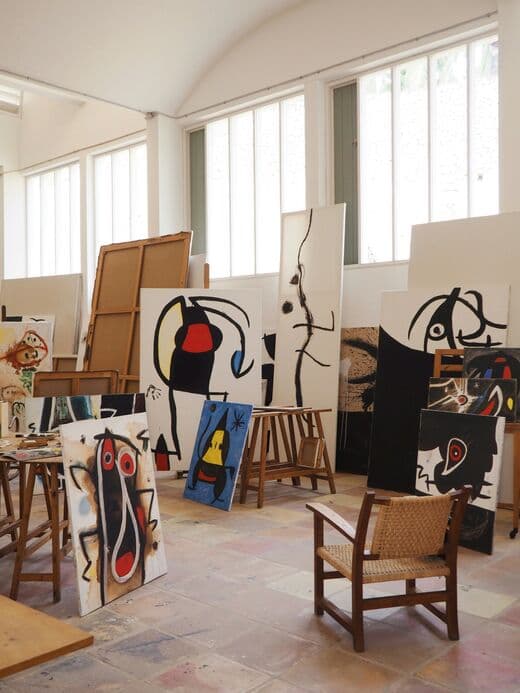
Morning (9:30-12:30). Visit the Joan Miro Foundation in Palma (EUR 10 entry). Miro lived and worked in Mallorca for the last 27 years of his life, and the museum includes his preserved studios designed by Josep Lluys Sert. The collection and the building itself are outstanding - one of the best small art museums in Spain. Allow 1.5 to 2 hours.
Afternoon (13:00-18:00). Head to the wine country around Binissalem and Santa Maria del Cami (20 minutes from Palma). Mallorca has a surprisingly good wine scene, with the Binissalem DO producing excellent reds from the indigenous Manto Negro grape. Visit Bodega Ribas (Spain's oldest winery, established 1711) or Jose L. Ferrer for tastings (EUR 12-20, book ahead). In Santa Maria, the Sunday market is one of the island's best - if your timing works.
Dinner (21:00). Tonight, splurge. DINS Santi Taura in Palma holds one Michelin star and serves a tasting menu (around EUR 95-120) built entirely around Mallorcan ingredients and traditional recipes reimagined with modern technique. The suckling pig and the almond desserts are remarkable. Book at least two weeks ahead. For a truly special occasion, Zaranda (two Michelin stars, located inside the Castell Son Claret hotel near Es Capdella) offers one of the best fine dining experiences in the Balearics, with tasting menus from EUR 165.
Day 7: Cabrera Island or Capdepera
Option A: Cabrera National Park. Take the boat from Colonia de Sant Jordi to Cabrera National Park, an uninhabited archipelago that is one of the best-preserved coastal ecosystems in the Mediterranean. Day trips depart at 9:00-9:30am and return by 5:00-5:30pm (EUR 45-55 per person, book at excursionscabrera.es). The water clarity is extraordinary - snorkelling here is the best in the Balearics. Bring your own lunch, sunscreen, and plenty of water. There is nothing on the island except a small castle, a museum, and wild nature.
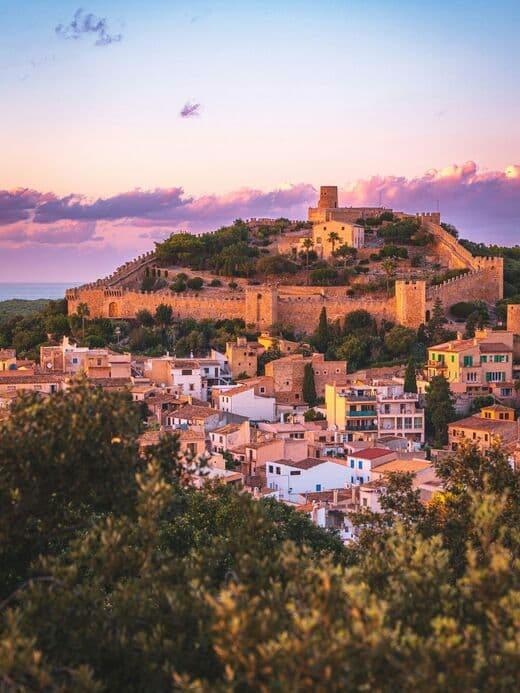
Option B: Capdepera and the Northeast. Visit Capdepera Castle (EUR 3 entry), a beautifully restored 14th-century fortress overlooking the town and the coast toward Menorca. Then drive to Cala Mesquida, a large unspoilt beach backed by dunes and pine forest. In the afternoon, explore the charming town of Arta, with its hilltop sanctuary and Thursday market.
Where to Eat: Restaurants and Cafes
Mallorca's food scene has exploded in the last decade. The island now has more Michelin stars per capita than almost anywhere in Spain, but the real magic is in the everyday eating - the markets, the cellers, the beachside chiringuitos. Here is where to find the best of each.
Markets
Mercat de l'Olivar (Palma, open Monday to Saturday 7am-2:30pm) is the island's biggest market and the best place to eat breakfast or an early lunch. The seafood section is spectacular - you can buy fish and have it cooked at the market's own restaurant counter. The Peruvian ceviche stall is an unexpected highlight. Santa Catalina Market (Palma, same hours) is smaller, trendier, and has better prepared food stalls - try the oysters and cava at the fish counter. The Soller Saturday Market (8am-1:30pm) fills the town's narrow streets with local produce, olives, honey, flowers, and handmade textiles. Get there before 10am for the best selection.
Traditional Mallorcan (Cellers)
Cellers are the soul of Mallorcan dining - traditional restaurants set in old wine cellars, with huge oak barrels, tiled floors, and portions that could feed a family of four. Celler Sa Premsa (Palma) is the most famous and still delivers: roast pork shoulder, tumbet, and house wine from the barrel, EUR 15-20 per person. Celler Can Amer (Inca) is a pilgrimage-worthy lunch spot in the centre of the island, known for its suckling pig and snail dishes. Go on Thursday, when the Inca market is in full swing. Celler Can Ripoll (Inca) is its rival across the street - locals argue fiercely about which is better. Try both.
Mid-Range Favourites
La Boveda (Palma, near the Llotja) - the tapas here are consistent and honest. Anchovy-stuffed peppers, Iberian ham, grilled prawns. Always busy, always good. EUR 20-30 per person. Ca'n Pintxo (Palma) - pintxos (Basque-style small bites on bread) in a lively atmosphere, perfect for a casual dinner. Ca's Patro March (Cala Deia) - the fish restaurant built into the cliffs above Cala Deia, mentioned in the itinerary above. The setting alone is worth the trip, but the food holds up too. EUR 35-50 per person. Book ahead.
Fine Dining
DINS Santi Taura (Palma, 1 Michelin star) - Chef Santi Taura is essentially the guardian of traditional Mallorcan cuisine, but presented with modern precision. The tasting menu (EUR 95-120) is a journey through the island's culinary heritage. Zaranda (Es Capdella, 2 Michelin stars) - Fernando Arellano's restaurant inside a luxury hotel is the pinnacle of fine dining on the island. Expect to pay EUR 165+ for the tasting menu, plus wine pairing. Worth every cent for a celebration.
Best Cafes
Arabay Coffee (Palma, two locations) - the best specialty coffee on the island, hands down. Single-origin pour-overs, excellent pastries. La Molienda (Palma, Santa Catalina) - another strong contender for best coffee, with a lovely courtyard. Cappuccino Grand Cafe (Palma, Paseo Maritimo) - yes, it is a chain (Balearic Islands only), but the waterfront terrace and the atmosphere make it perfect for a long, lazy afternoon coffee. EUR 4-5 for a cappuccino.
What to Try: Mallorca Food
Mallorcan cuisine is hearty, pork-heavy, and deeply rooted in the peasant cooking traditions of the Mediterranean. It shares DNA with Catalan food but has its own distinct identity. Here are the dishes and products you should not leave without trying.
Ensaimada. The island's signature pastry - a coiled, lard-based spiral dusted with powdered sugar. The basic version is light and flaky; fancier versions are filled with pumpkin jam (cabello de angel), cream, or sobrassada. The best bakery on the island is Forn Fondo in Palma (open since 1911). An ensaimada costs EUR 2-4 depending on size and filling. You will see giant ones at the airport in hexagonal boxes - they make genuinely good souvenirs.
Sobrassada. A spreadable cured sausage made from pork, paprika, and salt, air-dried for months. It sounds alarming if you have not encountered it before, but the flavour is extraordinary - smoky, slightly sweet, intensely savoury. Eat it spread on bread, melted on toast with honey (sobrassada con miel - addictive), or cooked into pasta. Buy some from the market to take home; it keeps for months.
Pa amb oli. Mallorca's answer to Italian bruschetta - bread rubbed with ripe tomato, drizzled with olive oil, and topped with ham, cheese, or whatever is on hand. It sounds simple because it is. The quality of the ingredients makes it extraordinary. You will find it on every menu, and it is the perfect light meal on a hot day. EUR 6-10 in most restaurants.
Tumbet. A layered vegetable dish of fried potatoes, aubergines, peppers, and tomato sauce, sometimes topped with an egg or served alongside meat or fish. Think of it as Mallorca's ratatouille. It appears as a side dish at cellers, but some places serve it as a main course. Completely addictive.
Frit mallorqui. Offal lovers, this is your dish. A fry-up of liver, kidney, and other organ meats with potatoes, peppers, fennel, and spring onions. It is rich, deeply flavourful, and not for the faint-hearted. Traditional versions use lamb or pork offal; some modern restaurants make a fish version. It is the most polarising dish on the island - most people either love it or cannot get past the concept.
Arros brut. Literally 'dirty rice' - a soupy, saffron-coloured rice dish loaded with pork, chicken, rabbit, mushrooms, and vegetables. It is Mallorca's version of a hearty stew, served mainly in autumn and winter. The 'dirty' refers to the murky colour from the mix of meats and spices. It is comfort food of the highest order.
Coca de trampo. A flatbread topped with roasted peppers, onions, and tomatoes - essentially a Mallorcan pizza without cheese. Simple, delicious, and perfect for picnics. Buy slices from bakeries for EUR 2-3.
Almond ice cream (gelat d'ametlla). Mallorca has been growing almonds for centuries, and the almond ice cream here is the best you will ever taste. Richer and more intensely flavoured than anything made from extract. Get it at Can Joan de S'Aigo in Palma (open since 1700 - not a typo), which also serves excellent hot chocolate and ensaimadas.
Mallorcan wines. The Binissalem DO produces serious reds from the Manto Negro grape - full-bodied, earthy, perfect with local pork dishes. Look for Ribas, Jose L. Ferrer, and Macia Batle. Whites from the Prensal Blanc grape are crisp and refreshing. A bottle in a restaurant costs EUR 15-30; at a bodega shop, EUR 8-18. The wine scene is still under the radar compared to mainland Spain, which means quality is high and prices are reasonable.
Mallorca Secrets: Local Tips
After many visits and conversations with residents, here are the things that most guidebooks do not tell you.
- The real beach secret is timing, not location. Even the most crowded beaches (Es Trenc, Calo des Moro, Formentor) are nearly empty before 9:30am and after 5:30pm. The light is better for photos at these times too. Bring a headlamp if you are leaving a remote beach at sunset - some access paths are tricky in the dark.
- ACIRE zones in Palma will get you fined. The old town has restricted traffic zones called ACIRE (Area de Circulacio Restringida). If you drive through one without authorisation, cameras will photograph your plate and you will receive a fine of EUR 90-200 weeks later, forwarded to your rental company who will add an admin fee. Watch for the signs - white circles with red borders - and do not enter. Park outside the old town and walk.
- Jellyfish are increasing. The summers of 2024 and 2025 saw significantly more jellyfish along the east coast than in previous years, likely due to rising sea temperatures. Pelagia noctiluca (mauve stinger) is the most common species. Lifeguarded beaches fly purple flags when jellyfish are present. Pack a small bottle of vinegar in your beach bag - it helps neutralise stings far better than fresh water.
- Learn three words of Catalan, not Spanish. Mallorqui (the local variant of Catalan) is the first language here, and locals genuinely appreciate when visitors make an effort. 'Bon dia' (good morning), 'gracies' (thank you), and 'adeu' (goodbye) will get you smiles everywhere. Street signs and place names are in Catalan, not Castilian Spanish.
- Sunday is dead. Outside Palma and the tourist resorts, almost everything closes on Sunday. Supermarkets, petrol stations, small restaurants - all shut. Plan your grocery shopping for Saturday. Palma itself is fine on Sundays, and some tourist-oriented restaurants in resort areas stay open, but do not count on finding anything in villages.
- The Palma-Soller train is romantic but slow. The famous wooden train (Tren de Soller) costs EUR 25 one way and takes about an hour. It is a lovely experience - vintage carriages, mountain tunnels, orange grove scenery - but it is genuinely not practical as transport. If you have a car, drive to Soller (30 minutes through the tunnel, EUR 3.90 toll) and take the train one way as an experience. Do not rely on it to get places on time.
- Thursday is Inca day. The town of Inca (centre of the island, 30 minutes from Palma) holds its weekly market on Thursdays, and it is by far the best general market on the island. Leather goods, shoes (Inca is the leather capital of Mallorca), produce, clothes, and household items spread through the entire town centre. Combine it with lunch at one of the famous cellers.
- Rent a boat without a licence. In many ports (Port de Soller, Port d'Alcudia, Cala d'Or), you can rent small motorboats (up to 15HP, no licence required) for EUR 120-180 per half day. This lets you reach hidden coves that are impossible or exhausting to reach on foot. Bring your own snorkelling gear, water, and a picnic.
- The interior is spectacularly empty. Almost all tourists stick to the coast. Drive 20 minutes inland and you are in a different world - rolling farmland, windmills, small stone towns where you might be the only non-local in the cafe. Sineu (Wednesday market), Petra (birthplace of Father Junipero Serra), and Alaro (hike to the castle) are all worth a half-day.
- Sunset spots the locals use. Forget the crowded Formentor sunset viewing. Head to Cap Blanc lighthouse (south coast, near Llucmajor) or the grounds of Castell de Bellver in Palma for stunning sunsets with a fraction of the people. On the west coast, the terrace bar at Sa Foradada (accessible via a short hike near Deia) has one of the best sunset views in the Mediterranean.
- The Mallorca Pledge is real. Since 2025, the island has been asking tourists to commit to responsible behaviour - respecting nature, reducing waste, supporting local businesses, keeping noise down. It is not legally binding, but it reflects genuine local frustration with certain tourist behaviours. Take it seriously. Do not blast music on beaches, do not trample posidonia seagrass, and do not enter private fincas for photos, no matter how pretty the gate looks.
Transport and Connectivity
Getting There
Palma de Mallorca Airport (PMI) is the third busiest in Spain. Direct flights operate from most European cities, and in summer there are direct routes from New York (seasonal on various carriers), several UK airports (London, Manchester, Birmingham, Edinburgh, Bristol - mostly budget airlines like Ryanair, easyJet, and Jet2), and Toronto (seasonal). From the US east coast, expect 7-8 hours direct; from the UK, about 2.5 hours. Budget airlines make flights from London absurdly cheap - EUR 30-60 return if you book early and fly midweek.
Airport to City
The airport is only 8 km from central Palma. The EMT Bus 1 runs every 12-15 minutes to the city centre (Placa d'Espanya) and costs just EUR 5. Journey time is 20-30 minutes. Taxis are metered: EUR 20-30 to central Palma, EUR 25-35 to the port area. There is no Uber in Mallorca. Use the FreeNow app (formerly MyTaxi) to book taxis - it works well and shows the estimated fare upfront.
Getting Around the Island
Rental car. This is by far the best way to explore Mallorca. The island is manageable - you can drive from Palma to Alcudia (northeast) in about 50 minutes, or to Santanyi (southeast) in 45 minutes. Book through comparison sites (DiscoverCars, Rental Cars) rather than airport desks. Prices range from EUR 25-40 per day in shoulder season to EUR 45-70 in July-August. Choose a small car - the mountain roads are narrow and the old town streets even narrower. International driving permits are not technically required for US/UK/Canadian/Australian licences, but carrying one avoids confusion. Fuel costs about EUR 1.55-1.70 per litre (roughly USD 6.50-7.00 per gallon). Most cars are manual transmission; request automatic when booking if needed, but expect to pay EUR 10-15 more per day.
TIB buses. The Transports de les Illes Balears (TIB) network covers most of the island and is surprisingly good. Key routes: L210 (Palma to Soller), L340 (Palma to Alcudia via Inca), L501 (Palma to Santanyi via Llucmajor). Single fares are EUR 2-8 depending on distance. Buy a rechargeable T-Mobilitat card for a 50% discount. Buses run less frequently on weekends and almost not at all on Sundays outside the Palma urban area. Timetables at tib.org.
Palma-Soller Train. The historic narrow-gauge railway (opened 1912) runs five times daily from Palma's Placa d'Espanya station. EUR 25 one way, EUR 35 return. The journey takes about an hour through the Tramuntana mountains. It is a tourist experience rather than practical transport, but a lovely one. The connecting tram from Soller to Port de Soller is EUR 8 one way.
Taxis. Widely available in Palma and resort areas, less so in villages. Metered rates: approximately EUR 1.10 per kilometre plus EUR 3.50 start fee. A taxi from Palma to Soller runs about EUR 45-55. Again, use the FreeNow app rather than trying to hail one, especially outside Palma.
Connectivity
eSIM is the way to go. If your phone supports eSIM (most phones from 2020 onward do), buy a data plan from Airalo or Holafly before you leave home. A 5GB Europe plan from Airalo costs about EUR 13 and lasts 30 days - more than enough for a week of maps, translation, and restaurant lookups. Holafly offers unlimited data plans from EUR 19 for 5 days. Both install in minutes via an app. This is far cheaper and more convenient than buying a local SIM, and you keep your home number for calls and messages over WiFi.
WiFi is generally excellent in hotels, cafes, and restaurants throughout the island. Even rural fincas usually have decent broadband. The airport has free WiFi (time-limited but usable).
Essential apps: FreeNow (taxis), Google Maps (works well for driving and walking, including mountain roads), TIB (bus timetables), Google Translate (the camera function is brilliant for Catalan menus), and Windy (wind and wave forecasts - useful for beach planning and knowing when jellyfish might drift in).
Who Is Mallorca For: Summary
Mallorca works for almost everyone, which is both its greatest strength and the reason it gets crowded. For couples: Deia, Valldemossa, and the southeast coast coves are effortlessly romantic. For families: Alcudia, Port de Pollenca, and Cala Millor have gentle beaches and excellent infrastructure. For solo travellers: Palma has enough culture, food, and nightlife to fill a week. For active travellers: the Serra de Tramuntana offers world-class hiking and cycling. For foodies: the restaurant scene has never been better. The one group I would steer elsewhere is anyone looking for a non-stop party island - Mallorca has nightlife, especially in Magaluf and El Arenal, but if that is the primary goal, Ibiza does it better. For everything else, Mallorca is genuinely one of the best islands in the Mediterranean, and a week there will leave you planning your return trip before you even reach the airport.