Kemer
Kemer 2026: What You Need to Know Before You Go
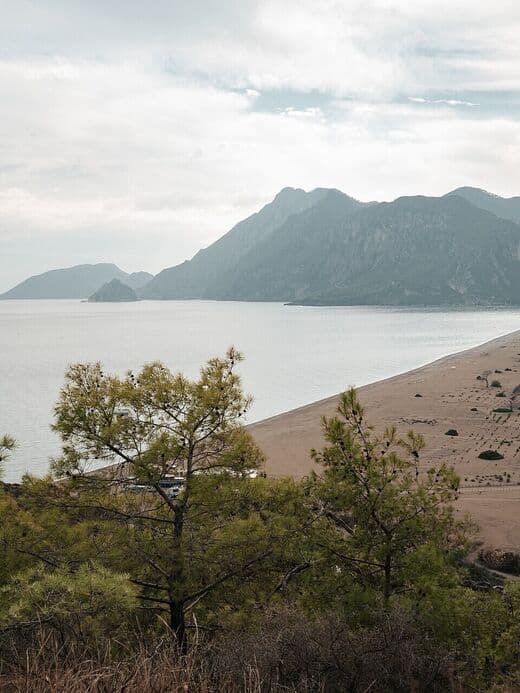
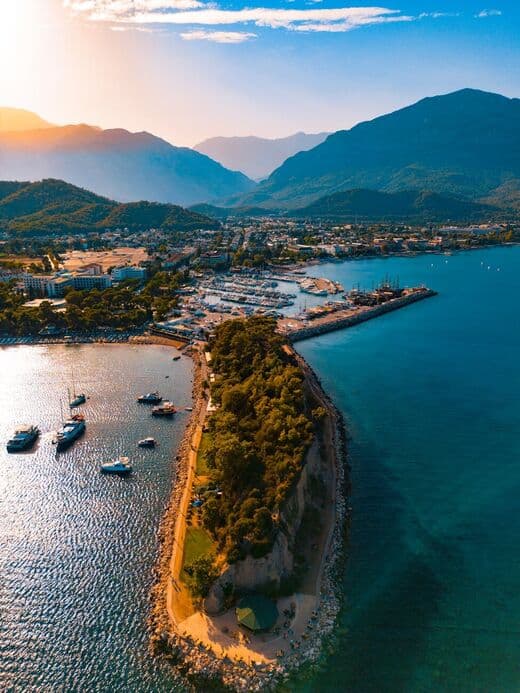
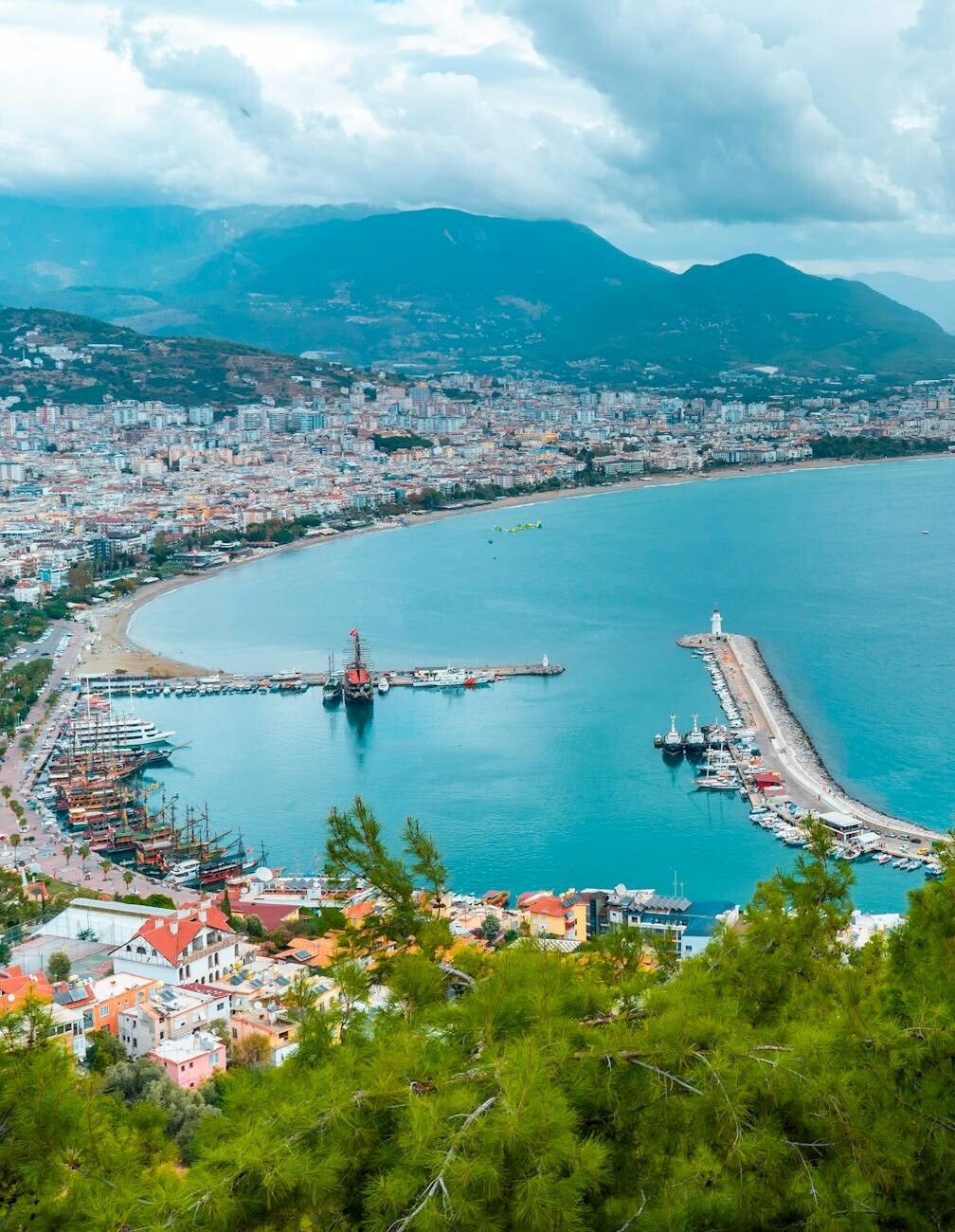
Kemer is not Antalya's flashy younger sibling or some generic all-inclusive resort town. It is its own thing entirely - a narrow coastal strip wedged between the western Taurus Mountains and the Mediterranean, about 40 kilometers southwest of Antalya. The mountains here do not just form a backdrop; they literally shape everything about the place, from the microclimate (cooler summers, less wind) to the geography (pebbly coves instead of endless sand flats) to the vibe (compact, walkable, surrounded by pine forest rather than concrete sprawl).
The town itself has a permanent population of around 25,000, which swells dramatically from May through October. Unlike Alanya or Side, Kemer never tried to become a city. The center is small enough to walk end-to-end in 20 minutes, and most of the resort development happened in satellite villages strung along the coast - Beldibi, Goynuk, Kiris, Camyuva, Tekirova, and the backpacker enclave of Cirali/Olympos at the southern end. Each of these has a distinct personality, and picking the right one matters more than picking the right hotel.
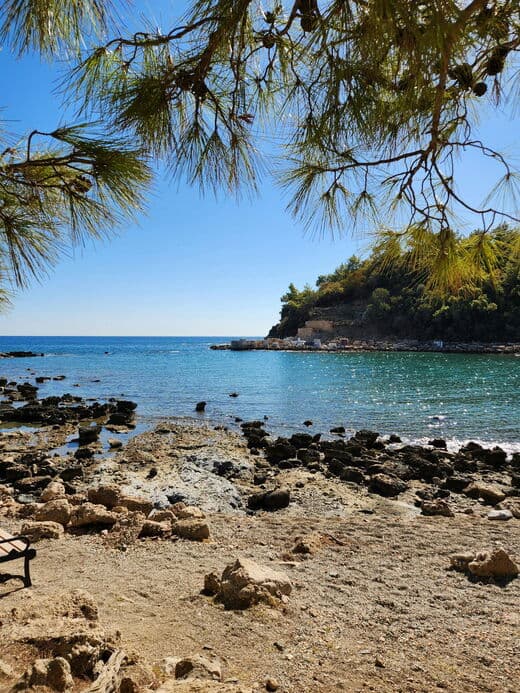
What catches most first-time visitors off guard is the water. The Mediterranean along this stretch is genuinely remarkable - visibility of 20-30 meters on calm days, color ranging from turquoise in the shallows to deep cobalt offshore. The trade-off is that most beaches are pebble or coarse gravel rather than powdery sand. If you absolutely need sand between your toes, you will find it, but it requires some effort. If you can make peace with pebbles (and a pair of water shoes), you are in for a treat.
Getting here is straightforward: Antalya Airport (AYT) is the gateway, with direct flights from London, Manchester, most European capitals, and seasonal charters from the US. From the airport, the transfer to Kemer takes 45-60 minutes depending on your specific hotel. Pre-booked transfers run $25-40 per person; a private taxi will cost $50-70 for the car. The public HAVABUS airport shuttle goes to Antalya city center, from where you can catch a local dolmus (minibus) to Kemer for about $3-4, but this adds significant time and hassle with luggage.
Kemer Neighborhoods: Where to Stay
This is the single most important decision you will make for your Kemer trip, and most travel sites get it completely wrong by treating the whole region as one destination. The seven main areas along the Kemer coast are fundamentally different experiences. Here is what each one actually feels like on the ground.
Kemer Center
The actual town of Kemer. This is where you will find the bus station, the Tuesday market (pazar), banks, pharmacies, the marina, and the closest thing to a nightlife scene. The main pedestrian boulevard runs parallel to the coast, lined with restaurants, shops, and the usual tourist tat. Moonlight Beach sits at the northern end - the town's pride, a crescent of imported sand backed by Moonlight Park with its cafes and playground. Kemer Main Beach stretches south from the marina, pebbly but well-maintained with sunbed rentals ($5-8/day for a pair with umbrella). Kemer Center is the best base if you want independence from your hotel - the ability to walk to restaurants, shops, and the dolmus station without relying on shuttle buses. Mid-range hotels here run $60-120/night for a double in high season. The downside: it is the least scenic area, and the beach is not the best on the coast.
Beldibi
Beldibi is the first settlement you hit coming from Antalya, about 15 km north of Kemer center. It is a long, narrow strip of large resort hotels pressed between the highway and the sea, backed by dramatic cliff faces. The beach is narrow and pebbly-to-rocky, and most hotels have built concrete platforms extending into the water for sunbathing. Beldibi's main advantage is proximity to Antalya - you can reach the city's malls, aquariums, and old town in 25-30 minutes. The main disadvantage is that there is essentially nothing outside the hotels. No real town center, very few independent restaurants. If you are doing all-inclusive and plan to mostly stay on the resort property with occasional excursions, Beldibi works fine. If you want to explore on foot, look elsewhere. Hotels here are often the cheapest on the Kemer coast - solid 4-star all-inclusive properties start around $80-100/night per person.
Goynuk
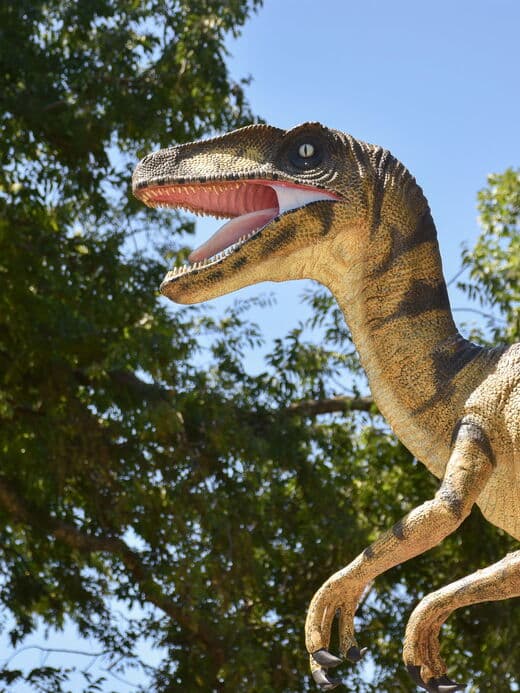
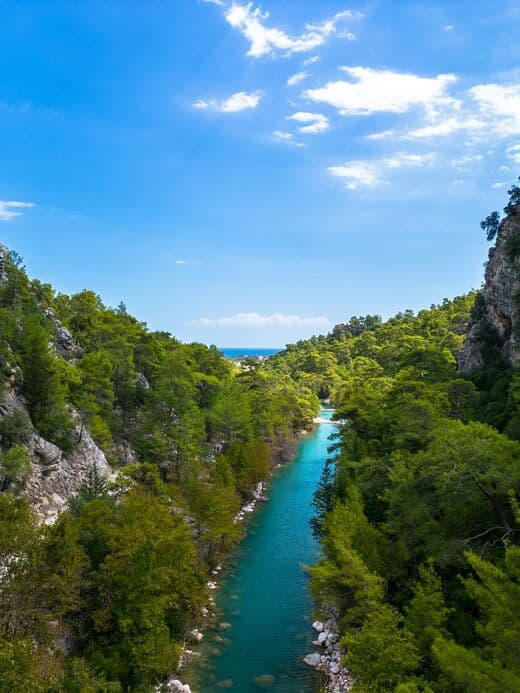
Sitting between Beldibi and Kemer center, Goynuk is where you will find some of the coast's largest and most elaborate resort complexes - the kind with multiple pools, private beaches, water slides, and dedicated kids' clubs. The big draw beyond the resorts is Goynuk Canyon, a spectacular gorge with turquoise pools that you can hike, swim, and zipline through. The canyon alone justifies a stay here if you are into outdoor activities. Dinopark Goynuk is a surprisingly decent dinosaur-themed amusement park that keeps kids entertained for a solid half-day. The village itself is tiny - a handful of shops and restaurants along the main road. Like Beldibi, you are largely dependent on your resort for evening entertainment. Best for: families with young children who want a top-tier resort experience with easy access to nature activities.
Kiris
A small, quiet bay between Kemer center and Camyuva. Kiris has a handful of large hotels, a pretty but narrow pebble beach, and almost nothing else. There is no village center to speak of. The setting is lovely - green hills on three sides, clear water - but you will need to taxi or dolmus to Kemer center (10 minutes, about $5 by taxi) for anything beyond your hotel's offerings. Kiris works well for couples who want a quieter, more intimate setting than Kemer center but do not want to be as far out as Tekirova or Cirali. Several of the hotels here are positioned in the mid-to-upper range, with rates of $100-180/night for a double with half-board.
Camyuva
Immediately south of Kiris, Camyuva (pronounced chahm-yoo-VAH) has a longer beach, a slightly more developed village with a few restaurants and minimarts, and a more relaxed feel than Kemer center. The beach here is a mix of pebble and coarse sand - not the finest, but better underfoot than Beldibi. Camyuva attracts a slightly older, quieter crowd. The main negative is that the beach can get seaweed buildup in late summer, which some hotels handle better than others. If you are driving, Camyuva is well-positioned as a base for exploring both north (Kemer center, Goynuk Canyon) and south (Phaselis, Tekirova, Chimaera). Expect to pay $70-130/night for a decent double room.
Tekirova
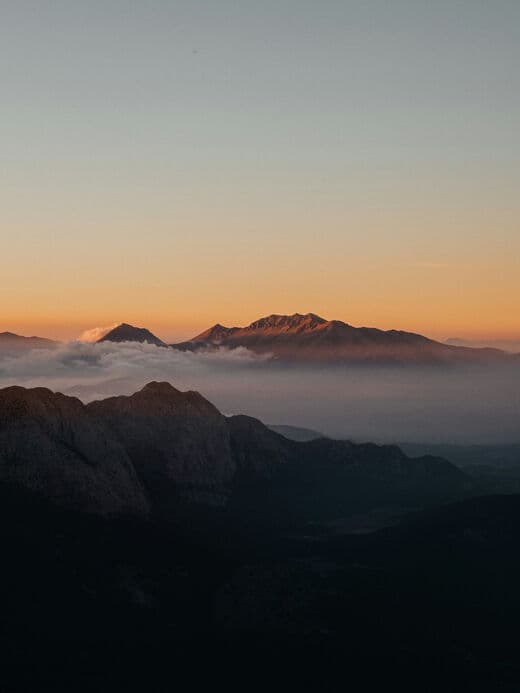
This is where the coast starts getting properly beautiful. Tekirova sits at the foot of Tahtali Mountain (Olympos peak, 2,365 meters - the highest point directly above the Mediterranean coast), and the combination of snow-capped mountain and turquoise sea is genuinely stunning for much of the year. Tekirova Beach is one of the best on the coast - fine pebble that is almost sandy in places, and the water is crystal clear. The ancient city of Phaselis is a 10-minute drive south, and you can hike there along the Lycian Way. Tekirova has a real village with restaurants, shops, and a weekly market. It is 15 km from Kemer center, which means a $12-15 taxi ride. The hotels here tend toward the higher end, with several luxury properties. This is the best base for hikers, nature lovers, and anyone who prioritizes beach quality. Rates: $90-200/night depending on property class.
Cirali and Olympos
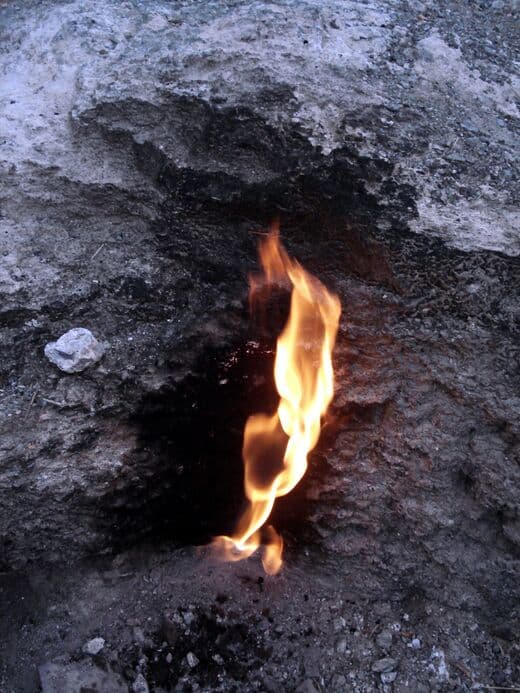
Thirty kilometers south of Kemer center, at the end of a winding mountain road, Cirali and Olympos are a different world entirely. No high-rise hotels. No all-inclusive bracelets. Instead, you get a 3-kilometer stretch of sand-and-pebble beach backed by small pensions, boutique guesthouses, and treehouse camps (Olympos was famous for these in the backpacker era). The beach is a protected Caretta caretta (loggerhead turtle) nesting site, so development is tightly restricted - no sunbeds after sunset, limited lighting, no construction near the shore. Olympos Beach at the southern end leads directly into the ruins of the ancient Lycian city of Olympos, scattered through an atmospheric valley. The Chimaera eternal flames (Yanartas) are a 30-minute hike uphill from Cirali - natural gas vents that have been burning for millennia, best seen at dusk. Cirali/Olympos is for travelers, not tourists. No nightlife, limited restaurant options (though several are excellent), and you will need your own wheels or a willingness to hitchhike to get anywhere else. Budget: $40-80/night for a pension double with breakfast.
Best Time to Visit Kemer
The short answer: mid-May to mid-June or September to mid-October. But the longer answer matters, because each season in Kemer delivers a different trip.
May to mid-June is arguably the sweet spot. Air temperatures hover around 25-30C (77-86F), the sea has warmed to a swimmable 22-24C (72-75F), and everything is open but not yet at peak capacity. The mountains behind Kemer are still green, wildflowers carpet the hillsides, and you can visit Phaselis or hike Goynuk Canyon without melting. Hotel prices are 20-30% below peak. The only downside: the odd rainy day is still possible in early May.
Late June through August is high season. Temperatures regularly hit 35-38C (95-100F) and the humidity, while lower than Antalya thanks to the mountain breeze, is still significant. The sea is bathwater-warm at 27-29C (81-84F). Every hotel is full, every beach is packed, and restaurant prices are at their highest. If you are doing an all-inclusive resort with pools and air conditioning, this is fine. If you plan to sightsee actively, you will be miserable by noon. Evening temperatures remain pleasant (25-28C), making this the best time for after-dark activities - the Kemer marina promenade comes alive, and the sunset from Tahtali Mountain cable car is at its most dramatic.
September to mid-October is the other golden window. The crushing heat breaks, temperatures drop to 28-32C (82-90F), and the sea is at its warmest - 28-29C (82-84F) in early September, still 24-25C (75-77F) in October. Crowds thin noticeably after European schools resume. This is the best time for hiking the Lycian Way, visiting Chimaera/Yanartas (the flames are more visible in cooler air), and exploring ruins without sunstroke. Prices drop 15-25% from peak.
Late October through April is off-season. Most resort hotels close. Kemer center and Tekirova retain some year-round life, but Beldibi, Goynuk, and Kiris essentially shut down. The weather is mild by northern European standards (10-18C / 50-64F in winter) but rainy, with 15-20 wet days per month from December to February. The upside: Phaselis and Olympos in winter rain, with no one else around, is hauntingly beautiful. And hotel prices bottom out - $30-50/night for properties that charge triple in summer.
Kemer Itinerary: 3 to 7 Days
3-Day Essential Kemer
Day 1: Kemer Center and the Coast
- 9:00 AM - Start at Moonlight Beach for a morning swim while it is still quiet. The water here is calmest before 10 AM.
- 11:00 AM - Walk through Moonlight Park and along the marina promenade. Stop for Turkish breakfast (kahvalti) at one of the marina cafes - expect to pay $8-12 for a full spread with eggs, cheese, olives, honey, and unlimited tea.
- 1:00 PM - Browse the Kemer town center. If it is Tuesday, the weekly pazar (market) is on - great for spices, dried fruits, cheap cotton towels, and fake designer goods you did not know you needed.
- 3:00 PM - Take a dolmus or taxi south to Kemer Main Beach for afternoon swimming. Rent a sunbed pair ($6-8) and settle in.
- 7:00 PM - Dinner in Kemer center. Try a family-run lokanta (casual eatery) rather than the tourist-front restaurants on the main strip - better food, half the price.
Day 2: Phaselis and Tahtali Mountain
- 8:30 AM - Taxi or dolmus to Phaselis Ancient City (entry about $4). Get there early - by 11 AM the tour buses arrive and it gets crowded. Walk all three harbors and swim off the main beach, which is one of the best on the coast.
- 12:00 PM - From Phaselis, continue south to the Tahtali Mountain cable car base station (Olympos Teleferik). The ride to 2,365 meters takes 10 minutes and costs about $30 round-trip. On clear days you can see the curve of the coastline from Antalya to Finike. Bring a jacket - it is 15-20 degrees cooler at the summit even in summer.
- 3:00 PM - Come back down and spend the afternoon at Tekirova Beach. The water here is some of the clearest on the coast.
- 7:30 PM - Dinner in Tekirova village. Several excellent fish restaurants here with fresh catch priced by weight - expect $15-25 per person for a full seafood meal with sides and drinks.
Day 3: Goynuk Canyon and Yoruk Park
- 9:00 AM - Head to Goynuk Canyon. The full canyon experience (hiking, swimming through rock pools, optional zipline) takes 3-4 hours. Entry is about $5, and you can rent wetsuits and helmets for another $10-15 if you want to go deep into the canyon where the water is cold and the walls narrow. This is genuinely spectacular - one of the best natural experiences on the Turkish Mediterranean.
- 1:30 PM - Lunch at one of the restaurants near the canyon entrance. Simple grilled meat and salads, $8-12.
- 3:30 PM - Visit Yoruk Park, a small open-air ethnographic museum on a hillside overlooking Kemer marina. It recreates the traditional lifestyle of the Yoruk nomadic people with felt tents, weaving demonstrations, and traditional food. Takes about an hour. Entry is minimal (about $2).
- 5:00 PM - Final swim at Moonlight Beach, then sunset drinks at the marina.
5-Day Extended Itinerary
Add these two days to the 3-day plan:
Day 4: Cirali, Olympos, and Chimaera Flames
- 9:00 AM - Rent a car or arrange a taxi ($30-40 one way) to Cirali. The drive from Kemer takes 35-40 minutes along a scenic mountain road.
- 10:00 AM - Walk Olympos Beach and explore the Olympos ancient city ruins in the valley. Allow 2 hours for the ruins - they are spread through dense vegetation along a stream bed, atmospheric and largely unexcavated.
- 1:00 PM - Lunch in Cirali at one of the beachfront gozleme (stuffed flatbread) stalls. Fresh, cheap ($3-5), and delicious.
- 2:00 PM - Swim at Cirali beach. The water is warmer here than further north, and the beach has a wilder, more natural feel.
- 5:30 PM - Start the hike up to Chimaera/Yanartas. The trailhead is at the north end of Cirali, and the walk up takes 25-35 minutes on a well-marked but steep path. Time it to arrive at dusk - the eternal flames (natural gas vents that have been burning for at least 2,500 years) are far more impressive in dim light. Bring a flashlight for the walk down. Entry is about $3.
- 8:00 PM - Dinner in Cirali. The village has several excellent small restaurants specializing in slow-cooked Ottoman dishes and fresh seafood.
Day 5: Boat Trip and Kemer Nightlife
- 9:30 AM - Join a day boat trip from Kemer marina. These run daily from May to October, typically visiting 3-4 swimming stops in secluded bays along the coast, often including Phaselis bay and several sea caves. Full-day trips (10 AM - 5 PM) cost $20-35 per person including a basic lunch. Book at the marina the evening before for better prices than hotel tour desks.
- 5:30 PM - Return to marina, freshen up at your hotel.
- 7:30 PM - Splurge dinner at one of the better restaurants in Kemer center or the marina area.
- 10:00 PM - Experience Kemer's nightlife along the main strip. It is not Ibiza, but there are several open-air clubs and bars with live music. The scene peaks in July-August. Drinks are surprisingly reasonable - $4-6 for a beer, $8-12 for cocktails.
7-Day Complete Kemer Coast
Add these two days to the 5-day plan:
Day 6: Antalya Day Trip
- 9:00 AM - Take the dolmus to Antalya city center ($3-4, about 1 hour). Get off at the Otogar or at the old town (Kaleici) stop.
- 10:00 AM - Explore Kaleici, the atmospheric old town with Ottoman-era houses, narrow streets, and Hadrian's Gate. Visit the Antalya Archaeological Museum ($8 entry) - it is one of the best in Turkey and provides excellent context for the ruins you have seen at Phaselis and Olympos.
- 1:00 PM - Lunch in Kaleici. More restaurant variety here than anywhere on the Kemer coast.
- 3:00 PM - Walk down to Mermerli Beach or Konyaalti Beach for a different swimming experience. Konyaalti is a long public pebble beach with the Taurus Mountains as a backdrop - free entry but sunbed rental is $5-8.
- 6:00 PM - Return to Kemer by dolmus, or stay for sunset over Antalya harbor if you take a later bus.
Day 7: Lycian Way Hiking and Beach Hopping
- 8:00 AM - Tackle a section of the Lycian Way, the famous 540-km long-distance trail that runs along this coast. The section from Tekirova to Phaselis (approximately 8 km one way) is one of the most scenic and manageable day-hike segments. It winds through pine forest along the cliffs above the sea, with swimming access at several points. Bring at least 2 liters of water per person - there are no reliable water sources on this section.
- 12:00 PM - Arrive at Phaselis, swim at the ancient harbor beach to cool off.
- 2:00 PM - Taxi back to your accommodation, pool time and rest.
- 4:30 PM - Visit Beldibi Beach for a different perspective on the coast - the cliffs here are dramatic and the offshore snorkeling is good along the rocky edges.
- 7:00 PM - Final dinner. Choose your favorite spot from the week, or try somewhere new.
Where to Eat in Kemer: Restaurants and Cafes
If you are on all-inclusive, you will eat most meals at your hotel, and honestly, many of the bigger resorts do a respectable job. But stepping outside the hotel bubble for at least a few meals is where Kemer really rewards you. The food scene here will not win any Michelin stars, but for honest, well-prepared Turkish and Mediterranean cooking at fair prices, it delivers.
For breakfast, look beyond your hotel at least once. Turkish kahvalti (breakfast) is a production - a table covered with small plates of white cheese, olives, tomatoes, cucumbers, honey with kaymak (clotted cream), butter, jam, eggs cooked to order, fresh bread, and endless glasses of cay (tea). In Kemer center, several cafes along the marina road do a proper kahvalti spread for $8-12 per person. In Cirali, nearly every pension serves an outstanding homemade breakfast included in the room rate - fresh orange juice, village eggs, homemade preserves.
For lunch, seek out lokantas - the Turkish equivalent of a cafeteria or canteen. These are where locals eat, and they serve steam-tray dishes (hazir yemek) like stewed green beans, meat-stuffed peppers, lamb with chickpeas, and rice pilaf. Point at what looks good, get a plate with 2-3 dishes plus bread, and you are out the door for $4-7. There are several along the side streets behind the main boulevard in Kemer center. For a quicker lunch, gozleme stalls are everywhere - these thin, griddle-cooked flatbreads filled with spinach and cheese, potato, or minced meat cost $2-4 and are surprisingly filling.
For dinner, the Kemer marina area has the highest concentration of sit-down restaurants. Fish restaurants here price their catch by weight - ask the price before ordering and expect to pay $12-25 per person for a full fish dinner with mezes and salad. The tourist-front restaurants on the main pedestrian strip in Kemer center tend to be overpriced for what they offer; walk one or two streets back and the quality goes up while the prices come down. In Tekirova village, there are three or four family-run restaurants that do excellent grilled meat and fish at very fair prices - ask any local for a recommendation and they will point you right.
For street food, the stars are doner kebab stands (the real thing, carved from a vertical spit, nothing like the sad European imitations), simit carts (sesame-crusted bread rings, about $0.50), roasted corn on the cob from beach vendors ($1-2), and fresh-squeezed orange and pomegranate juice stands ($2-3 for a large glass). The Tuesday market in Kemer center is excellent for dried fruits, nuts, local honey, and spices.
For late-night eating, Kemer center has several pide shops (Turkish flatbread pizza) open until 1-2 AM during high season. A pide with cheese and ground meat runs $4-6 and is the perfect end to a night out. Lahmacun (thin crispy flatbread with spiced meat) is the Turkish equivalent of a late-night pizza slice and costs under $2.
Must-Try Food in Kemer
Turkey's food culture is one of the deepest in the world, and the Kemer coast draws from both the broader Turkish canon and specific Mediterranean/Antalya regional specialties. Here are ten dishes you should actively seek out.
- Tandır Kebabı - Slow-roasted lamb cooked for hours in a clay-lined pit until it falls apart at the touch of a fork. The Antalya region version is particularly tender, served on flatbread that soaks up the juices. Found in better restaurants for $10-15 per portion. Do not confuse it with regular kebab - this is in a different league.
- Piyaz - The signature dish of Antalya province. A white bean salad dressed with tahini sauce, vinegar, and olive oil, topped with sliced eggs and parsley. Sounds simple, tastes extraordinary. Served as a side dish or appetizer at nearly every lokanta. Usually $2-3 or included with grilled meat orders. This is something you genuinely cannot find outside this region.
- Gozleme - Hand-rolled thin dough filled with spinach and cheese (ispanakli), potato (patatesli), or minced meat (kiymali), cooked on a convex griddle called a sac. Watch the village women make them at markets and roadside stalls - the speed and skill is mesmerizing. $2-4 each and they are huge.
- Balik Ekmek - Grilled fish sandwich, served in a quarter-loaf of crusty bread with raw onion, lettuce, and a squeeze of lemon. The marina vendors in Kemer do a good version for $4-6. Simple, fresh, perfect for lunch.
- Kofte - Turkish grilled meatballs, made from a mix of lamb and beef with onion, parsley, and spices, shaped by hand and grilled over charcoal. Served with grilled peppers, tomatoes, raw onion, and flatbread. A kofte plate at a lokanta costs $5-8 and is one of the most satisfying meals you will have.
- Lahmacun - Paper-thin crispy flatbread topped with a mixture of spiced minced meat, tomato, pepper, and herbs. Roll it up with lemon juice, parsley, and onion, and eat it like a wrap. At $1.50-2.50, this is the best value meal in Turkey. Not a pizza - thinner, crispier, and intensely flavored.
- Manti - Turkish dumplings, tiny parcels of dough filled with spiced meat, topped with garlic yogurt and drizzled with melted butter infused with red pepper flakes (pul biber). The dumplings are much smaller than their Central Asian cousins - the saying goes that a good cook makes them small enough to fit forty on a spoon. $6-10 at restaurants. A labor of love.
- Kunefe - The dessert you did not know your life was missing. Shredded kadayif pastry layered with unsalted cheese, baked until crispy and golden, then soaked in sweet syrup and topped with crushed pistachios. Served hot so the cheese stretches. Sweet, savory, crunchy, gooey - all at once. $3-5 per portion. Several kunefe specialty shops in Kemer center.
- Sac Kavurma - Cubed lamb or beef sauteed with peppers, tomatoes, and onions on a flat iron sac pan, usually brought to the table still sizzling. The meat is cut small for quick, high-heat cooking that keeps it juicy. Served with fresh bread for mopping up the juices. $8-12 at meat-focused restaurants.
- Kabak Tatlisi - Pumpkin dessert. Sounds odd, tastes incredible. Pumpkin slices slowly baked in sugar syrup until caramelized and translucent, served cold with tahini or crushed walnuts and a thick dollop of clotted cream (kaymak). Found at lokantas and traditional dessert shops for $2-3. A rustic, deeply satisfying end to any meal.
Kemer Insider Tips: Local Secrets
- Water shoes are non-negotiable. Even beaches labeled as 'sand' along the Kemer coast have pebble or gravel sections, and the sea entry is almost always over stones. A $5 pair of aqua shoes from any Kemer shop transforms your beach experience. Do not try to tough it out barefoot - you will spend half your beach time wincing.
- The Tuesday market is for more than shopping. Yes, buy your spices, dried apricots, and Turkish delight here. But also eat here - the gozleme stalls and fresh-squeezed juice vendors inside the market serve some of the best and cheapest food in town. Get there before 10 AM for the best selection and fewer crowds.
- Negotiate taxi prices before getting in. Kemer taxis technically run on meters, but many drivers will try to quote a flat rate for tourists. This is not always a scam - sometimes the flat rate is fair - but always agree on the price or insist on the meter before the wheels start turning. Kemer center to Tekirova should be about $12-15; to the airport $50-65.
- Download the Moovit or Google Maps transit feature. Dolmus (minibus) routes and times are not well-documented online, but Google Maps has gotten surprisingly accurate for the Kemer coast routes. The main dolmus artery runs Antalya-Kemer-Tekirova with stops at all villages along the highway.
- Do not book excursions through your hotel. Hotel tour desks mark up everything 30-50%. Walk to the marina or the main street in Kemer center and book directly with tour agencies - the exact same boat trip or canyon tour will cost significantly less. Even better, for places like Phaselis or Goynuk Canyon, just take a dolmus and visit independently.
- Phaselis is best at 8:30 AM or after 4 PM. Between 10 AM and 3 PM, tour buses unload hundreds of people. The ancient city is small enough that it feels overcrowded. Early morning or late afternoon, you might have entire sections to yourself, and the light for photography is incomparably better.
- Carry cash in Turkish Lira for small purchases. Major hotels and restaurants take cards, but dolmus fares, market vendors, beach sunbed rentals, and small cafes are cash-only. ATMs (bankamatik) are plentiful in Kemer center - use Ziraat, Halkbank, or Vakifbank ATMs for the best rates and lowest fees. Avoid the standalone ATMs near tourist spots.
- The Olympos Teleferik (Tahtali cable car) has a sunset special. Going up in the late afternoon and watching the sun set from 2,365 meters above the Mediterranean is one of the genuinely unforgettable experiences on this coast. Check current operating hours and the sunset time to plan accordingly. Bring warm layers even in summer - summit temperatures can be 15-20 degrees Celsius below sea level.
- Pharmacies (eczane) are your best friend for minor ailments. Turkish pharmacists can dispense many medications over the counter that require prescriptions in the US or UK - basic antibiotics, prescription-strength antihistamines, strong painkillers. They are well-trained and often speak some English. Look for the green cross sign.
- Learn five words of Turkish. Merhaba (hello), tesekkurler (thank you), hesap (the check/bill), ne kadar (how much), and cok guzel (very beautiful/very nice). This small effort gets you noticeably better service and genuine warmth. Turks are among the most hospitable people on the Mediterranean, and even mangled Turkish is appreciated far more than confident English.
- The Lycian Way passes right through. Even if you are not a serious hiker, walking a 2-3 km section of this famous long-distance trail - particularly the segment near Phaselis through the coastal pine forest - is a highlight. The trail is marked with red and white blazes. Just make sure you have closed-toe shoes, water, and sunscreen.
- Do not overlook the village restaurants in Tekirova and Cirali. The most memorable meals on the Kemer coast are often at humble-looking family restaurants in the smaller villages, not at the polished marina establishments. Trust the places where the menu is handwritten, the owner's grandmother is cooking, and local Turkish families are eating. Portions will be generous, prices will be fair, and the food will be cooked with a care that no commercial kitchen can replicate.
Getting Around and Connectivity in Kemer
Dolmus (Minibus) - This is the backbone of local transport and the cheapest way to move between the Kemer coast villages. Dolmus vehicles are small buses or vans that run fixed routes, picking up and dropping off passengers anywhere along the route (just wave one down or shout 'durak' when you want to get off). The main route runs along the D400 highway from Antalya through Beldibi, Goynuk, Kemer center, Kiris, Camyuva, and down to Tekirova, roughly every 15-20 minutes from 7 AM to 10 PM in summer (less frequent in winter). Fares are distance-based and paid in cash to the driver: Kemer to Tekirova is about $2, Kemer to Antalya about $3-4. Getting to Cirali/Olympos requires a separate dolmus from the highway junction, which runs less frequently.
Taxi - Available throughout the region. The stands in Kemer center (near the bus station and the marina) are the most reliable. For airport transfers, pre-booking through your hotel or a transfer service is standard and avoids price haggling on arrival. Typical fares: Kemer center to airport $50-65, Kemer to Goynuk Canyon $8-10, Kemer to Phaselis $15-20, Kemer to Cirali $30-40. Late-night fares increase by about 50%. Uber does not operate in Turkey; the local equivalent is BiTaksi, which works in Antalya but coverage in Kemer is spotty.
Car Rental - If you want maximum flexibility, renting a car is the best option, particularly for reaching Cirali/Olympos, exploring the mountain villages above Kemer, or taking day trips to Antalya or beyond. International companies (Europcar, Budget, Avis) have desks at Antalya Airport; local companies in Kemer center offer better rates but more variable vehicle quality. Expect $25-45 per day for a basic hatchback in high season including insurance. Roads along the coast are well-maintained. Parking is generally easy outside Antalya city center. Drive on the right. An international driving permit is technically required but rarely checked for EU/US/UK licenses.
Scooter Rental - Popular for solo travelers and couples. Available from several shops in Kemer center for $15-25 per day. You technically need a motorcycle license, though enforcement is lax. Helmets are required by law and provided with rental. Be cautious on the highway - Turkish drivers are aggressive and the D400 is not a relaxed road. Scooters are excellent for short hops between Kemer center and nearby beaches.
Internet and Mobile - Turkey has excellent 4G/LTE coverage along the entire Kemer coast, including Cirali. If you want local data, the three main carriers are Turkcell (best coverage), Vodafone, and Turk Telekom. Tourist SIM cards with data packages are available at the airport and in phone shops in Kemer center - expect $15-25 for a 20-30 GB data package valid for 30 days. Alternatively, an international eSIM (Airalo, Holafly, or similar) works well and avoids the paperwork of a physical Turkish SIM. Free WiFi is available at virtually all hotels, most restaurants, and many cafes, though speeds vary. For remote workers, the cafes along Kemer marina generally have the most reliable connections.
Airport Transfers - The most common option is a pre-booked private transfer, available through your hotel, sites like GetTransfer or Tranigo, or local companies. These cost $50-70 for a sedan (1-3 passengers) or $60-80 for a minivan (4-7 passengers) one way. The HAVABUS shuttle from Antalya Airport goes to Antalya city center only, not directly to Kemer. Some budget hotels arrange shared shuttle transfers for $15-25 per person. The transfer drive itself is pleasant - highway all the way, with mountain and sea views once you pass Antalya.
Who Is Kemer For: Final Verdict
Kemer is for people who want a Mediterranean beach holiday with more substance than a standard resort experience - but who are not quite ready for full-on backpacker adventure. It is the rare place where you can spend a morning exploring 2,000-year-old ruins, an afternoon at a crystal-clear beach, and an evening eating exceptional food at fair prices. The mountains give it a beauty that flat coastal resorts simply cannot match, and the range of neighborhoods means you can calibrate your trip precisely - from the full-service luxury of Tekirova to the bohemian simplicity of Cirali.
It is not for people who need fine sand beaches (go to the Maldives), non-stop nightlife (go to Bodrum), or a completely untouched destination (that ship sailed decades ago). The tour-group infrastructure is visible, and in high summer the main beaches are crowded. But compared to its peers on the Turkish Mediterranean - Alanya, Side, Belek - Kemer feels more grounded, more varied, and more genuinely connected to the landscape it sits in. For the price, it is one of the best-value coastal destinations in the Mediterranean, and it rewards both the relaxation-seeker and the explorer in equal measure.