About Granada
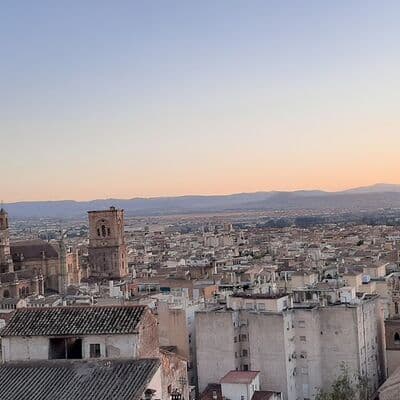
Granada is a city where history comes alive at every turn. Nestled at the foot of the Sierra Nevada mountains in southern Spain, it was the last stronghold of Moorish civilization on the Iberian Peninsula. When Granada fell in 1492, it marked the end of the Reconquista - the eight-century-long Christian reconquest of Spain from the Moors.
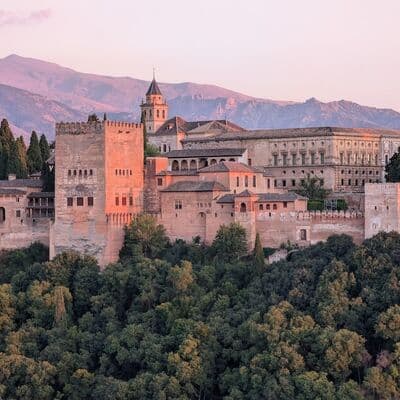
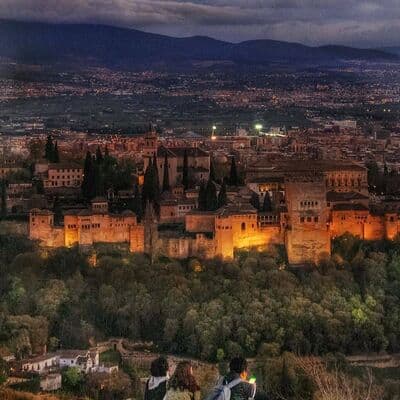
The city's crowning glory is the Alhambra, a palatial complex considered the pinnacle of Islamic art in Europe. But Granada is far more than just the Alhambra. Here, Moorish heritage intertwines with Renaissance Christian architecture and the vibrant Andalusian culture of flamenco and tapas.
With a population of around 230,000, Granada remains relatively compact, yet thanks to one of Spain's oldest universities (founded in 1531), the city buzzes with student energy and youthful dynamism. The historic center is perfectly suited for exploration on foot.
Granada's unique location offers an extraordinary combination: you can ski in the Sierra Nevada mountains in the morning and sunbathe on the Costa Tropical beaches after lunch - all within an hour's drive. In 2025, the city continues to captivate travelers with its authenticity, affordable prices, and unmistakable atmosphere.
Best Time to Visit
Granada has a continental Mediterranean climate with hot summers and cool winters. Your choice of timing significantly affects comfort and experience.
Spring (March - May)
The ideal time to visit. Temperatures range from 15-25°C (59-77°F), the Generalife gardens bloom magnificently, and tourist crowds are smaller than in summer. Holy Week (Semana Santa) features grand religious processions through the streets. In May, the Cruces de Mayo festival fills the city with decorated crosses and flamenco performances.
Summer (June - August)
Extremely hot - temperatures can reach 35-40°C (95-104°F). This is peak tourist season with enormous queues for the Alhambra; tickets must be booked months in advance. Evenings are pleasant, with numerous open-air concerts and festivals. The International Music and Dance Festival takes place in June-July in the Generalife gardens.
Fall (September - November)
Excellent conditions: temperatures of 15-28°C (59-82°F), thinning crowds, and lower prices. October is particularly lovely - comfortable weather and golden colors in the parks. November brings some rain, but the city becomes even more atmospheric.
Winter (December - February)
Cool weather (5-15°C/41-59°F), with possible frost and occasional snow. Few tourists, lowest prices, and Alhambra tickets are readily available. Christmas lights decorate the city. You can combine sightseeing with skiing in the Sierra Nevada.
| Season | Temperature | Features | Recommendation |
|---|---|---|---|
| Spring | 15-25°C | Blooming gardens, festivals | ⭐ Best time |
| Summer | 35-40°C | Heat, crowds | For heat lovers only |
| Fall | 15-28°C | Fewer tourists | ⭐ Excellent |
| Winter | 5-15°C | Low prices, skiing | Budget option |
Getting There
By Air
Granada's Federico García Lorca Airport (GRX) is located 17 km from the city center. Flights operate from Madrid (1 hour), Barcelona (1.5 hours), and several European cities. The ALSA bus runs from the airport to the center (€3, 45 minutes), or take a taxi (€25-30).
An excellent alternative is Malaga Airport (AGP), the largest in southern Spain, located 130 km away. Direct ALSA buses connect to Granada (€12-15, 2 hours). Malaga offers more international flights, including budget carriers.
By Train
Granada railway station is 1.5 km from the center. High-speed AVE trains connect to major cities:
- Madrid: 3 hours (€30-70)
- Barcelona: 6 hours with connection (€50-100)
- Seville: 2.5 hours (€25-45)
- Córdoba: 1.5 hours (€20-35)
By Bus
The bus station is 3 km from the center. ALSA is the main carrier with routes across Spain:
- Madrid: 4-5 hours (€20-30)
- Seville: 3 hours (€15-25)
- Malaga: 1.5-2 hours (€10-15)
- Córdoba: 2.5 hours (€15-20)
By Car
Granada is connected by highways to Madrid (A-44/A-4, 420 km), Malaga (A-92, 130 km), and Seville (A-92, 250 km). Parking in the center is limited; park near the Alhambra or use peripheral parking with bus connections.
Getting Around
Granada's historic center is compact and best explored on foot. Streets are often narrow and winding, especially in the Albaicín district.
City Buses
Transportes Rober operates city routes. Key lines for tourists:
- Line C30/C32: center - Alhambra
- Line C31/C34: center - Albaicín - Sacromonte
- Line LAC: airport - center
Single ticket costs €1.40 at stops, €1.50 on board. The Credibus card (€2 + top-up) reduces fares to €0.87 per ride. Buses run from 6:00 AM to 11:00 PM.
Taxis
White taxis with green lights are available throughout the city. Base fare €1.30, per km €0.90 (higher at night and on weekends). A ride from center to Alhambra costs about €8. Uber doesn't operate here, but FreeNow works.
Tourist Train
The Tren Turístico is a small wheeled train touring main attractions. Convenient for a first overview of the city (€9, 75 minutes).
Bicycles
Granada is hilly, so regular bikes require good fitness. E-bikes can be rented (€20-30/day). The city has a Lovesharing bike-sharing system.
Walking
The best way to explore. From the center (Plaza Nueva) to the Alhambra is a 20-30 minute uphill walk. The Albaicín is a labyrinth where getting lost is part of the charm.
Neighborhoods
Centro (Downtown)
The heart of Granada with main squares - Plaza Nueva, Plaza del Carmen, Plaza Bib-Rambla. This is where you'll find shops, restaurants, the Cathedral, and the Royal Chapel. The area buzzes day and night with numerous tapas bars.
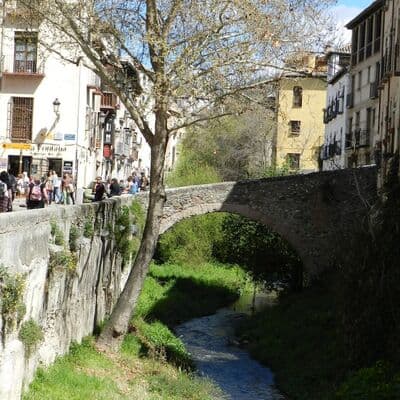
Albaicín
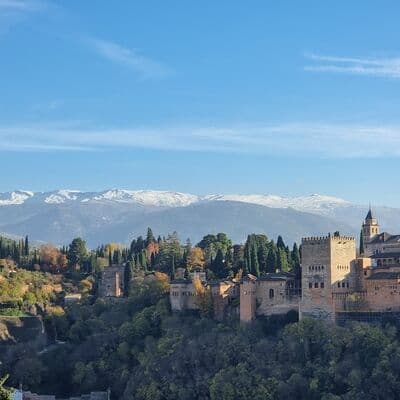
An ancient Moorish quarter on the hillside opposite the Alhambra, a UNESCO World Heritage site. White houses with interior patios (carmen), narrow cobblestone streets, tea houses (teterías). The Mirador de San Nicolás viewpoint offers the best view of the Alhambra at sunset. A neighborhood for romantic walks, but be prepared for steep climbs.
Sacromonte
The Roma (Gypsy) quarter with caves carved into the hillside. Historic birthplace of Granada's flamenco. In the evenings, authentic shows (zambras) take place in caves. The Cave Museum tells the neighborhood's story. The atmosphere is bohemian and slightly wild.
Realejo
The former Jewish quarter, now popular with locals. Hip cafes, street art, the Manuel de Falla House-Museum. Less touristy than downtown, with excellent tapas bars. Conveniently located for walking up to the Alhambra.
Cartuja
University district north of the center. Home to the Cartuja Monastery with its lavish Baroque interior. Modern infrastructure but little tourist interest beyond the monastery.
Zaidín
Residential neighborhood south of center. Budget hotels and apartments, local atmosphere, good restaurant prices. 15-20 minutes to center on foot or by bus.
Top Attractions
Alhambra and Generalife
The main attraction not just of Granada, but of all Spain. This 13th-14th century palatial complex is a masterpiece of Moorish architecture. It includes:
- Nasrid Palaces: the crown jewel with carved walls, fountains, and the famous Court of the Lions
- Alcazaba: the fortress with towers and panoramic views
- Palace of Charles V: a Renaissance contrast within the Moorish complex
- Generalife: the summer residence with gardens and fountains
Tickets: €14-19, must be booked online 2-3 months ahead. Visit takes 3-4 hours. Best in the morning or before sunset.
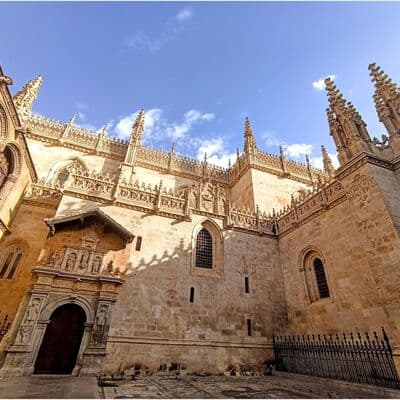
Granada Cathedral
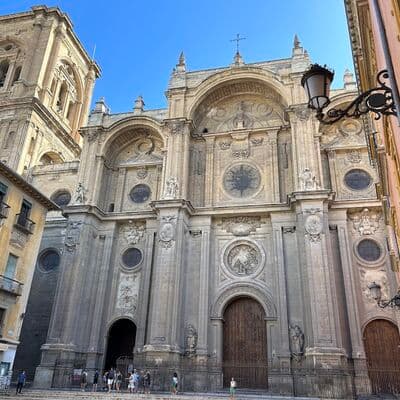
One of Spain's first Renaissance cathedrals, built on the site of a mosque after the Reconquest. Majestic facade, luminous interior with chapels. Adjacent is the Royal Chapel housing the tombs of Isabella of Castile and Ferdinand of Aragon. Cathedral: €5, Chapel: €5.
Mirador de San Nicolás
A viewpoint in the Albaicín with the iconic view of the Alhambra against the Sierra Nevada backdrop. Especially beautiful at sunset when the palace turns golden. Free, but watch for pickpockets.
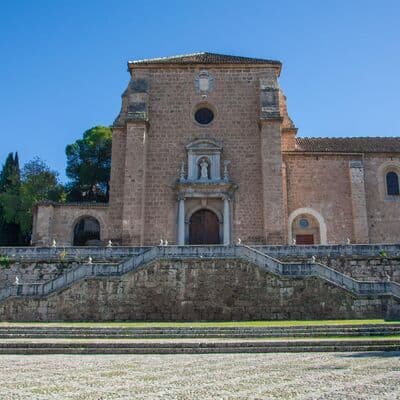
Monastery of San Jerónimo
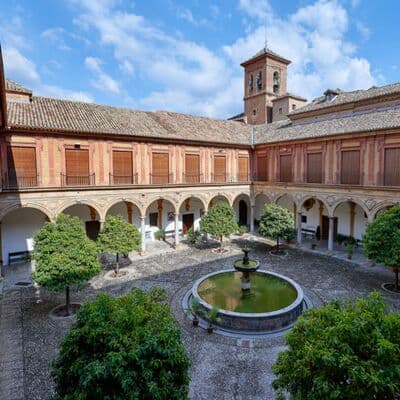
The first monastery built after the Reconquest. Impressive Renaissance cloister and richly decorated church. Gonzalo Fernández de Córdoba, the "Great Captain," is buried here. Entrance: €4.
Sacromonte Abbey
Atop the hill above the Gypsy quarter. According to legend, relics of Saint Caecilius, patron of Granada, were discovered here. Underground caves, a museum, and beautiful views. Entrance: €5.
Alcaicería
Former Arab silk market, now a labyrinth of narrow streets with souvenir shops. An atmospheric place for strolling and buying ceramics, leather goods, and marquetry (wooden inlay).
Corral del Carbón
The only remaining Moorish caravanserai in Spain (14th century). Now houses the tourist office and serves as a performance venue. Free entrance.
Plaza Bib-Rambla
The main square of the old town with a fountain, flower stalls, and cafes. Once hosted jousting tournaments and Inquisition executions. Now a place to relax and watch city life unfold.
Museums & Galleries
Fine Arts Museum
Located in the Palace of Charles V within the Alhambra. Collection of Granada paintings from the 15th-20th centuries, works by Alonso Cano and Pedro de Mena. Free for EU citizens, €1.50 for others.
Alhambra Museum
Also in the Palace of Charles V. Displays Moorish artifacts from the palace - ceramics, carvings, textiles. Helps understand the history and culture of the Alhambra. Free.
Science Park
One of Spain's best interactive science museums. Planetarium, observatory, exhibits on nature and technology. Great for families with children. Ticket: €7, planetarium extra.
Federico García Lorca House-Museum (Huerta de San Vicente)
The poet's family summer home on the city outskirts. Here Lorca wrote many of his works. Personal belongings, manuscripts, 1930s atmosphere. Entrance: €3, tours in Spanish.
Sacromonte Cave Museum
Ten caves showing traditional Roma life and crafts - blacksmithing, weaving, pottery. Beautiful views of the city. Entrance: €5.
Federico García Lorca Center
Modern center in downtown dedicated to the poet's legacy. Exhibitions, archives, events. Temporary exhibition areas are free.
Archaeological Museum
In the Casa del Castril, a Renaissance palace. Finds from Paleolithic to Moorish periods. Interesting for understanding the region's ancient history. Free for EU citizens.
Food & Dining
Granada is famous for its tradition of free tapas - with every drink, you receive a complimentary snack. This is not a myth: in virtually any bar, tapas come at no extra charge. With each subsequent drink, the portions grow larger.
Traditional Dishes
Tortilla del Sacromonte
An omelet with lamb brains, testicles, peppers, and herbs. Sounds exotic, but it's a Granada classic. Not for everyone, but worth trying.
Remojón
A cold salad of salt cod, oranges, olives, and onion. Refreshing, especially in summer. A typical Andalusian recipe.
Pionono
A small dessert of cream-filled sponge cake soaked in syrup. Named after Pope Pius IX. Invented in nearby Santa Fe.
Habas con jamón
Broad beans with ham - simple but filling. Served in spring when beans are young and tender.
Where to Eat
| Restaurant | Type | Price | Specialty |
|---|---|---|---|
| Bar Los Diamantes | Tapas bar | € | Best seafood |
| Bodegas Castañeda | Traditional | € | Classic tapas |
| La Tana | Wine bar | €€ | Great wine, gourmet tapas |
| Ruta del Azafrán | Contemporary | €€€ | Creative cuisine |
| Carmen de Aben Humeya | Restaurant | €€€ | Alhambra views |
Best Areas for Food
- Calle Navas: the main tapas street, bar after bar
- Plaza Nueva: touristy but classic
- Realejo: trendy spots with creative tapas
- Albaicín: teterías (tea houses) with Moroccan atmosphere
Drinks
Tinto de verano (red wine with lemon soda) is a summer classic. Local beer is Alhambra. In teterías, try Moroccan mint tea with pastries.
Shopping
What to Buy
- Ceramics: blue and green Moorish-style pieces (fajalauza)
- Marquetry: wooden inlay - boxes, chess sets, tables
- Leather: bags, belts, wallets
- Guitars: Granada is a center of flamenco guitar production
- Spices: saffron, paprika, paella mixes
- Silver: jewelry with garnets (the city's symbol)
Where to Shop
Alcaicería
Historic bazaar near the Cathedral. Atmospheric but prices are inflated. Bargain or just enjoy the stroll.
Cuesta de Gomérez
Street from Plaza Nueva up to the Alhambra. Marquetry and ceramic shops. Higher quality than in Alcaicería.
Calle Recogidas
Main shopping street with chain stores - Zara, Mango, H&M. Pedestrian zone.
Centro Comercial Nevada
Large mall in the suburbs. IKEA, Primark, cinema. Bus from downtown.
Markets
Mercado San Agustín is a covered market in the center with local products, jamón, cheese, olive oil. Great for gourmet souvenirs.
Where to Stay
By Neighborhood
Centro
Most convenient: everything nearby, plenty of restaurants and bars. Downside - noisy at night. Prices €60-150 for a double room.
Albaicín
Romantic and atmospheric. Many hotels are carmenes (houses with interior patios). Steep climbs; wheeled luggage is impractical. Prices €80-200.
Near the Alhambra
Parador de Granada is a luxury hotel in a former monastery within the Alhambra grounds. Expensive (€250+) but unforgettable.
Realejo
Balance between convenience and atmosphere. Close to center and Alhambra, charming streets. Prices €50-120.
Accommodation Types
| Type | Price | Examples |
|---|---|---|
| Parador | €200-350 | Parador de Granada |
| Boutique hotel | €100-200 | Hotel Casa 1800, Gar-Anat |
| Mid-range hotel | €50-100 | Hotel Palacio de Santa Inés |
| Hostel | €15-30 | Oasis Backpackers, Makuto |
| Apartments | €40-100 | Airbnb, Booking |
Tips
- Book 2-3 months ahead in high season
- Apartments with kitchens save on food costs
- Check for air conditioning in summer
- In Albaicín, confirm vehicle access if arriving by car
Travel Budget
Granada is one of Spain's most affordable cities for tourists. The free tapas tradition significantly reduces food costs.
Budget Traveler (€40-60/day)
- Hostel: €15-25
- Tapas with drinks: €10-15
- Transport: €3-5
- Attractions: €10-15
Mid-Range (€80-120/day)
- 3-star hotel: €50-80
- Cafes and restaurants: €25-35
- Transport and taxis: €10
- Alhambra and museums: €20-25
Comfort (€150-250/day)
- Boutique hotel: €100-180
- Restaurants: €50-70
- Taxis, tours: €30-50
- Flamenco show: €25-40
Price Comparison
| Item | Granada | Barcelona | Madrid |
|---|---|---|---|
| Beer in a bar | €2.00 | €4.00 | €3.50 |
| Tapas (portion) | Free | €4-8 | €3-6 |
| Lunch | €10-15 | €15-25 | €12-20 |
| Taxi (5 km) | €7 | €12 | €10 |
Money-Saving Tips
- Use the free tapas tradition - dinner of 3-4 drinks with snacks costs €8-12
- Free museum days: last Sunday of the month
- Buy Alhambra tickets online in advance - cheaper and skip the lines
- Granada Card includes Alhambra and public transport
Safety & Practical Info
Safety
Granada is a safe city, but standard precautions are necessary:
- Pickpockets operate near the Alhambra and at Mirador de San Nicolás
- In Albaicín and Sacromonte, stick to lit streets at night
- Don't leave valuables in your car, especially near tourist sites
- Watch your bags in crowded tapas bars
Climate
Hot in summer - wear a hat, drink water. Cold in winter - bring warm clothes. Rain possible in spring and fall.
Language
Spanish (Castilian). English is understood in tourist areas, but a few Spanish phrases are appreciated:
- Hello: Hola (OH-la)
- Thank you: Gracias (GRAH-thyahs)
- Please: Por favor (por fa-VOR)
- The bill: La cuenta (la KWEN-ta)
- A small beer: Una caña (OO-na KAN-ya)
Spanish Schedule
Lunch is 2:00-4:00 PM, dinner after 9:00 PM. Shops close for siesta (2:00-5:00 PM). Adjust to eating late!
Emergency Numbers
- General emergency: 112
- Police: 091
- Ambulance: 061
Internet
Free WiFi in most cafes and hotels. For mobile internet, get a Spanish SIM card or use EU roaming.
Visa
Spain is part of the Schengen Area. US, UK, Canadian, and Australian citizens can stay up to 90 days without a visa. Check requirements for your nationality.
Day Trips
Sierra Nevada
Distance: 35 km (45 minutes)
Europe's southernmost ski resort operates from November to April. In summer, enjoy hiking and mountain biking. Mulhacén peak (3,479 m) is the highest point in continental Spain. Bus from Granada €9.
Alpujarras
Distance: 60-80 km (1-1.5 hours)
White villages on the southern slopes of the Sierra Nevada. Pampaneira, Bubión, and Capileira are the most picturesque. Moorish architecture, local crafts, premium jamón. Best by car, though buses exist.
Costa Tropical
Distance: 70 km (1 hour)
Coastline with subtropical climate. Almuñécar and Salobreña are resort towns with beaches and historic fortresses. Mangos, avocados, and cherimoyas grow right on the streets. Hourly buses available.
Córdoba
Distance: 160 km (1.5 hours by train)
The Mezquita - a grand mosque-cathedral and UNESCO site. Jewish Quarter, Alcázar, Roman Bridge. A day visit covers the main highlights. AVE train €20-35.
Malaga
Distance: 130 km (1.5-2 hours)
Picasso's birthplace with an excellent museum of his works. Alcazaba fortress, port, beaches. More vibrant and cosmopolitan than Granada. Bus or train €10-20.
Antequera
Distance: 90 km (1 hour)
Bronze Age dolmens (UNESCO), the bizarre rock formations of El Torcal. Alcazaba fortress with views across the plain. Less known but charming.
Jaén and the Olive Groves
Distance: 90 km (1 hour)
Jaén province is the world's largest olive oil producer. The towns of Úbeda and Baeza (both UNESCO sites) are Renaissance architectural masterpieces. Olive oil tastings at haciendas.