Goa 2025: Complete Guide to India's Beach Paradise
North and South beaches, scooter rentals, beach shacks, trance parties, money tips, and safety - everything you need to know before visiting Goa.
Why Goa?
Goa is India's smallest state but its most popular tourist destination. This former Portuguese colony has a unique atmosphere: Catholic churches stand alongside Hindu temples, and trance music fills the beaches. You can find everything here - from wild parties to secluded coves, from budget guesthouses to luxury villas.
North Goa Beaches
North Goa means nightlife, developed infrastructure, and a colorful atmosphere.
Arambol
The most "hippie" beach in Goa. Yogis, musicians, and digital nomads gather here from around the world. Sunsets at Sweet Lake are a must-do ritual. Accommodation is cheaper than tourist centers, and the vibe is relaxed.
Morjim
Popular with Russian tourists - you'll find Russian-speaking cafes and shops. Wide beach with moderate waves, suitable for families. Prices slightly higher due to the Russian crowd.
Anjuna and Vagator
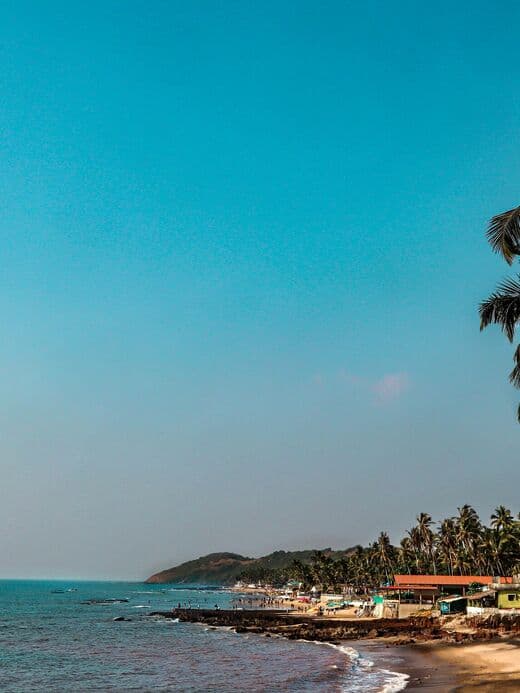
The epicenter of trance culture since the 1970s. Rocky coves, sunsets overlooking Chapora Fort, legendary parties at Hilltop and Shiva Valley. Famous Wednesday flea market.
Calangute and Baga
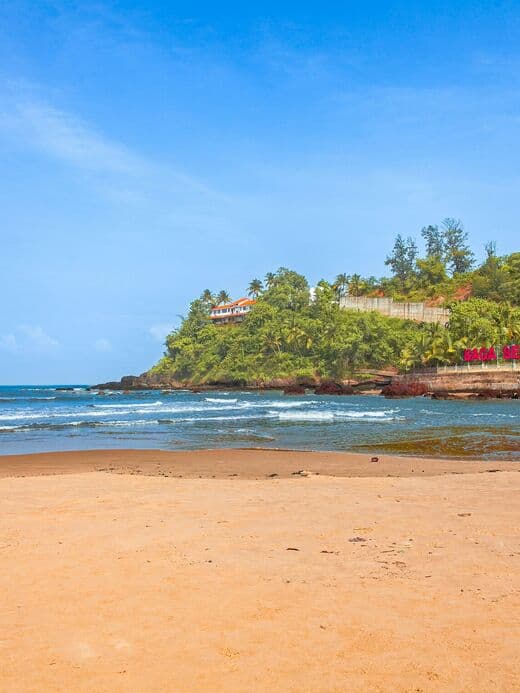
The most touristy beaches - crowded and noisy with many Indian tourists. But maximum infrastructure: restaurants, shops, nightclubs. Hotels are pricier.
Candolim and Sinquerim
Quieter than Calangute with a more upscale crowd. Fort Aguada nearby - great for photos.
Ashwem and Mandrem
Quiet beaches between Morjim and Arambol. Few people, premium shacks like La Plage. Perfect for those wanting peace with good cuisine.
South Goa Beaches
South Goa means tranquility, unspoiled nature, and fewer tourists.
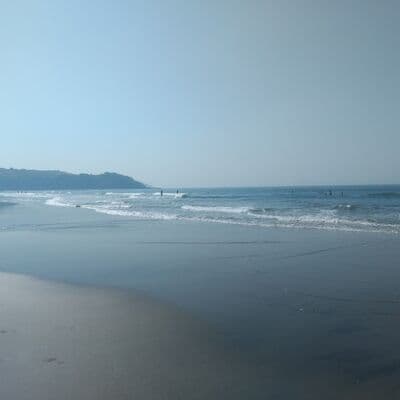
Palolem
A postcard-perfect crescent beach in a palm-fringed bay. Most popular in the south but still calmer than the north. Beach bungalows right on the sand - the classic Goa experience. "Silent disco" at night - dancing with headphones to avoid noise.
Agonda
Even quieter than Palolem. Ideal for yoga retreats, meditation, and digital detox. Minimal shacks, maximum peace.
Cola
A secret lagoon - freshwater lake right by the sea. Harder to reach but worth it. A few eco-bungalows.
Colva and Benaulim
Long empty beaches. Colva is slightly livelier with shacks like Boomerang. Benaulim is practically wild.
Money and Payments
Currency is the Indian Rupee (₹). 2025 rate: approximately 1 USD = 85-86 ₹.
Cash
Cash is king in Goa. Many shacks, small shops, and bike rentals only accept cash. Always carry small bills (100-500 ₹).
ATMs
ATMs are everywhere. Withdrawal limit: 10,000 ₹ per transaction, 40,000 ₹ per day. Fee usually 200-250 ₹. Best ATMs: HDFC, ICICI, SBI. Avoid standalone ATMs without security.
Currency Exchange
Exchange in city centers, not at the airport - rates are 3-5% worse there. Always count money in front of the cashier.
Cards and UPI
Visa/Mastercard accepted at larger hotels and restaurants. UPI (Google Pay, PhonePe) is the main payment method for Indians but unavailable to foreigners without an Indian bank account. This is changing - watch for updates.
Transport: Bikes and Scooters
A scooter is the main transport in Goa. Hard to manage without one.
2025 Rental Prices
Scooter (Activa, Dio, Access): ₹300-500/day, ₹5,000-7,000/month. Motorcycle (Bullet, Avenger): ₹700-1,500/day. More expensive in Calangute/Baga, cheaper in Arambol. In low season (monsoon) you can find from ₹250/day.
Documents
Officially you need an International Driving Permit (IDP) with category A. In practice, rentals often don't ask, but police do. Fine for driving without license: ₹5,000.
Police and Fines
Helmet is mandatory - fine ₹500. Triple riding - ₹100. Drunk driving - ₹10,000 and possible arrest. Police sometimes set up checkpoints on tourist roads. Stay sober and wear a helmet - no problems.
Fuel
Around ₹100/liter. Full scooter tank - ₹250-300, enough for 100+ km.
Food and Shacks
Shacks are the soul of Goa. Beach restaurants with sun loungers, seafood, and sunsets.
Top North Goa Shacks
- Curlies (Anjuna) - legendary since the 90s, trance music, international crowd
- La Plage (Ashwem) - French cuisine, elegant atmosphere, higher prices
- Britto's (Baga) - classic spot, huge seafood menu
- S2 (Morjim) - surf school with cafe, laid-back vibe
Top South Goa Shacks
- Boomerang (Colva) - live music, karaoke, open year-round
- Blue Corner (Benaulim) - favorite among regulars
What to Try
Goan cuisine blends Indian and Portuguese. Fish curry rice - fish in coconut curry with rice (₹100-150). Prawn balchao - prawns in spicy sauce. Bebinca - layered coconut dessert. Feni - local spirit from cashew or coconut.
Prices
Thali at local eatery: ₹80-150. Lunch at shack: ₹300-600. Dinner with seafood and beer: ₹800-1,500 for two.
Season and Weather
Peak Season (November - February)
Perfect weather: 25-32°C, minimal rain, low humidity. December-January is peak: all shacks open, parties every day, but maximum prices and crowds.
Shoulder Season (October, March - April)
October - monsoon retreats, everything is green and fresh, few tourists, lower prices. March-April - hot (35°C+) but still bearable. Good balance of price and weather.
Monsoon (June - September)
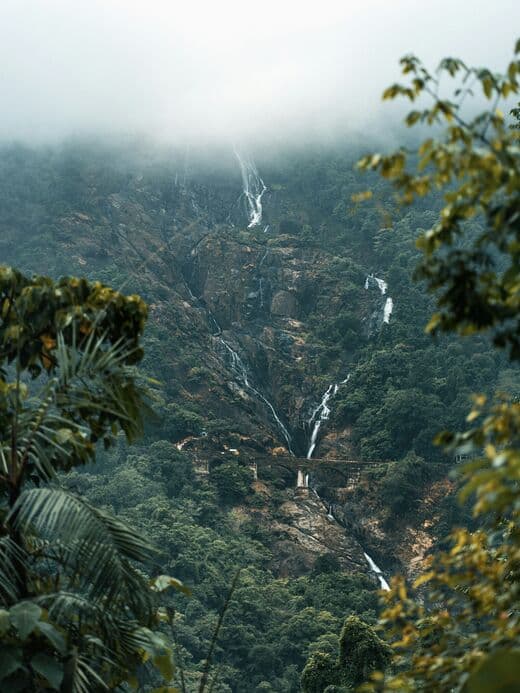
Beaches closed for swimming - dangerous waves. Most shacks closed. Rain every day (up to 1 meter per month!). But prices drop 2-3x, nature is incredibly green, and Dudhsagar Falls is at full power.
Recommendation
First time in Goa - November or February. Want cheaper and fewer people - October or March.
Accommodation
Types
Guesthouses - simple rooms from ₹500-1,000/night. Minimal amenities, maximum authenticity.
Hotels - from ₹2,000/night in season. AC, pool, breakfast.
Beach Bungalows - unique experience in Palolem and Agonda. ₹1,500-3,000/night.
Villas - for long stays or groups. From ₹30,000/month for 1BHK to ₹150,000+ for premium with pool.
Where to Search
Booking works but doesn't have everything. Airbnb - good villa selection. For long-term - search on-site or in Facebook groups (Goa Expats, Goa Long Term Rentals). Book ahead in season!
Locations
Parties and nightlife - Anjuna, Vagator. Quiet with infrastructure - Ashwem, Mandrem. Families - Morjim. Budget - Arambol. Seclusion - Palolem, Agonda.
Connectivity
SIM Cards
Jio and Airtel are the best carriers. Jio is faster (especially 5G), Airtel more stable in remote areas. Vodafone not recommended.
How to Get One
Need passport and photo. Activation takes 1-2 days. Jio/Airtel offices in every major village. Dabolim airport has kiosks but they don't always work.
Plans
Tourist SIM valid 90 days. Package with 1.5-2 GB/day costs about ₹200-300/month. Unlimited calls included.
Alternative
eSIM from international providers (Airalo, Holafly) - no registration, works immediately, but data only, no calls. Convenient for short trips.
Parties and Nightlife
Trance Culture
Goa is the birthplace of Goa Trance. Since the 1970s, psychedelic music lovers from around the world gather here.
Legendary Venues
Hilltop (Vagator) - icon of Goan trance since 1974. Sunday daytime parties under neon palm trees. New Year's Eve is the main event (~₹1,200 ticket).
Shiva Valley (Anjuna) - Tuesday parties from 5pm. Classic Goa Trance at sunset.
Chronicle / Glory (Vagator) - techno and deep house with sea views.
Clubs
Tito's and Mambo's (Baga) - mainstream for tourists, Bollywood and commercial music.
Club Cubana (Arpora) - "nightclub in the sky" on a hill with pool.
Rules
Officially music must stop by 10-11pm (noise law). In practice, parties continue but quieter or indoors. Full moon brings special parties.
Safety
General Situation
Goa is one of India's safest regions. Serious crimes against tourists are rare. But vigilance doesn't hurt.
What to Watch For
- Petty theft - don't leave valuables unattended on the beach
- Scams - check restaurant bills, bargain at markets
- Drugs - Goa is known for availability, but laws are strict. Police conduct raids, fines are huge, arrest is possible
- Roads - the biggest danger. Potholes, cows, chaotic traffic. Don't speed, especially at night
Police
Tourist police are generally friendly. Be polite during document checks. If asked for a bribe without cause - politely request an official fine receipt.
Health
Drink bottled water. Be careful with street food in the first days. Pharmacies on every corner. For serious cases - hospitals in Panjim and Margao. Insurance is essential!
Practical Tips
- Season - November-February is best, October and March are optimal for price/weather
- Budget - from $30-40/day (basic) to $100+ (comfortable)
- Scooter is essential - Goa isn't complete without one
- Cash - always have some on hand
- Helmet - not just a fine, but safety
- Sunsets - don't miss them, it's a Goa ritual
- North vs South - try both on your first visit