Beijing 2025: The Complete Travel Guide to China's Ancient Capital - Great Wall, Forbidden City & Hidden Hutongs
Beijing is a city where millennia of history collide with breathtaking modernity. Imperial palaces stand beside soaring skyscrapers, while narrow hutong alleyways weave between eight-lane boulevards. China's capital is ready to astound you with the magnitude of the Great Wall, the grandeur of the Forbidden City, and the relentless energy of a 22-million-strong metropolis that never sleeps.
This guide is written for travelers who want to experience the real Beijing in 2025: from practical visa and transportation tips to secret spots that group tours never visit. Whether you're coming to see Olympic landmarks or taste authentic Peking duck, this comprehensive guide will be your trusted companion through one of the world's most fascinating cities.
Best Time to Visit Beijing
Beijing experiences four distinct seasons, and your timing significantly impacts your experience. The climate is continental with monsoon influences: cold dry winters, hot humid summers, and pleasant shoulder seasons.
Monthly Climate Overview
| Month | Temperature | Rainfall | Conditions |
|---|---|---|---|
| January-February | 18°F to 36°F (-8°C to 2°C) | 0.1-0.2 in | Cold, dry, few tourists. Chinese New Year |
| March-April | 41°F to 68°F (5°C to 20°C) | 0.4-1 in | Spring blooms, possible sandstorms |
| May | 59°F to 81°F (15°C to 27°C) | 1.4 in | Excellent month, warm and dry |
| June-August | 72°F to 95°F (22°C to 35°C) | 2.8-7 in | Hot, humid, monsoons. Peak season |
| September-October | 54°F to 79°F (12°C to 26°C) | 0.8-2 in | Golden autumn - ideal time |
| November-December | 23°F to 50°F (-5°C to 10°C) | 0.2-0.4 in | Cold but sunny. Few tourists |
Seasonal Recommendations
Prime Time: September - October
This is Beijing's "golden autumn" (金秋) - the best time to visit. Temperatures are comfortable (59-77°F/15-25°C), skies are clear, and parks transform into canvases of gold and crimson. The Great Wall surrounded by autumn foliage is spectacular. The only drawback is National Day Golden Week (early October), when Chinese domestic tourists flood every attraction.
Good Period: April - May
Spring brings blooming peaches, magnolias, and cherry blossoms to imperial gardens. However, April can bring sandstorms from the Gobi Desert - check forecasts. May is ideal for hutong walks and Summer Palace visits.
Budget Season: November - February
Winter brings 30-40% hotel discounts and minimal queues. The Forbidden City dusted with snow is a rare magical sight. Dress warmly: even at 23°F (-5°C), the wind chill feels much colder. Chinese New Year (January-February) is special - the city glows with lanterns, but many businesses close.
Avoid: July - August
Summer in Beijing is oppressive (91-100°F/33-38°C with high humidity), rain is frequent, and smog peaks. If visiting in summer, plan sightseeing for early morning and spend afternoons in air-conditioned museums.
Getting to Beijing
Beijing is one of Asia's major international hubs, accessible from virtually anywhere in the world with excellent flight connections.
International Flights
| From | Airlines | Flight Time | Approx. Price (Round Trip) |
|---|---|---|---|
| New York (JFK) | Air China, United, Delta | 14-15 hours (direct) | $800-1,500 |
| Los Angeles (LAX) | Air China, Hainan Airlines, American | 12-13 hours (direct) | $700-1,300 |
| London (LHR) | Air China, British Airways, Virgin | 10-11 hours (direct) | £500-900 |
| San Francisco (SFO) | Air China, United | 11-12 hours (direct) | $600-1,200 |
| Sydney (SYD) | Air China, China Southern, Qantas | 11-12 hours (direct) | AUD 900-1,600 |
| Tokyo (NRT/HND) | Air China, ANA, JAL | 3.5-4 hours | $300-600 |
Beijing's Airports
Beijing Capital International Airport (PEK) - Shoudu
The main airport, located 15 miles (25 km) northeast of the city center. Most international flights arrive here. Three terminals: T1 (domestic), T2 (domestic and some international), T3 (main international terminal - Norman Foster's stunning design). Getting to the city: Airport Express (¥25/~$3.50, 20-30 minutes to Dongzhimen) or taxi (¥100-150/~$14-21, 40-60 minutes depending on traffic).
Beijing Daxing International Airport (PKX)
The newest starfish-shaped airport, opened in 2019. Located 29 miles (46 km) south of downtown. Zaha Hadid's futuristic terminal is an attraction itself. Fewer international flights currently, but infrastructure is excellent. Getting to the city: Daxing Airport Express (¥35/~$5, 25 minutes to Caoqiao) or taxi (¥200-250/~$28-35, 50-70 minutes).
Visa Requirements for US/UK/EU Citizens in 2025
China has significantly relaxed visa requirements in recent years. Here are the current options:
144-Hour Visa-Free Transit
- Eligibility: Citizens of 54 countries (including US, UK, Canada, Australia, most EU)
- Duration: Up to 144 hours (6 days)
- Requirements: Valid passport, confirmed ticket to a third country (not your origin)
- Restrictions: Must stay within Beijing-Tianjin-Hebei region
- Perfect for: Extended layovers or short city breaks
Tourist Visa (L Visa)
- Duration: Single entry (30 days), double entry (60 days), or 10-year multiple entry
- Cost: $140-185 (US citizens), £85-151 (UK citizens)
- Processing: 4-5 business days, express available
- Documents: Application form, photo, itinerary, hotel bookings, flight tickets
- Where to apply: Chinese Embassy/Consulate or visa agency
15-Day Visa-Free (Select Countries)
In 2024-2025, China expanded visa-free access to several countries including France, Germany, Italy, Spain, and others for stays up to 15 days. Check the latest list as it's frequently updated.
From Hong Kong or Other Asian Cities
Many travelers combine Beijing with other Asian destinations:
- Hong Kong - Beijing: 9 hours by high-speed rail or 3 hours by flight
- Shanghai - Beijing: 4.5 hours by bullet train (G-trains), frequent departures
- Seoul - Beijing: 2 hours by flight, multiple daily options
- Singapore - Beijing: 6 hours by flight
Getting Around Beijing
Beijing is a massive city covering over 6,000 square miles (16,000 km²), and understanding the transport system saves enormous time. Fortunately, public transit is excellent and extremely affordable.
Subway - The Best Way to Move
Beijing's subway is one of the world's largest: 27 lines, over 470 stations, and more than 500 miles (800 km) of track. It continues expanding, with new lines opening through 2025.
Subway Essentials
- Hours: 5:00 AM - 11:30 PM (some lines close at 11:00 PM)
- Fare: ¥3-10 (~$0.40-1.40) depending on distance
- Payment: Yikatong card, WeChat/Alipay, cash at machines
- Frequency: Every 2-5 minutes during rush hour
Key Tourist Lines
| Line | Key Stations | Attractions Served |
|---|---|---|
| Line 1 | Tiananmen West, Tiananmen East, Wangfujing | Tiananmen Square, Forbidden City, Wangfujing |
| Line 2 | Qianmen, Dongzhimen, Beijing Station | Temple of Heaven area, hutongs, railway station |
| Line 5 | Tiantan Dongmen, Lama Temple | Temple of Heaven, Lama Temple |
| Line 8 | Olympic Green, Gulou | Olympic Park, Drum Tower |
| Line 15 | Nanluoguxiang | Famous hutong street |
| Airport Express | Dongzhimen, T2, T3 | Capital Airport |
Subway Tips
- Security screening at entrance - allow extra time
- Rush hour (7:30-9:00 AM, 5:30-7:30 PM) is extremely crowded
- Download Beijing Subway app - works offline
- Station signs are in English and Chinese
Taxis and Ride-Hailing
Taxis in Beijing are affordable, but there are challenges for foreigners.
Didi (滴滴) - China's Uber
The essential ride-hailing app. Has an English version. Links to international credit cards or WeChat/Alipay. Fixed prices, tracked routes, and you can show drivers your destination in Chinese. Download before arrival.
Street Taxis
- Flag fall: ¥13 (~$1.80) for first 2 miles (3 km)
- Per kilometer: ¥2.3 (~$0.32)
- Night surcharge: +20% after 11:00 PM
- Tip: Have your destination written in Chinese - drivers rarely speak English
Buses
The bus network covers the entire city including outskirts. Fares are very cheap (¥2/~$0.28), but navigating without Chinese is challenging. Tourist-useful routes include bus 877 from Deshengmen to Badaling Great Wall.
Bikes and Scooters
Beijing has extensive bike-sharing: Meituan (yellow), Hello (blue), Didi (orange). Rental requires WeChat or Alipay with a linked payment method. Cost: about ¥1.5 (~$0.20) per 15 minutes. Dedicated bike lanes exist on many streets.
Warning: Traffic in Beijing is chaotic, and drivers don't always yield to cyclists. Recommended only for experienced urban cyclists.
Transit Cards
Yikatong (一卡通)
Beijing's universal transit card. Works on subway, buses, and some shops. Buy at subway stations (¥20/~$2.80 deposit). Gives 50% discount on buses. Balance is refundable when leaving.
WeChat/Alipay
These apps can pay for subway via QR code. Add the Beijing Subway mini-program or activate a virtual transit card. For international cards, this may be trickier than a physical Yikatong.
Beijing Neighborhoods: Where to Stay & Explore
Beijing is built around concentric ring roads. The center - the Forbidden City - is surrounded by the Second Ring Road (ancient walls demolished). The farther from center, the higher the ring number. Main tourist areas are within the Third Ring.
Dongcheng - Historic Heart
Best for: History lovers, first-time visitors
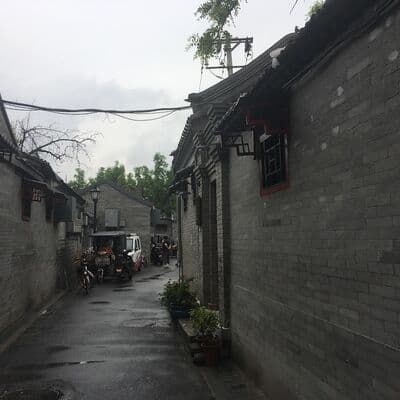
The eastern half of the old city with major attractions: Forbidden City, Tiananmen, Temple of Heaven, Lama Temple. Also home to the best hutongs - traditional neighborhoods with narrow alleys and courtyard houses (siheyuan). Nanluoguxiang and Wudaoying Hutong are touristy but atmospheric.
- Accommodation: Boutique hutong hotels, Raffles, Peninsula, Grand Hyatt
- Prices: Hostels from $15, 4-star hotels from $80
- Subway: Lines 1, 2, 5, 6, 8
Xicheng - Lakes and Old Beijing
Best for: Romantics, local atmosphere seekers
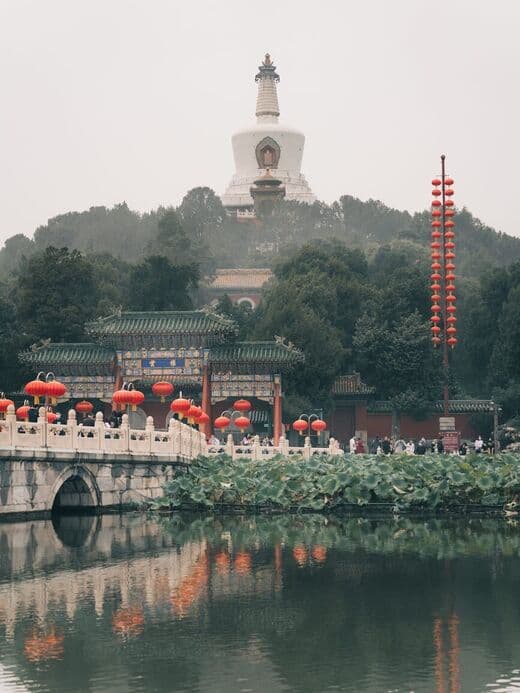
The western half of the center with picturesque Houhai, Qianhai, and Xihai lakes. Summer brings boating, winter brings ice skating. Lakeside bars, cafes, and restaurants line the shores. Nearby: White Pagoda, Beihai Park, Yandai Street. More relaxed vibe than Dongcheng.
- Accommodation: Lakeside guesthouses, atmospheric hostels
- Prices: Hostels from $12, hotels from $55
- Subway: Lines 2, 4, 6, 8
Chaoyang - Modern Beijing
Best for: Business travelers, shoppers, nightlife enthusiasts
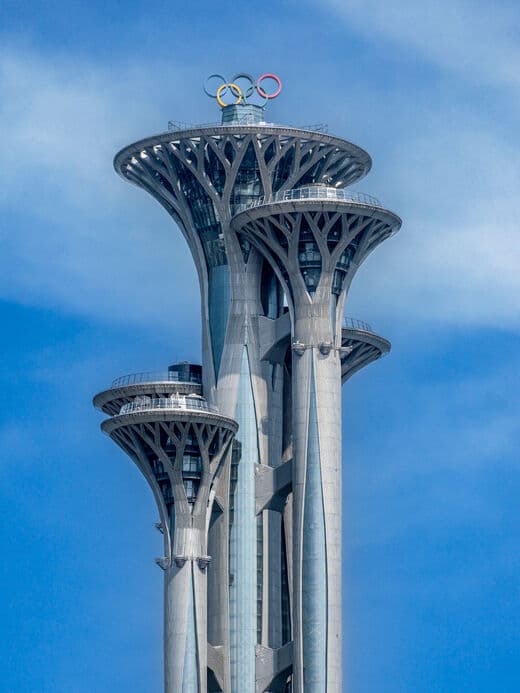
The massive eastern district. Home to the CBD (Central Business District) with CCTV Tower, the embassy quarter of Sanlitun with bars and clubs, and world-class shopping malls. Olympic Park with Bird's Nest and Water Cube is also in Chaoyang.
- Accommodation: International chains (Marriott, Hilton, Shangri-La), apartments
- Prices: 4-5 star hotels from $100
- Subway: Lines 1, 6, 10, 14
Haidian - Universities and Tech
Best for: Students, budget travelers, nature lovers
Northwestern district with China's top universities (Peking, Tsinghua), Summer Palace, and Yiheyuan Park. Also home to Zhongguancun - China's Silicon Valley. More youthful atmosphere, many affordable cafes and shops.
- Accommodation: Budget hotels, university-area hostels
- Prices: Hostels from $8, hotels from $35
- Subway: Lines 4, 10, 13, 15, 16
Where to Stay Based on Your Trip
| Trip Type | Recommended Area | Why |
|---|---|---|
| Classic sightseeing | Dongcheng (near Wangfujing) | Walking distance to Forbidden City and Tiananmen |
| Hutong atmosphere | Xicheng (Houhai) or Dongcheng (Nanluoguxiang) | Immersion in traditional Beijing |
| Business + entertainment | Chaoyang (Sanlitun, CBD) | Near offices, great nightlife |
| Budget travel | Haidian or outer Dongcheng | Cheaper, good subway access |
| Summer Palace focus | Haidian | Close to parks |
Top Attractions in Beijing
Beijing is a city with 3,000 years of history and an incredible concentration of cultural heritage. It has 7 UNESCO World Heritage Sites - more than any other city on Earth. Here's what you cannot miss.
The Forbidden City (Gugong)
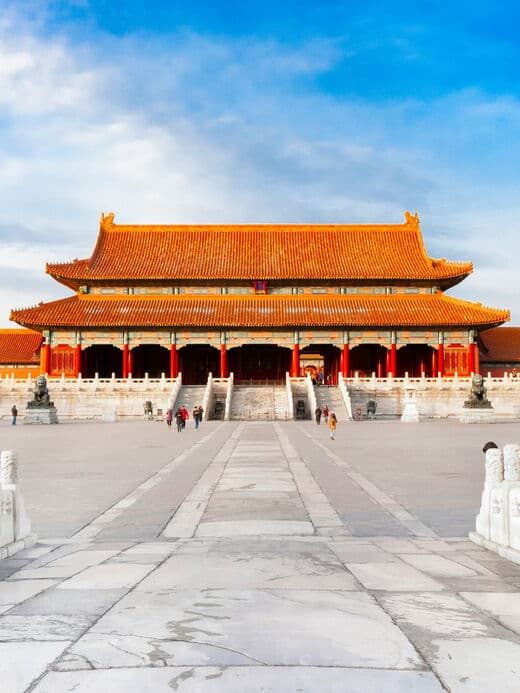
The world's largest palace complex - home to 24 emperors of the Ming and Qing dynasties for nearly 500 years (1420-1912). Covering 180 acres (720,000 m²) with 980 buildings and 8,707 rooms. The name "Forbidden" reflected its closure to commoners.
Practical Information
- Address: 4 Jingshan Front St, Dongcheng
- Hours: 8:30 AM - 5:00 PM (Apr-Oct), 8:30 AM - 4:30 PM (Nov-Mar). Last entry one hour before closing
- Admission: ¥60/~$8.50 (Apr-Oct), ¥40/~$5.60 (Nov-Mar). Extra: Treasury and Clock Gallery ¥10 each
- Tickets: Online only! Book 1-7 days ahead at gugong.cn (passport required)
- Closed: Mondays
- Time needed: 3-5 hours
What to See
- Southern section (official): Meridian Gate, Hall of Supreme Harmony (China's largest wooden building), Hall of Central Harmony, Hall of Preserving Harmony
- Northern section (residential): Palace of Heavenly Purity, Palace of Earthly Tranquility, Imperial Garden
- Treasury: Collection of jewels and imperial regalia
- Clock Gallery: Amazing collection of 18th-century European clocks
The Great Wall of China
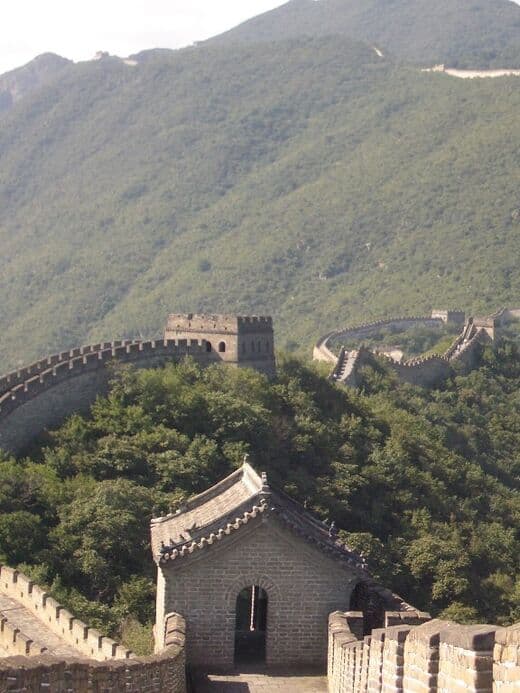
The most magnificent structure ever built by humanity. Total length of all sections exceeds 13,000 miles (21,000 km), though most date to the Ming Dynasty (14th-17th centuries). Several sections near Beijing vary in restoration and crowds.
Great Wall Sections Near Beijing
| Section | Distance | Features | Best For |
|---|---|---|---|
| Badaling | 43 mi/70 km, 1.5 hrs | Most restored and crowded. Cable car available | Families, first-timers |
| Mutianyu | 45 mi/73 km, 1.5 hrs | Well-restored, fewer crowds. Cable car + toboggan | Best balance of access and atmosphere |
| Jinshanling | 80 mi/130 km, 2.5 hrs | Partially restored, excellent hiking | Hikers and photographers |
| Simatai | 75 mi/120 km, 2 hrs | Only section open at night. Near Gubei Water Town | Romantics, night photography |
| Jiankou | 50 mi/80 km, 2 hrs | Wild, unrestored, dangerous | Experienced hikers only |
Getting to Mutianyu (Recommended Section)
- Bus: 916 Express from Dongzhimen to Huairou, then taxi (~¥100/~$14 round trip)
- Group tour: From ¥300/~$42 including hotel pickup and admission
- Taxi/Didi: About ¥500/~$70 round trip with waiting
Admission Fees
- Mutianyu: ¥40/~$5.60 (wall) + ¥120/~$17 (round-trip cable car) or ¥100/~$14 (cable car up + toboggan down)
- Badaling: ¥40/~$5.60 (Apr-Oct), ¥35/~$5 (Nov-Mar)
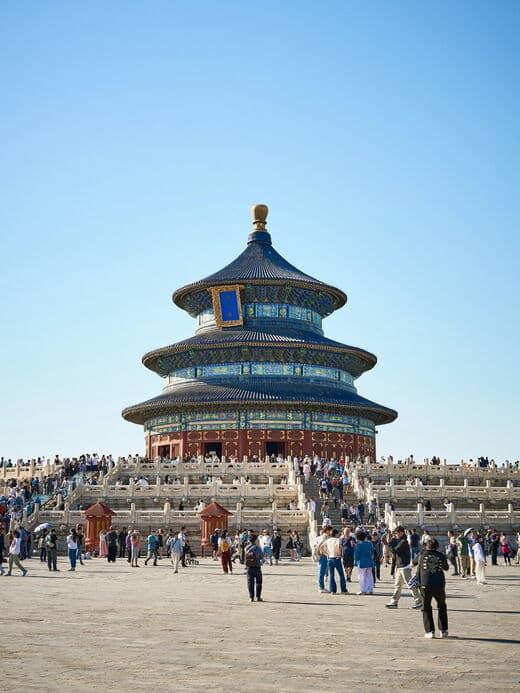
Temple of Heaven (Tiantan)
A masterpiece of Chinese architecture and philosophy, where emperors prayed for good harvests. The Hall of Prayer for Good Harvests with its triple-tiered blue roof is one of Beijing's and China's most iconic symbols.
- Address: 1 Tiantan E Rd, Dongcheng
- Hours: Park 6:00 AM - 9:00 PM, buildings 8:00 AM - 5:30 PM
- Admission: Park only ¥15/~$2, combined ticket (all buildings) ¥35/~$5
- Subway: Tiantandongmen (Line 5)
- Tip: Arrive early morning to see locals doing tai chi, dancing, and singing
Summer Palace (Yiheyuan)
A vast imperial garden ensemble with Kunming Lake, the artificial Longevity Hill, and elegant pavilions. Favorite residence of Empress Dowager Cixi. Perfect for a full day of leisurely exploration.
- Address: 19 Xinjiangongmen Rd, Haidian
- Hours: 6:30 AM - 6:00 PM (Apr-Oct), 7:00 AM - 5:00 PM (Nov-Mar)
- Admission: ¥30/~$4 (park only), ¥60/~$8.50 (combined)
- Subway: Beigongmen (Line 4)
- Time needed: 4-6 hours
Tiananmen Square
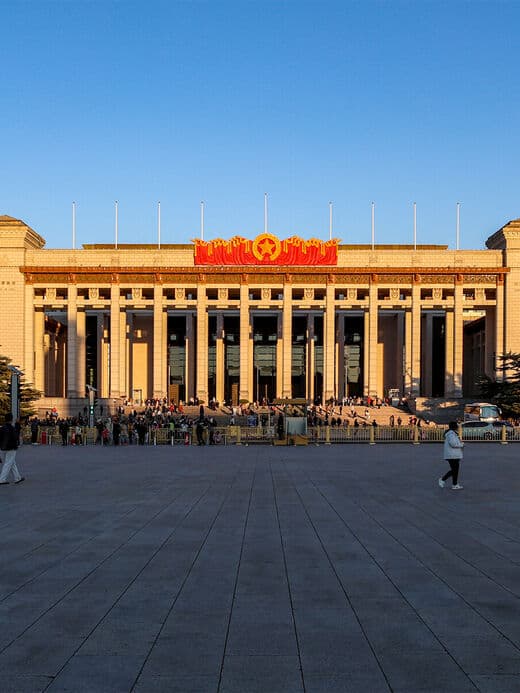
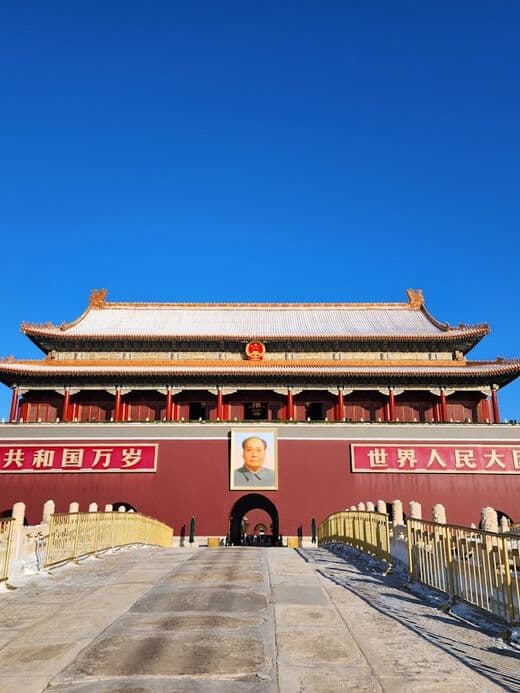
The world's largest urban square (109 acres/440,000 m²). Here Mao Zedong proclaimed the People's Republic in 1949. Today it holds Mao's Mausoleum, the National Museum of China, and the Great Hall of the People. The flag-raising ceremony at sunrise is an emotional spectacle.
- Subway: Tiananmen East or Tiananmen West (Line 1)
- Access: Free, but passport required to pass security checkpoints
- Flag ceremony: At sunrise (time varies); check schedule
- Mao's Mausoleum: Free, Tuesday-Sunday 8:00 AM - 12:00 PM. Bags must be stored, no photos
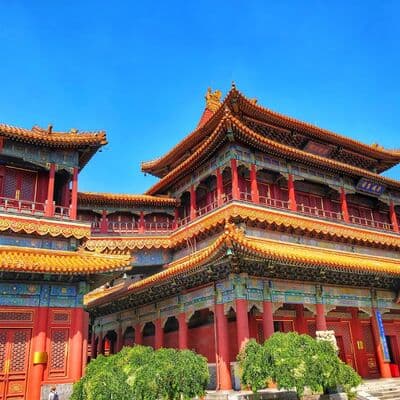
Lama Temple (Yonghe Gong)
The largest Tibetan Buddhist temple outside Tibet. A former princely residence converted to a monastery. The main treasure: an 60-foot (18m) statue of Maitreya Buddha carved from a single sandalwood trunk (Guinness World Record).
- Address: 12 Yonghegong St, Dongcheng
- Hours: 9:00 AM - 4:30 PM (Nov-Mar), 9:00 AM - 5:00 PM (Apr-Oct)
- Admission: ¥25/~$3.50
- Subway: Yonghegong Lama Temple (Lines 2, 5)
Olympic Park
Legacy of the 2008 Olympics. The Bird's Nest (National Stadium) and Water Cube (now Ice Cube after the 2022 Winter Olympics) are architectural icons of modern Beijing. Spectacular illumination at night.
- Subway: Olympic Green (Line 8)
- Bird's Nest: ¥50/~$7, interior tour
- Water/Ice Cube: ¥30/~$4 (viewing), ¥200+/~$28+ (water park/skating)
- Tip: Visit in the evening for the light show
What's New in Beijing in 2025
Beijing continues to evolve, and 2025 brings new opportunities and improvements for travelers.
New Subway Lines
2024-2025 saw extensions of several lines improving connections to suburbs and attractions. Line 3 (expected 2025 opening) will connect eastern districts to the center. Line 12 extension improves access to Olympic Park.
Expanded Visa-Free Access
China has significantly expanded visa-free transit and short-stay options since 2024. The 144-hour transit visa-free policy now covers more entry points, and several European countries now have 15-day visa-free access. Check the latest policies before traveling.
Digital Payments for Foreigners
WeChat Pay and Alipay now officially support international Visa/Mastercard directly. Registration is simpler - you can link your card without a Chinese bank account. This solves the biggest tourist frustration of past years.
Universal Beijing Resort Expansion
The theme park opened in 2021 continues expanding. 2025 brings new themed zones and attractions based on popular franchises. Located in the eastern suburbs, accessible via Line 7 (Universal Resort station).
Historic Hutong Restoration
Beijing actively restores remaining hutongs, transforming them into cultural quarters with cafes, galleries, and boutiques. The Qianmen area (south of Tiananmen) has been renovated while preserving historic character. New pedestrian routes allow hutong exploration without crowds.
Airport Improvements
Daxing Airport has expanded its international program with more flights from Europe and Asia. Transfer between the two airports (Shoudu and Daxing) is improved with direct buses and future intercity rail connections.
Environmental Initiatives
Beijing's air quality has improved dramatically in recent years through coal plant closures and vehicle restrictions. The city continues "greening" in 2025 - more electric buses, expanded parks, and new green spaces along canals.
Beijing Cuisine: What and Where to Eat
Beijing cuisine (京菜, Jīng cài) is one of China's eight great culinary traditions. Shaped by the imperial court, it incorporates dishes from many regions adapted for the capital. Characteristics: rich flavors, plenty of garlic and onion, wheat-based foods rather than rice.
Must-Try Dishes
Peking Duck (北京烤鸭, Běijīng kǎoyā)
The city's culinary icon. The duck is marinated, inflated to separate skin from meat, glazed with maltose, and roasted in a wood-fired oven until the skin is crispy. Served sliced with thin pancakes, scallions, cucumber, and hoisin sauce. A skilled chef carves the duck into 100+ perfect pieces.
Where to try:
- Quanjude (全聚德): Most famous (since 1864), touristy but authentic. Qianmen, 14 Qianmen West St. Duck from ¥300/~$42
- Da Dong (大董): Modern interpretation, less fatty. Multiple locations. Duck from ¥400/~$56
- Siji Minfu (四季民福): Excellent value, popular with locals. Near Tiananmen and Wangfujing. Duck around ¥200/~$28
- Liqun Roast Duck (利群烤鸭店): Small hutong restaurant, old Beijing atmosphere. Book ahead! Beixiangfeng Hutong
Zhajiang Noodles (炸酱面, Zhájiàng miàn)
Thick wheat noodles with rich sauce made from fermented soybean paste, minced pork, and vegetables. Served with julienned cucumber, radish, and bean sprouts. Simple, filling, and incredibly satisfying - the soul of Beijing street food.
Jiaozi (饺子, Jiǎozi)
Chinese dumplings with various fillings: pork and cabbage, lamb and onion, shrimp, vegetables. Come boiled (shuijiao), pan-fried (guotie), or steamed. Lamb dumplings are particularly popular in Beijing.
Mongolian Hot Pot (涮羊肉, Shuàn yángròu)
Mongolian heritage: paper-thin sliced lamb cooked in boiling broth at your table. Served with sesame paste, tofu, vegetables, mushrooms, and noodles. Perfect winter warmer.
Recommendation: Donglaishun (东来顺) - legendary hot pot since 1903. Branches citywide.
Baozi (包子, Bāozi)
Steamed buns with filling. Most common is pork, but vegetarian and sweet versions exist. Beijingers often eat baozi with soy milk for breakfast.
Jianbing (煎饼, Jiānbing)
Street breakfast: thin crepe from flour batter, topped with egg, herbs, crispy cracker, and spicy sauces. Rolled up and eaten on the go. Costs ¥8-15/~$1-2 from street carts.
Street Food and Night Markets
Gui Street (簋街, Guǐ Jiē)
"Ghost Street" - a mile-long strip of restaurants open until late night. Specialty: spicy crayfish (麻辣小龙虾) and Sichuan cuisine. Neon signs, noise, crowds - authentic nocturnal Beijing atmosphere. Subway: Beixinqiao (Line 5).
Niujie (牛街)
Muslim quarter with halal restaurants. Excellent lamb, Uyghur nan bread, and kebabs (chuar). Also home to Beijing's oldest mosque (Niujie Mosque).
Sweets and Drinks
- Tanghulu (糖葫芦): Candied hawthorn berries on a stick - Beijing's winter symbol
- Doufu nao (豆腐脑): Silky tofu pudding with savory or sweet sauce
- Suanmeitang (酸梅汤): Sweet-sour plum drink - summer heat relief
- Erguotou (二锅头): Strong (56%) sorghum liquor - not for the faint-hearted
Regional Cuisines in Beijing
As the capital, Beijing offers cuisines from all Chinese provinces:
- Sichuan (spicy): South Beauty, Sichuan Government Restaurant
- Cantonese (dim sum): Din Tai Fung (Taiwanese xiaolongbao), Minzu Hotel restaurants
- Uyghur: Crescent Moon Muslim Restaurant, Niujie restaurants
- Yunnan: Lost Heaven, Yun'er (mushrooms and flowers)
Dining Tips
- Meal times: Lunch 11:30 AM - 1:00 PM, dinner 5:30 - 8:00 PM. Limited options outside these hours
- Tipping: Not expected. Service charge sometimes included at upscale restaurants
- Chopsticks: Spoons and forks available on request, but learning chopsticks is part of the experience
- Spice level: Beijing cuisine isn't spicy, but say "bù là" (不辣, not spicy) when ordering Sichuan dishes
- Portion sizes: Dishes are meant to share. Order 1 dish per person + 1 extra for the table
Beijing Nightlife
Despite its reputation as a conservative capital, Beijing has diverse nightlife - from underground hutong bars to glamorous clubs with world-class DJs.
Main Nightlife Districts
Sanlitun (三里屯)
Beijing's nightlife epicenter. Dozens of bars, clubs, and restaurants concentrated here. The focal point is Taikoo Li complex with its open terraces. Workers' Stadium nearby hosts major clubs. Mixed crowd: expats, young Chinese, tourists.
Recommendations:
- Migas Mercado: Rooftop bar with views, Spanish tapas, great cocktails
- Parlor: Craft beer bar chain with house brews
- Vics: Huge club at Workers' Stadium, pop and EDM
Houhai (后海)
Romantic lakeside district with bars along the water. More relaxed vibe than Sanlitun. Live music (often covers in Chinese and English), outdoor terraces. Summer: boat rides. Winter: ice skating.
Recommendations:
- No Name Bar: Legendary unmarked bar, intimate atmosphere
- Lotus Bar: Jazz and blues, quality drinks
- Boat Bar: Literally a bar on a boat
Wudaoying Hutong (五道营胡同)
Hipster alternative to Sanlitun. Small bars in restored hutongs, craft beer, signature cocktails. Crowd: local creatives and in-the-know tourists.
Recommendations:
- Great Leap Brewing: Pioneer of Beijing craft beer
- Arrow Factory: Another craft brewery
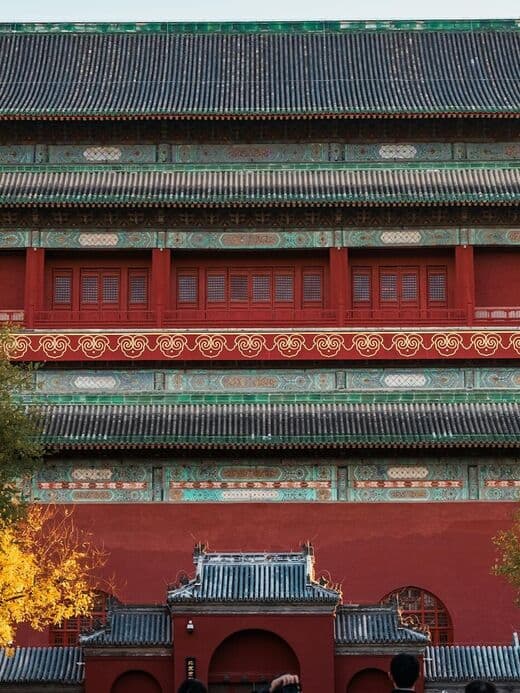
Gulou (鼓楼) - Drum Tower Area
Underground music scene. Small live music venues - indie rock, punk, electronic. Dada, Temple, School Bar are cult venues. For authentic Beijing alternative scene, come here.
Clubs
- One Third (1/3): Beijing's biggest club, international DJs, house/techno. Sanlitun area
- Lantern: Electronic music, local and international artists
- Mix: R&B, hip-hop, popular with young crowd
- Spark: Techno club in industrial space
Practical Information
- Hours: Bars until 2:00-4:00 AM, clubs until 6:00 AM
- Prices: Cocktails ¥60-100/~$8-14, beer ¥30-60/~$4-8, club entry ¥50-150/~$7-21 (often includes drink)
- Dress code: Most places casual. Trendy clubs won't admit shorts and flip-flops
- Payment: WeChat/Alipay everywhere, cash accepted
- Safety: Beijing is very safe, but watch your belongings in crowds
Cultural Evenings
Alternatives to bars:
- Peking Opera: Chang'an Theatre, Huguang Guild Hall - classic performances with subtitles
- Acrobatics: Chaoyang Theatre - breathtaking shows
- Kung Fu Show: Red Theatre - theatrical martial arts performance
- Tea ceremonies: Many teahouses stay open late
Shopping in Beijing
Beijing offers the full shopping spectrum - from market knockoffs to luxury boutiques and unique antique finds.
Shopping Districts
Wangfujing (王府井)
The main shopping street - an 800-meter pedestrian zone. Department stores, international brands, souvenir shops. Tourist prices but enormous selection. Also home to the famous "Snack Street" (though quality is debatable).
Taikoo Li Sanlitun
Modern open-air shopping complex. Designer brands, concept stores, flagship Apple and Nike. Architecture itself is interesting. Nearby Yashow Market has more affordable goods.
SKP (Shin Kong Place)
China's largest luxury department store - a serious Harrods competitor. All global brands, exclusive collections. Tax-free for tourists.
Markets and Bazaars
Silk Market (秀水街, Xiushui)
Five floors of "brand name" goods (fakes). Silk, cashmere, clothing, bags, electronics. Bargaining is essential - opening prices are 5-10x inflated. Bargain hard, walk away and return. Quality varies wildly.
- Address: 8 Xiushui E St, Chaoyang
- Subway: Yonganli (Line 1)
- Hours: 9:30 AM - 9:00 PM
Panjiayuan Antique Market (潘家园)
Asia's largest antique market. Over 3,000 vendors: furniture, porcelain, calligraphy, vintage posters, jewelry, coins. Most "antiques" are reproductions, but interesting finds are possible. Best time: early weekend mornings when dealers arrive from across China.
- Address: 18 Huaweili, Chaoyang
- Subway: Panjiayuan (Line 10)
- Hours: Mon-Fri 8:30 AM - 6:00 PM, weekends 4:30 AM - 6:00 PM (best stuff early!)
Hongqiao Pearl Market (红桥市场)
Near Temple of Heaven. Pearls (freshwater and saltwater), jewelry, souvenirs. Pearl quality varies - research before buying or bring someone knowledgeable.
What to Buy in Beijing
| Item | Where to Buy | Price Range |
|---|---|---|
| Tea (pu-erh, oolong, jasmine) | Maliandao Tea Street - entire street of tea shops | ¥50-5000+/~$7-700+ per 500g |
| Silk and cashmere | Silk Market, Yashow, Qianmen shops | Scarf from ¥100/~$14, garments from ¥500/~$70 |
| Cloisonne enamel | Beijing Enamel Factory, Panjiayuan | ¥50/~$7 for small items to thousands for vases |
| Calligraphy and paintings | Liulichang Street - art shop row | Prints from ¥100/~$14, originals from ¥1000/~$140 |
| Name seals (chops) | Panjiayuan, Liulichang - they'll carve your name in characters | From ¥50/~$7 |
| Porcelain | Panjiayuan, specialty shops | ¥100-100,000+/~$14-14,000+ |
| Peking Opera masks | Wangfujing, Nanluoguxiang | From ¥30/~$4 |
Shopping Tips
- Bargain everywhere except department stores and fixed-price shops
- Start at 20-30% of asking price and work up
- Tax-free: Purchases over ¥500 at Tax Refund shops qualify for 9-11% VAT refund at airport
- Payment: WeChat/Alipay preferred, cash accepted everywhere
- Antiques: Export permit needed for items pre-1949. Most "antiquities" are replicas
Budget Planning for Beijing
Beijing is a city of contrasts price-wise. You can spend a fortune at luxury hotels and restaurants, or live for a week on a shoestring. Here are guidelines for planning.
Daily Budget Estimates
| Category | Budget | Mid-Range | Comfort |
|---|---|---|---|
| Accommodation | ¥150-300 (~$20-40) | ¥400-800 (~$55-110) | ¥1000-2500 (~$140-350) |
| Food | ¥80-150 (~$11-21) | ¥200-400 (~$28-55) | ¥500-1000 (~$70-140) |
| Transport | ¥20-40 (~$3-5) | ¥50-100 (~$7-14) | ¥150-300 (~$21-42) |
| Attractions | ¥50-100 (~$7-14) | ¥100-200 (~$14-28) | ¥200-400 (~$28-55) |
| Total | ¥300-600 (~$40-85) | ¥750-1500 (~$105-210) | ¥1850-4200 (~$260-590) |
Cost Breakdown
Accommodation
- Hostels: ¥80-200/~$11-28 per dorm bed. Leo Hostel, Peking Yard Hostel well-reviewed
- Budget hotels: ¥200-400/~$28-55. Chains like Home Inn, Hanting - clean, basic
- Mid-range: ¥500-1000/~$70-140. Courtyard by Marriott, Holiday Inn, hutong boutiques
- Luxury: ¥1500-5000+/~$210-700+. Peninsula, Waldorf Astoria, Aman at Summer Palace
Food
- Street food: Jianbing ¥8-15/~$1-2, baozi ¥5-10/~$0.70-1.40, noodles ¥15-30/~$2-4
- Simple restaurants: ¥30-80/~$4-11 per dish
- Mid-range restaurants: ¥100-200/~$14-28 per person
- Peking duck: ¥180-400/~$25-55 per duck (serves 2-3)
- Fine dining: ¥500-1500/~$70-210 per person
Attractions
- Forbidden City: ¥60/~$8.50 (high season), ¥40/~$5.60 (low)
- Great Wall (Mutianyu): ¥40/~$5.60 (entry) + ¥120/~$17 (cable car)
- Temple of Heaven: ¥35/~$5 (combined)
- Summer Palace: ¥60/~$8.50 (combined)
- Lama Temple: ¥25/~$3.50
Sample Budgets
5 Days Budget (1 person)
- Hostel: ¥150 × 5 = ¥750/~$105
- Food: ¥100 × 5 = ¥500/~$70
- Transport: ¥30 × 5 = ¥150/~$21
- Attractions: ¥300/~$42
- Total: ~¥1700/~$240
7 Days Comfortable (2 people)
- 4-star hotel: ¥800 × 7 = ¥5600/~$785
- Food: ¥500 × 7 = ¥3500/~$490
- Transport (including Wall taxi): ¥1500/~$210
- Attractions: ¥1000/~$140
- Entertainment & shopping: ¥2000/~$280
- Total: ~¥13,600/~$1,900 for two
Money-Saving Tips
- Eat like locals: Canteens and street food are delicious and cheap
- Use the subway: Faster and cheaper than taxis
- Book ahead: Hotels are cheaper 2-3 weeks in advance
- Winter season: November-February brings up to 40% discounts
- Combined tickets: Save on multi-site packages
- Free activities: Hutong walks, Beihai Park (¥5 entry), flag ceremony
Money and Payments
- Currency: Chinese Yuan (CNY/¥). Rate: roughly $1 = ¥7 (check current rate)
- Cash: Decreasingly needed, but carry some just in case
- WeChat Pay/Alipay: Main payment method. Now supports international cards in 2025
- Cards: Visa/Mastercard accepted at hotels, major stores, but not always at small shops
- ATMs: Bank of China, ICBC have minimal fees for foreign cards
- Exchange: Banks, airport, hotels. Banks offer best rates
Culture and Etiquette
China has millennia of tradition, and understanding local customs will make your trip more pleasant and avoid awkward situations.
Communication and Behavior
Face (面子, Miànzi)
The concept of "saving face" is central to Chinese culture. Public criticism, pointing out mistakes, arguments - all cause someone to "lose face." Be diplomatic, avoid confrontation, criticize privately and gently.
Volume
Chinese people speak louder than Westerners - this is normal, not rude. Animated restaurant conversations, loud phone calls in transit are part of local culture. Don't take offense.
Personal Space
In crowds (subway, shops), personal space concepts dissolve. You'll be pushed without apology - this isn't aggression, just different norms. Adapt.
Queuing
Traditionally, queues in China weren't strictly observed, but things are changing. In Beijing, especially in subways and museums, order is usually maintained. But be ready to hold your place.
At the Table
- Chopsticks: Don't stick them vertically in rice (resembles funeral ritual), don't point at people
- Course order: Dishes arrive as ready, not in courses. Everything goes in the center for sharing
- Toasts: "Ganbei" (干杯) = "bottoms up." If you don't want to drink heavily, say "suibian" (随便) = "as you like"
- Paying: It's customary to "fight" for the right to pay. This is ritual - insist on your turn to treat
- Tipping: Not expected and can cause embarrassment. Upscale venues may include service charge
At Temples and Sacred Sites
- Remove shoes where indicated
- Don't photograph Buddha statues with flash
- Don't point fingers at religious objects
- Dress modestly (covered shoulders and knees)
- Walk clockwise around temple objects
Photography
Chinese people love photos and often ask foreigners to pose together - especially if you look unusual (blonde hair, tall). This is genuine curiosity, not intrusion. You can politely decline if tired.
Important: Don't photograph military installations, police, certain government buildings. Be especially careful around Tiananmen.
Gifts
- Good: Tea, sweets, fruit, souvenirs from your country
- Bad: Clocks (association with death), knives/scissors (cutting relationships), white or black flowers (mourning)
- Wrapping: Red or gold - lucky colors. Avoid white and black
- Receiving: Gifts are accepted with both hands, not opened immediately
Numbers
- 8: Lucky number (sounds like "wealth"). Chinese pay more for numbers with 8
- 4: Unlucky (sounds like "death"). Some buildings skip the 4th floor
- 6: Good number ("smooth sailing")
- 9: Symbol of longevity
Useful Chinese Phrases
| English | Chinese (Pinyin) | Characters |
|---|---|---|
| Hello | Nǐ hǎo | 你好 |
| Thank you | Xièxie | 谢谢 |
| Goodbye | Zàijiàn | 再见 |
| Yes / No | Shì / Bù shì | 是 / 不是 |
| How much? | Duōshao qián? | 多少钱? |
| Too expensive | Tài guì le | 太贵了 |
| Where is the toilet? | Cèsuǒ zài nǎr? | 厕所在哪儿? |
| I don't understand | Wǒ bù dǒng | 我不懂 |
| Check, please | Mǎidān | 买单 |
| Delicious | Hěn hǎo chī | 很好吃 |
Practical Tips
Internet and Connectivity
The Great Firewall
Google, Facebook, Instagram, WhatsApp, YouTube, and many Western news sites are blocked in China. Telegram works inconsistently. You need a VPN for access.
VPN
IMPORTANT: Download and configure your VPN BEFORE arriving in China - VPN websites are also blocked inside China. Recommended services: ExpressVPN, NordVPN, Astrill. Tourist VPN use is technically gray area, but nobody is prosecuted in practice.
Local Alternatives
- WeChat: Replaces WhatsApp + Facebook + payment system. Install before arrival, add local contacts
- Baidu Maps: Instead of Google Maps. More accurate for China, works offline
- Didi: Chinese Uber
- Meituan/Eleme: Food delivery
SIM Cards
Tourist SIMs available at airports or China Mobile/Unicom stores. Passport required. Cost: about ¥100-200/~$14-28 for a week's data package. Alternative: eSIM from foreign providers (Airalo, Holafly) with VPN included.
Safety
Beijing is very safe. Street crime is minimal; you can walk anywhere at any time. However:
- Pickpockets: Exist in subways and tourist areas. Watch your belongings
- Scams: Classic: "students" inviting you to "tea ceremonies" or "art galleries" where you're pressured to buy overpriced items. Politely decline strangers' invitations
- Taxis: Use Didi or official metered taxis. Avoid "private" drivers at airports and stations
Health
- Water: Drink only bottled or boiled water. Tap water is not safe
- Air: On heavy smog days (AQI > 150), wear N95 mask, avoid physical exertion. Check AirVisual app
- Pharmacies: Watsons chain has Western medicines. Local pharmacies mostly stock traditional Chinese medicine
- Hospitals for foreigners: Beijing United Family Hospital, International SOS Clinic - English-speaking staff, high prices. Get travel insurance!
Electricity
- Voltage: 220V, 50Hz
- Outlets: Types A/I/C - universal, accept most plugs. US travelers may need adapter for 3-prong plugs
Time Zone
Beijing: UTC+8 (13 hours ahead of US Eastern, 8 hours ahead of London). All of China uses one time zone despite its size. No daylight saving time.
What to Pack
- VPN - install before departure!
- Translation app - download offline pack for Google Translate or use Baidu Translate
- N95 mask - for bad air days
- Comfortable shoes - lots of walking at Forbidden City and Wall
- Rain jacket/umbrella - summer brings frequent storms
- Sunscreen - sun is strong
- Cards with PIN - for ATMs
- Cash yuan - until you set up WeChat Pay
- Document copies - digital backup
Useful Apps
- WeChat - communication and payments
- Alipay - payments (WeChat alternative)
- Didi - ride-hailing
- Baidu Maps - navigation
- Pleco - best Chinese-English dictionary
- Beijing Subway - offline metro map
- Air Matters / AirVisual - air quality
- Trip.com - hotel and ticket booking in China
Sample Beijing Itineraries
3 Days - Classic Route
Day 1: Imperial Beijing
- Morning: Tiananmen Square (sunrise flag ceremony optional), Tiananmen Gate
- Midday: Forbidden City (3-4 hours). Exit through north gate
- Afternoon: Jingshan Park (view of Forbidden City from hill)
- Evening: Wangfujing walk, Peking duck dinner at Siji Minfu
Day 2: Great Wall
- Morning: Early departure to Mutianyu (7:00-8:00 AM)
- Midday: Wall climb and walk (3-4 hours)
- Afternoon: Return to city
- Evening: Houhai district - lakeside stroll, bars, live music
Day 3: Temples and Hutongs
- Morning: Temple of Heaven (arrive at 8:00 AM to see locals)
- Midday: Lama Temple, then walk through hutongs to Nanluoguxiang
- Afternoon: Drum and Bell Towers
- Evening: Gui Street dinner (spicy crayfish) or farewell duck
5 Days - Extended Route
Add to the three days above:
Day 4: Summer Palace and Modern City
- Morning/Midday: Summer Palace (4-5 hours) - lakeside walk, Long Corridor, Marble Boat
- Evening: Olympic Park (Bird's Nest and Water Cube lit up), Sanlitun dinner
Day 5: Art and Shopping
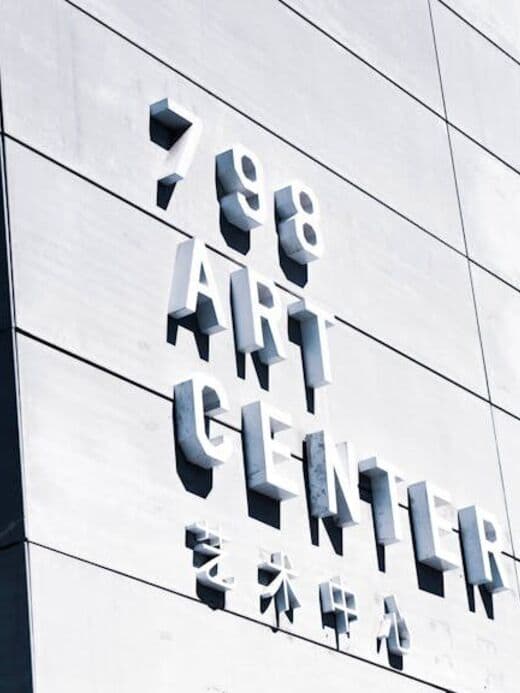
- Morning: 798 Art District - contemporary art galleries in former factory
- Afternoon: Panjiayuan Market - antiques
- Evening: Peking Opera or acrobatic show
7 Days - Full Immersion
Add to five days:
Day 6: Western Hills or Another Wall Section
- Option A: Fragrant Hills Park (香山) - especially beautiful in autumn with red leaves. Nearby: Temple of Azure Clouds
- Option B: Different Wall section - wild Jiankou or nighttime Simatai with Gubei Water Town
Day 7: Deeper into History
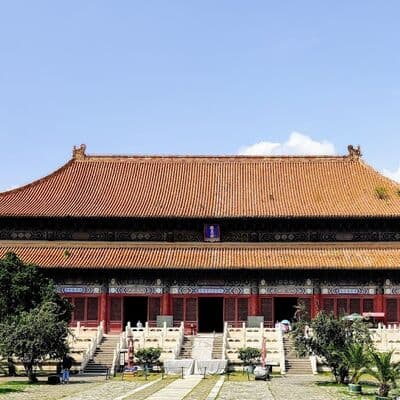
- Morning: Ming Tombs - imperial burial grounds 30 miles from city
- Midday: Sacred Way (road to tombs with stone statues)
- Evening: Return, Qianmen walk, Liulichang souvenirs
Themed Itineraries
Foodie Beijing (1 Day)
- Breakfast: Street jianbing + soy milk
- Morning: Dumpling-making cooking class
- Lunch: Zhajiang noodles at local shop
- Afternoon: Maliandao tea market - tastings
- Dinner: Peking duck at Da Dong or Liqun
- Late night: Gui Street - spicy crayfish and Sichuan cuisine
Beijing with Kids (1 Day)
- Morning: Beijing Zoo (pandas!) or Beijing Aquarium
- Midday: Olympic Park - can enter Bird's Nest
- Afternoon: Boat ride on Houhai Lake
- Evening: Acrobatic show at Chaoyang Theatre
Frequently Asked Questions
Visa and Entry
Do I need a visa to visit China?
Depends on your nationality and trip length. The 144-hour visa-free transit is available for 54 countries including US, UK, Canada, Australia, and most EU nations. Several European countries now have 15-day visa-free access. For longer stays, you'll need a tourist visa (L visa).
What is the 144-hour transit visa-free policy?
If traveling through Beijing to a third country (not your origin), you can stay up to 144 hours (6 days) visa-free. You need a passport valid 3+ months and a ticket to your next destination.
Do I need to register with police?
Yes, foreigners must register within 24 hours. Hotels do this automatically. If staying with friends, you need to visit the local police station.
Money and Payments
How do I pay in China without a Chinese bank account?
In 2025, WeChat Pay and Alipay officially support international Visa/Mastercard. Download the app, link your card, and pay with QR codes everywhere.
Is cash accepted?
Yes, cash yuan is accepted everywhere, but it's used less and less. Keep some for small purchases and backup.
Will my credit card work?
Visa/Mastercard work at hotels, major stores, upscale restaurants. Not reliable at small shops, street vendors, or local restaurants. WeChat/Alipay is more universal.
Internet and Connectivity
Do Google, Instagram, and WhatsApp work?
No, they're blocked in China. You need a VPN to access them. Install and test your VPN before arriving.
What VPN works best in China?
ExpressVPN, NordVPN, and Astrill work relatively well. But the firewall constantly updates, so no solution is guaranteed. Install multiple as backup.
Transportation
How do I get to the Great Wall independently?
To Mutianyu: Take bus 916 Express from Dongzhimen to Huairou (1 hour), then taxi (~¥50/~$7) or local bus H23. Alternative: Taxi/Didi direct (~¥250/~$35 one way).
Subway or taxi?
Subway is faster and cheaper during rush hour (traffic is horrific). Taxis are better at night, with luggage, or to remote areas. Combine both.
Culture and Language
Do people speak English in Beijing?
At tourist sites, hotels, and airports - yes. In taxis, small restaurants, and shops - rarely. Download a translation app and have addresses in Chinese.
Is it safe to take photos?
Generally yes. Avoid military installations, police, government buildings. Be especially careful around Tiananmen.
Health and Safety
Can I drink tap water?
No. Only bottled or boiled water. Hotels usually provide kettles and free water.
What about air quality?
Monitor AQI (AirVisual app). When AQI exceeds 150, wear N95 mask, limit outdoor time, choose indoor activities. Over 200, avoid physical exertion.
Practical Questions
When's the best time to visit the Forbidden City?
Early morning (arrive at 8:30 AM opening) or on weekdays. Avoid Chinese holidays and weekends. Book tickets online in advance - no online reservation means no entry.
How many days do I need for Beijing?
Minimum 3-4 days for main attractions. 5-7 days for comfortable exploration. 10+ days to explore surroundings and immerse in culture.
Which neighborhood is best for accommodation?
Dongcheng (near Wangfujing or Nanluoguxiang) is optimal for first visits - close to major sites. Houhai is more romantic. Sanlitun for nightlife.