Bali isn't just an island. It's an entire universe packed into 5,780 square kilometers. Rice terraces neighbor volcanoes, ancient temples sit alongside trendy beach clubs, and spiritual practices mix with world-class surfing. Millions visit each year, and everyone finds their own Bali.
When to Visit
Dry season (April-October): Ideal time. Minimal rain, comfortable humidity, great visibility for diving. Peak is July-August, when prices rise and crowds swell.
Rainy season (November-March): Not as bad as it sounds. Rains are usually short, often at night or afternoon. Greener scenery, fewer tourists, lower prices. But surfing and diving conditions are worse.
Pro tip: September-October is golden time. Dry, not too hot, fewer tourists than summer.
Visa and Entry (2025)
Visa on Arrival (VOA)
Citizens of most countries can get a visa on arrival:
- Duration: 30 days, extendable for another 30
- Cost: IDR 500,000 (~$35)
- e-VOA: Apply online beforehand and skip airport queues
Important change from June 2025: For visa extensions, you must now visit an immigration office in person for biometrics (fingerprints, photo). Apply online at least one week before your visa expires.
Tourist Levy
Since 2024, all tourists pay IDR 150,000 (~$10) upon each entry to Bali. Pay in advance at lovebali.baliprov.go.id - you'll get a QR code. You can pay at the airport, but expect queues.
Other Requirements
- Passport valid for at least 6 months
- Return ticket (may be requested)
- Electronic Customs Declaration (ECD) - complete within 3 days before arrival
Where to Stay: Bali's Areas
Bali isn't one resort - it's many different worlds. Your area choice defines your entire experience.
Canggu
Vibe: Hipster village turned digital nomad capital. Surf spots, trendy cafes, coworking spaces, yoga studios. Young, edgy, sometimes chaotic.
Best for: Remote workers, surfers, young travelers, beach club lovers (Finns Beach Club is legendary).
Downsides: Horrific traffic, especially on the main road. Beaches aren't for swimming - waves and currents.
Accommodation: Villas with pools from $30-50/night, rooms from $15.
Seminyak
Vibe: Canggu's glamorous older brother. Boutiques, fine dining, premium beach clubs. More polished, more expensive.
Best for: Couples, shoppers, foodies, those wanting beach plus civilization.
Downsides: Above-average prices, traffic issues too.
Accommodation: 5-star hotels from $150, villas from $80, budget options from $30.
Kuta and Legian
Vibe: Classic mass tourism. Kuta is loud, cheap, with bars and clubs. Legian is slightly calmer.
Best for: Budget travelers, party-goers, those needing airport proximity.
Downsides: Persistent hawkers, dirty-ish beaches, crowds. Many say Kuta "isn't what it used to be."
Accommodation: Cheapest area - hostels from $8, hotels from $20.
Ubud
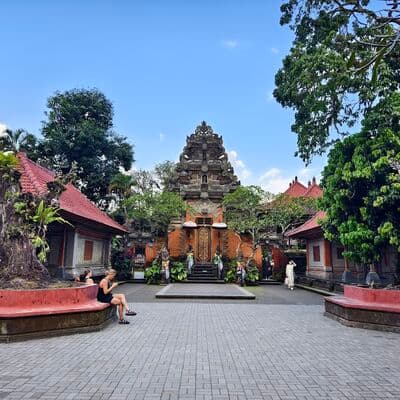
Vibe: Bali's cultural heart. Rice terraces, galleries, temples, yoga retreats, vegan restaurants. Peace and spirituality.
Best for: Yogis, artists, nature and culture lovers, those seeking "real Bali."
Downsides: No beach (40-60 minutes to coast), more humid and cooler, monkeys steal things.
Accommodation: Villas with rice field views from $40, budget guesthouses from $15.
Sanur
Vibe: Calm, family-friendly, slightly old-fashioned. Beach with gentle entry, promenade for walks, relaxed pace.
Best for: Families with children, older couples, those tired of partying.
Downsides: Boring for younger travelers, limited nightlife.
Accommodation: Good mid-range hotels from $50.
Nusa Dua
Vibe: Gated tourist zone with luxury resorts. Clean beaches, impeccable service, complete isolation from "real Bali."
Best for: All-inclusive lovers, those wanting a surprise-free vacation.
Downsides: Sterile, expensive, far from everything interesting.
Uluwatu and Bukit
Vibe: Rocky peninsula in the south. Epic sunsets, serious surfing, cliffside temple.
Best for: Advanced surfers, romantics, dramatic landscape lovers.
Downsides: Need transport (far from everything), beaches with tricky access.
Amed and East
Vibe: Quiet fishing village, black volcanic beaches, Bali's best snorkeling and diving.
Best for: Divers, peace seekers, those escaping crowds.
Downsides: Far from airport (2.5-3 hours), basic infrastructure.
Lovina (North)
Vibe: Completely different Bali. Black beaches, dolphins at sunrise, hot springs, waterfalls.
Best for: Those wanting non-touristy Bali, nature lovers.
Downsides: 3+ hours from airport, less accommodation and dining choice.
Transportation
Scooter/Motorbike
Bali's main transport. Rental: IDR 50,000-80,000/day ($3-5), from IDR 800,000/month.
Important for 2025: Police actively check licenses. You need local license OR International Driving Permit (IDP) + national motorcycle license. Fine for riding without: IDR 500,000-1,000,000.
Helmet mandatory. Insurance usually doesn't cover unlicensed bike accidents.
Grab and Gojek
Taxi apps, like Uber. Cheap, convenient, air-conditioned. But in tourist zones (Ubud, Sanur, Nusa Dua) there's a "taxi mafia" - local drivers who block ride-share. Walk away from the center to order.
Gojek also delivers food - very convenient.
Taxis
Blue Bird - the only reliable metered company. Others negotiate. At the airport - prepaid taxi with fixed prices.
Car with Driver
Excellent for excursions. From IDR 500,000-700,000 ($35-50) per day with driver. Driver knows roads, waits, shares information about sights.
Money
Currency: Indonesian Rupiah (IDR). Rate: approximately IDR 15,500-16,000 = $1.
ATMs: Everywhere, but charge IDR 25,000-50,000 per withdrawal. Limit usually IDR 2,500,000-3,000,000 per transaction.
Exchange: Money changers in tourist areas. Use official ones (Central Kuta, BMC), avoid street changers - they may shortchange you.
Cards: Visa/Mastercard accepted at hotels, large restaurants, and shops. But cash needed for small warungs, markets, taxis.
Tip: Always have small bills. Change may not be available.
Connectivity
SIM cards: Telkomsel (best coverage), XL, Indosat. Buy at official stores or the airport. Passport required for registration.
Monthly package with 10-20 GB data: IDR 50,000-150,000.
WiFi: Available everywhere - cafes, hotels, coworking spaces. Speed usually good.
eSIM: If your phone supports it - convenient alternative. Airalo, Holafly, and others.
What to See
Temples
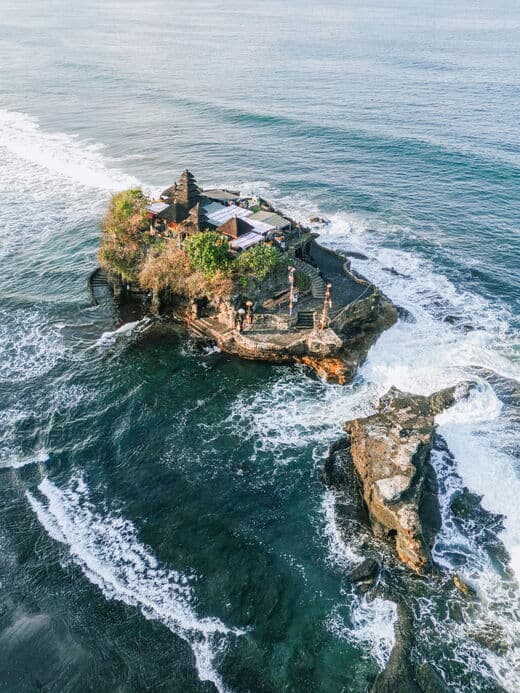
Tanah Lot - temple on a rock in the sea. Bali's most photographed. Come at sunset, but prepare for crowds.
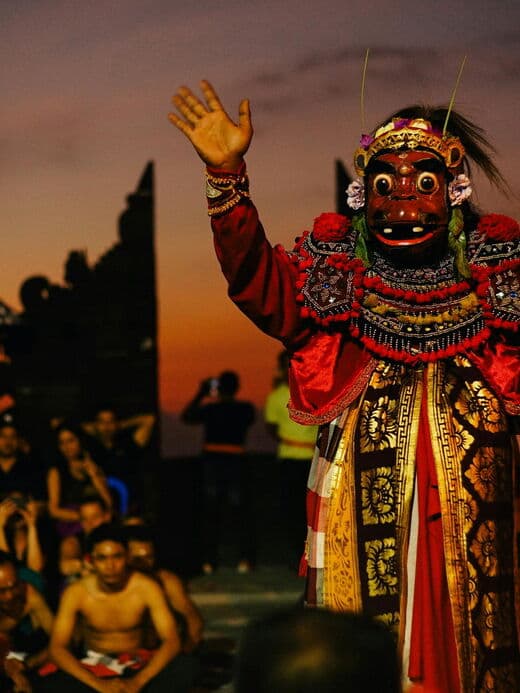
Uluwatu - on a 70-meter cliff. Incredible views, Kecak dance at sunset. Watch for monkeys - they steal glasses and phones!
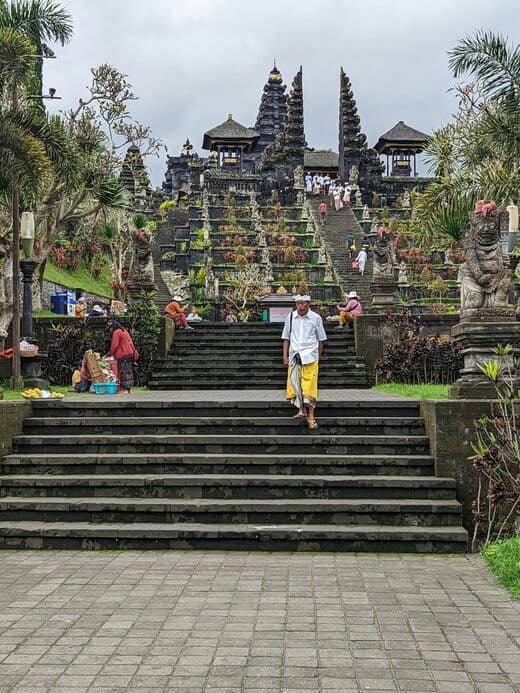
Besakih - "mother of all temples," on Mount Agung's slopes. Largest temple complex. Hire a guide through the official center to avoid pushy "helpers."
Tirta Empul - holy water temple for ritual purification. You can participate (sarong required, respectful behavior).
Rice Terraces
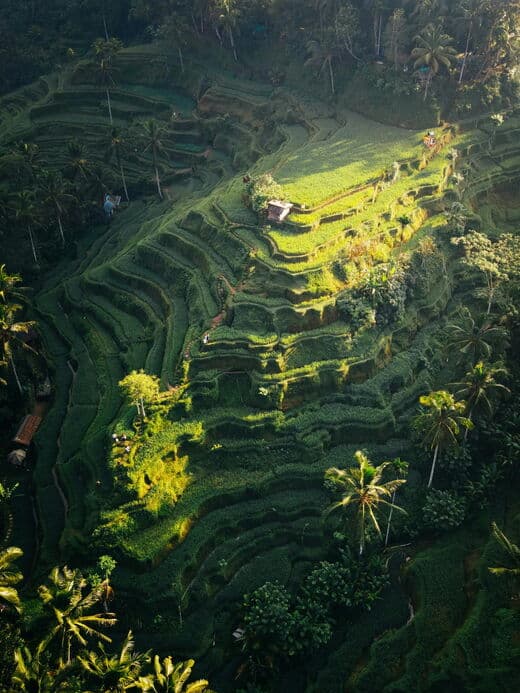
Tegallalang - most famous, 15 minutes from Ubud. Beautiful but crowded. Photo swings everywhere.
Jatiluwih - UNESCO site, larger and calmer than Tegallalang. Farther from Ubud but more atmospheric.
Sidemen - "secret Ubud." Terraces with Mount Agung backdrop, minimal tourists.
Waterfalls
Bali is an island of waterfalls. Most popular:
- Sekumpul - most beautiful, but far and requires stair descent
- Git Git - easily accessible, near Lovina
- Tukad Cepung - in a cave, light rays create magic
- Tegenungan - close to Ubud but crowded
Volcanoes
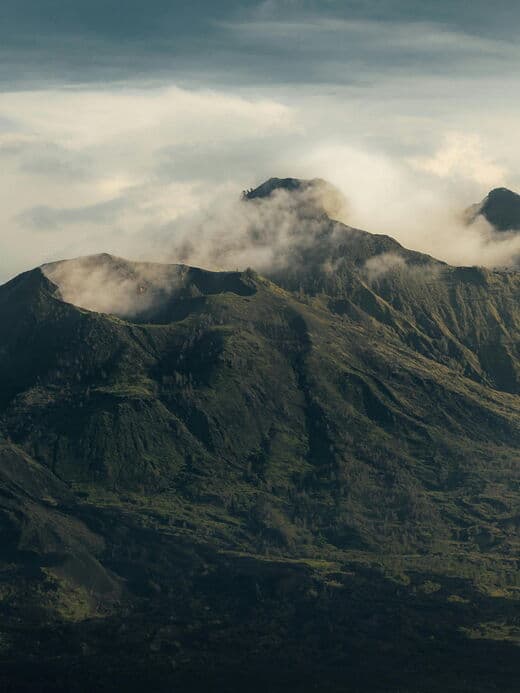
Mount Batur - sunrise trek. Start 2-3am, 2-hour climb, watch sunrise above clouds. A Bali must-do.
Mount Agung - Bali's highest point (3,142m). Harder than Batur, requires good fitness. Guide mandatory.
Beaches
For Swimming
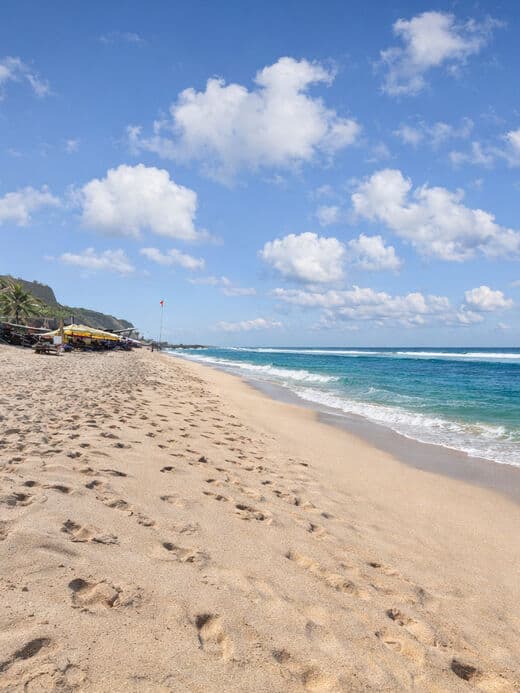
- Sanur - shallow, calm, perfect for kids
- Nusa Dua - clean sand, clear water, but "resort atmosphere"
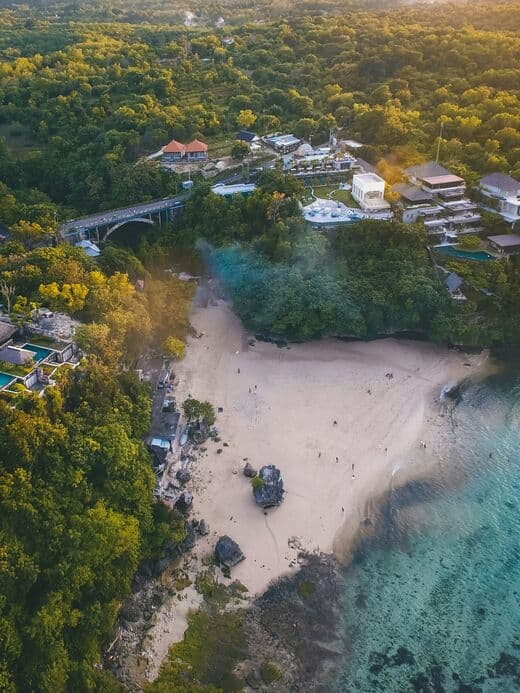
- Padang Padang - small picturesque beach (from "Eat, Pray, Love")
For Surfing
- Kuta - for beginners, gentle waves
- Canggu (Batu Bolong, Echo Beach) - intermediate level
- Uluwatu - for pros, powerful waves
For Sunsets
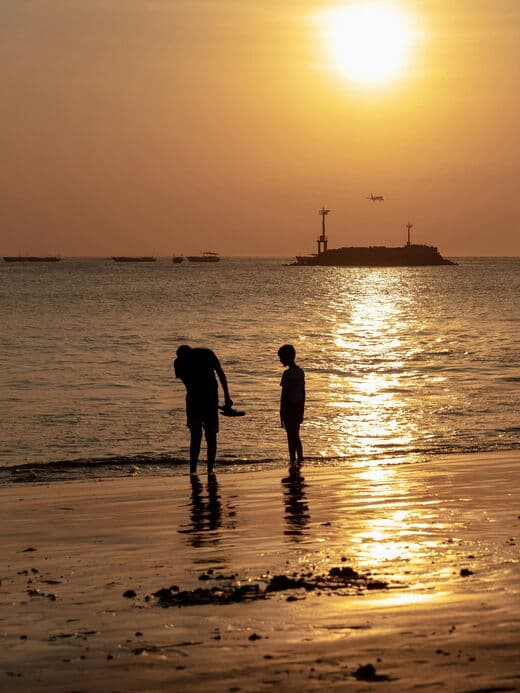
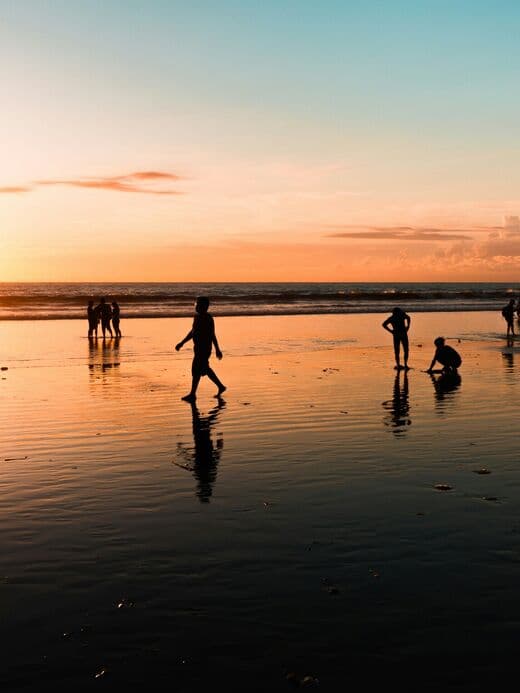
- Seminyak / Double Six - beachside bars, music, atmosphere
- Tanah Lot - temple in sunset light
- Uluwatu - dramatic cliffs
Nearby Islands
Nusa Penida
Neighboring island 45 minutes by boat. Wild nature, incredible views: Kelingking Beach (T-Rex shaped cliff), Broken Beach, Angel's Billabong. Terrible roads - take a tour or experienced driver.
Gili Islands (Trawangan, Meno, Air)
Three islands off Lombok coast. No cars or bikes - only bicycles and horse carts. Trawangan is party island, Meno is romantic, Air is balanced. Great snorkeling with turtles.
Lombok
"Bali 20 years ago." Fewer tourists, wild beaches, Mount Rinjani for trekking. 25-minute flight or 2-4 hours by boat.
Activities
Surfing
Bali is Asia's surfing capital. Schools everywhere, especially in Kuta and Canggu. Beginner lesson: $20-40, including board and instructor.
Diving and Snorkeling
Best spots: Amed (USAT Liberty shipwreck in Tulamben), Nusa Penida (manta rays!), Menjangan in the west. Snorkeling on Gili - turtles guaranteed.
Yoga and Wellness
Ubud is the world's yoga capital. Yoga Barn, Radiantly Alive - famous studios. Retreats, meditation, sound baths. Spa and massage - from $10/hour to infinity at luxury spas.
Rafting
On Ayung River near Ubud. 2-3 hours, easy rapids, suitable for beginners. About $30-50 with transfer.
Food
What to Try
- Nasi Goreng - fried rice (national dish)
- Mie Goreng - fried noodles
- Babi Guling - spit-roasted pig (not halal!)
- Satay - skewers with peanut sauce
- Gado-Gado - vegetables with peanut sauce
- Nasi Campur - rice with assorted sides
Where to Eat
Warungs - local eateries. Lunch IDR 25,000-50,000 ($1.5-3). Tasty, cheap, authentic.
Cafes and restaurants - in tourist areas for every budget and cuisine. Canggu and Ubud famous for healthy food and smoothie bowls.
Tip: Eat where locals eat. Fresher and cheaper.
Practical Tips
- Bargain at markets and non-tourist shops. Starting prices often inflated 2-3x.
- Temple dress: Sarong and sash mandatory (usually provided at entrance or buy one).
- Monkeys - don't provoke, don't show food, hide glasses and phones.
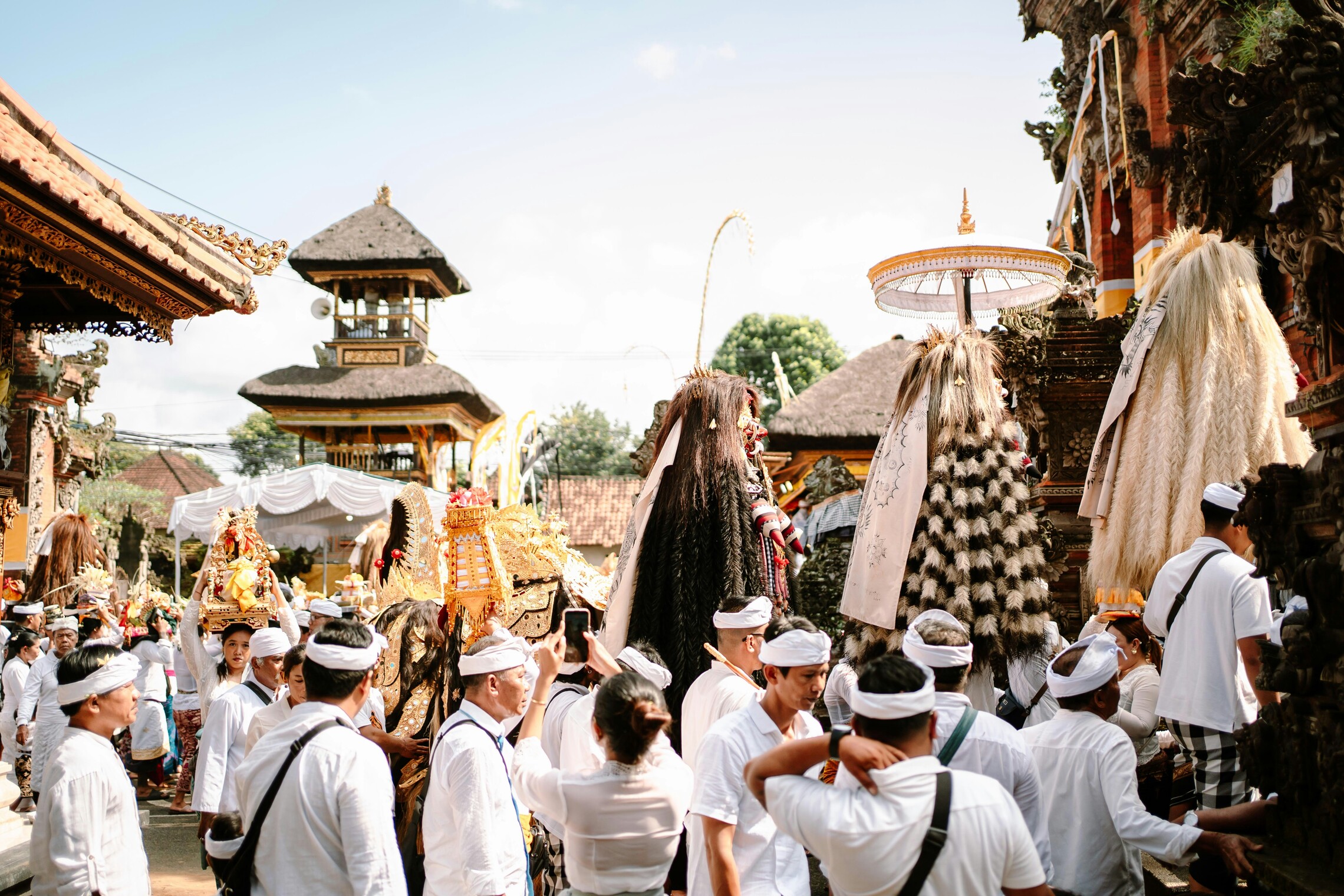
- Balinese ceremonies: If you see a procession, give way. Don't step over offerings on the ground.
- Traffic: Allow extra time, especially in Kuta-Seminyak-Canggu.
- Insurance: Essential. Check if it covers activities (motorbike, diving, surfing).
- Water: Drink only bottled. Ice in tourist places is usually safe.