Agra Travel Guide 2025: Complete Guide to the City of the Taj Mahal
Agra is where love became immortalized in marble. The Taj Mahal, recognized as one of the New Seven Wonders of the World, draws millions of visitors annually. But Agra offers much more than its famous mausoleum - Agra Fort, the Tomb of Itimad-ud-Daulah, Fatehpur Sikri, and the rich heritage of the Mughal Empire await exploration. This comprehensive guide covers everything you need for the perfect 2025 visit.
Welcome to Agra
Agra is a city in the northern Indian state of Uttar Pradesh with a population of approximately 1.8 million. Situated on the banks of the sacred Yamuna River, this city served as the capital of the Mughal Empire during the 16th and 17th centuries and still preserves traces of that magnificent era. Three monuments in Agra are UNESCO World Heritage Sites: the Taj Mahal, Agra Fort, and Fatehpur Sikri.
The story of the Taj Mahal is a story of love. Emperor Shah Jahan built this mausoleum in memory of his beloved wife Mumtaz Mahal, who died during childbirth in 1631. Construction took 22 years and involved over 20,000 craftsmen from across Asia. The white marble was transported from Rajasthan, while precious stones for inlay came from Persia, Tibet, Afghanistan, and even Europe.
Agra forms an essential part of the famous "Golden Triangle" tourist route (Delhi - Agra - Jaipur). Most travelers spend 1-2 days here, but the city deserves deeper exploration. Beyond the main attractions, you can immerse yourself in Mughal-era atmosphere, sample famous Agra cuisine, and purchase traditional handicrafts.
In 2025, Agra continues developing its tourist infrastructure. New eco-friendly zones around the Taj Mahal have opened, the ticketing system has been modernized, and transportation links with Delhi have improved thanks to high-speed trains. The city is ready to welcome visitors at a high standard while preserving its unique historical heritage.
Best Time to Visit
Agra has a subtropical monsoon climate. Choosing the right season is critical for a comfortable trip.
Winter (October - March) - Best Season
Winter months are ideal for visiting Agra. Daytime temperatures range from 68-77°F (20-25°C), dropping to 41-50°F (5-10°C) at night. Clear skies are especially important for Taj Mahal photography. December and January are peak season when the city is crowded and hotel prices are highest. For a calmer experience, choose November or February-March.
Summer (April - June) - Hot Season
Summers in Agra are extremely hot. Temperatures reach 104-113°F (40-45°C), and in May-June can hit 118°F (48°C). The hot "loo" winds make being outdoors unbearable. If traveling during this time, start sightseeing at sunrise (Taj Mahal opens at 6:00 AM) and avoid going out during midday. The advantage: minimal tourists and low prices.
Monsoon (July - September) - Rainy Season
Monsoon rains bring relief from the heat but create inconveniences. Humidity reaches 90%, and downpours can be sudden and heavy. Roads sometimes flood. However, after rain, the Taj Mahal looks especially majestic against dramatic skies, and surrounding greenery comes alive. Few tourists, low prices.
Special Dates
The Taj Mahal is closed on Fridays (Muslim day of prayer). Plan visits for other days. On full moon nights, the Taj Mahal can be visited in the evening (8:30 PM - 12:30 AM) - a unique experience, but tickets must be booked in advance. Taj Mahotsav Festival (February) is an annual cultural celebration with music, dance, and craft fairs.
How to Get There
There are no direct international flights to Agra. Access is through Delhi or other major Indian cities.
Flying to Delhi
Indira Gandhi International Airport (DEL) in Delhi is the main hub for visiting Agra. Major airlines flying to Delhi include:
- From North America: Air India, United, American Airlines (direct from select cities); connections via Europe or Middle East
- From Europe: British Airways, Lufthansa, Air France, KLM, Swiss (direct or one-stop)
- From Middle East: Emirates, Qatar Airways, Etihad (excellent connections from Dubai, Doha, Abu Dhabi)
- From Asia-Pacific: Singapore Airlines, Thai Airways, Cathay Pacific, ANA, JAL
From Delhi to Agra
The distance from Delhi to Agra is approximately 140 miles (230 km). Several transportation options:
Train (Recommended)
- Gatimaan Express: Fastest train, 1 hour 40 minutes journey. Departs Delhi (Hazrat Nizamuddin) at 8:10 AM, returns from Agra at 5:50 PM. Ticket from ₹750 (~$9) in CC class (air-conditioned)
- Shatabdi Express: 2-hour journey. Departs New Delhi Station at 6:00 AM, returns from Agra at 8:30 PM. Ticket from ₹550 (~$7)
- Other trains: Multiple options of varying speed and comfort. Book on IRCTC website or app
Bus
Air-conditioned Volvo buses run between Delhi and Agra. Journey time 4-5 hours (depending on traffic). Cost ₹400-800 (~$5-10). Departs from ISBT Sarai Kale Khan bus station in Delhi.
Taxi or Rental Car
Taxi from Delhi to Agra costs ₹3000-4000 (~$36-48) one way. Journey time 3-4 hours via Yamuna Expressway. Convenient if you want to stop en route (e.g., Mathura - birthplace of Krishna).
Visa Information
Most international visitors need a visa for India. Options include:
- e-Visa: Apply online at indianvisaonline.gov.in. 30-day tourist e-Visa costs $25, 1-year costs $40, 5-year costs $80. Processing time 3-5 days. Requirements: valid passport, photo, accommodation proof, return tickets
- ETIAS (for Europeans): From 2025, EU citizens need both Indian e-Visa and ETIAS for return travel
- Regular Visa: Through Indian embassy or consulate. Longer processing, suitable for extended stays
Tip: Apply for e-Visa 2-4 weeks before travel. Peak season (December-January) may have delays.
Getting Around Agra
Agra is a compact city with major attractions relatively close together. However, walking is not recommended due to chaotic traffic and heat.
Rickshaws
Auto-rickshaw (tuk-tuk): The most common transport. Negotiate price beforehand. From railway station to Taj Mahal: ₹50-100 (~$0.60-1.20). From Taj Mahal to Fort: ₹50. Use OLA Auto app for fair prices.
Cycle rickshaw: Eco-friendly and slow option. Good for short distances and narrow old city streets. Price negotiable, typically ₹20-50 for short trips.
Taxis and Apps
Uber and Ola work in Agra. Fixed prices, card or cash payment. Convenient and safe. Half-day taxi rental (4-5 hours): from ₹1500 (~$18). Full day (8 hours): from ₹2500 (~$30).
Electric Buses
In 2025, eco-friendly electric buses launched between major attractions as part of the "Taj Trapezium Zone" initiative. Route: Agra Cantt Station - Taj Mahal - Agra Fort. Ticket ₹20 (~$0.25).
Bicycle
Bicycle rental available at some hotels and rental shops (₹100-200/day, ~$1.20-2.40). Good option for early morning when traffic is minimal.
Important Tips
- Always negotiate price before the ride
- Carry small bills - change may not be given
- Rickshaw drivers may offer to take you to "best" shops - tourist traps; decline
- Don't accept "free" tours - they end at overpriced shops
Agra's Neighborhoods
Agra divides into several areas with different characters and tourist amenities.
Taj Ganj
The area around the Taj Mahal's south gate - the main tourist zone. Budget and mid-range hotels, rooftop restaurants with mausoleum views, souvenir shops cluster here. Narrow streets full of life and chaos. Pros: walking distance to Taj Mahal, atmosphere. Cons: noisy, many pushy vendors and "guides."
Sadar Bazaar
Agra's commercial center with shops, restaurants, and mid-range to upscale hotels. More modern and organized area. Convenient access to all attractions from here. Good choice for those who value comfort but want to stay in the action.
Fatehabad Road
Main tourist street with major hotels (ITC Mughal, Oberoi Amarvilas, Radisson). Best restaurants and shops located here. Clean and well-maintained area but lacks authenticity. Ideal for those seeking comfort and quality service.
Cantonment
Former British military area, now a quiet, green neighborhood. Agra Cantt railway station is here. Mostly mid-range hotels. Good choice for families and those preferring tranquility.
Where to Stay: Recommendations
- Budget travelers: Taj Ganj - numerous hostels and guesthouses from ₹500/night (~$6)
- Mid-range budget: Sadar Bazaar or Cantonment - hotels from ₹2000-5000 (~$24-60)
- Luxury: Fatehabad Road - Oberoi Amarvilas (Taj Mahal view from every room), ITC Mughal
Agra's Attractions
Agra is a treasure trove of Mughal heritage. Beyond the Taj Mahal, numerous stunning monuments await.
Taj Mahal
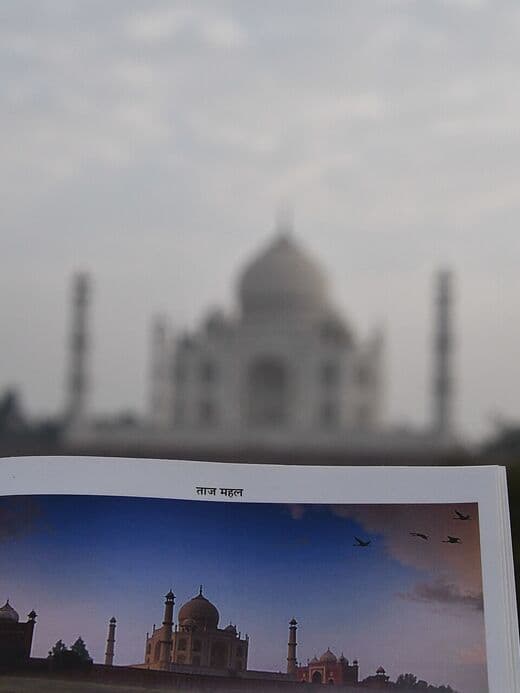
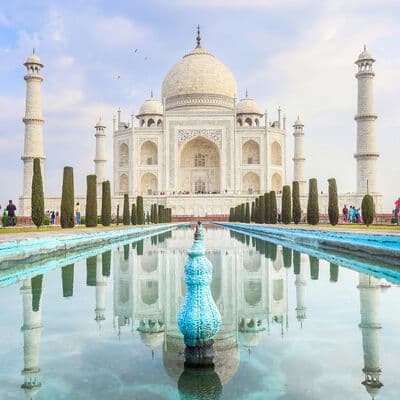
"A tear on the cheek of eternity" - poet Rabindranath Tagore's description of the Taj Mahal. This white marble mausoleum, built by Emperor Shah Jahan in memory of his wife Mumtaz Mahal, is recognized as one of the New Seven Wonders of the World.
What to see: Main mausoleum with 240-foot (73m) dome, minarets (each slightly tilted outward for earthquake protection), Charbagh garden with reflecting pool, mosque and guest house flanking the tomb, semi-precious stone inlay (pietra dura).
Best time to visit: Sunrise - when marble turns pink and crowds are smallest. Also beautiful at sunset and during full moon.
Practical information: Open daily except Friday, 6:00 AM to 7:00 PM. Foreign tourist entry ₹1100 (~$13) including water bottle and shoe covers. Online booking at ASI (Archaeological Survey of India) website recommended. Full moon evening visits (8:30 PM - 12:30 AM) cost additional ₹750, tickets must be booked 24 hours ahead.
Prohibited: Food, camera tripods, drones, smoking. Leave large bags at storage facilities near gates.
Agra Fort
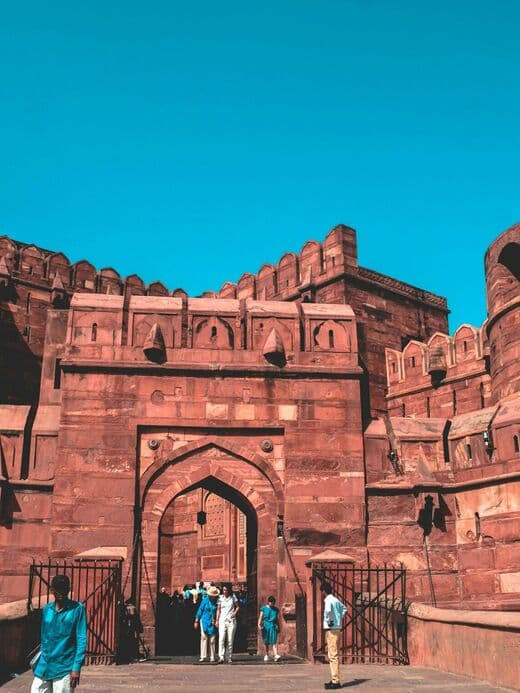
This red sandstone fort is Agra's second UNESCO World Heritage Site. Built by Emperor Akbar in 1565 and expanded by his successors. It served as the Mughal emperors' residence until the capital moved to Delhi.
What to see: Delhi and Lahori Gates, Diwan-i-Am (Hall of Public Audience), Diwan-i-Khas (Hall of Private Audience), Musamman Burj - octagonal tower where imprisoned Shah Jahan gazed at the Taj Mahal, Shish Mahal (Mirror Palace), Nagina Masjid (Gem Mosque).
Practical information: Open daily 6:00 AM to 6:00 PM. Foreign entry ₹650 (~$8). Located 1.5 miles (2.5 km) from Taj Mahal, easy to combine in one day.
Tomb of Itimad-ud-Daulah (Baby Taj)
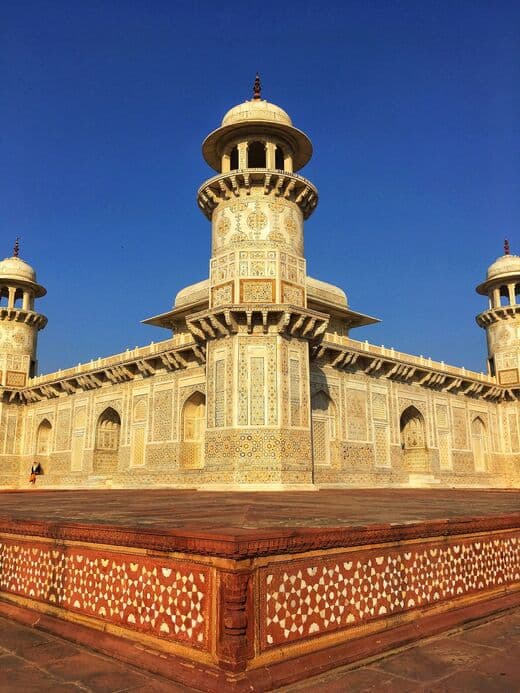
This delicate tomb is called the "Baby Taj" or "Jewel Box." Built by Empress Nur Jahan for her father. Considered a precursor to the Taj Mahal - the first building to use pietra dura inlay technique.
Practical information: Open daily sunrise to sunset. Entry ₹310 (~$4). Located on the opposite bank of the Yamuna, less crowded than the Taj Mahal.
Fatehpur Sikri
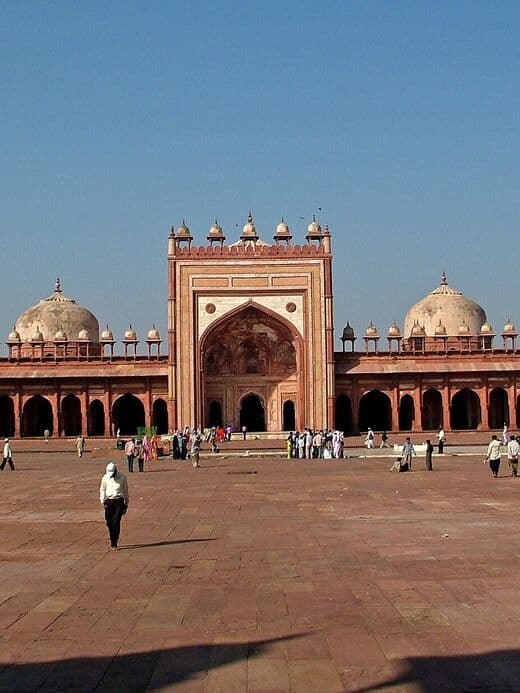
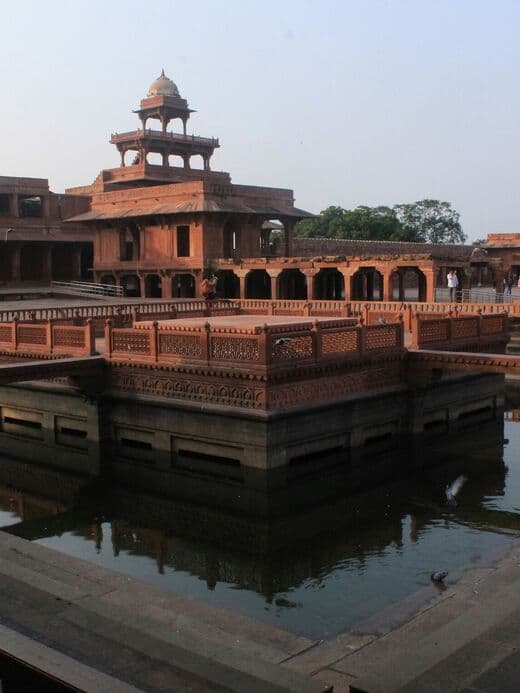
This abandoned fortress city 25 miles (40 km) from Agra is the region's third UNESCO site. Built by Akbar as his capital but abandoned after 14 years due to water scarcity.
What to see: Buland Darwaza (Gate of Magnificence) - world's tallest gateway at 177 feet (54m), Salim Chishti's tomb with intricate marble screens, Panch Mahal (five-story palace), Diwan-i-Khas with unique central pillar.
Practical information: Open sunrise to sunset. Entry ₹610 (~$7). Reach by bus (₹30, 1 hour) or taxi (₹1500-2000 round-trip with waiting).
Mehtab Bagh (Moonlight Garden)
Garden on the opposite bank of the Yamuna from the Taj Mahal. Best spot for sunset photos with the mausoleum's reflection in the river (during monsoon season). Entry ₹300 (~$4).
Akbar's Tomb (Sikandra)
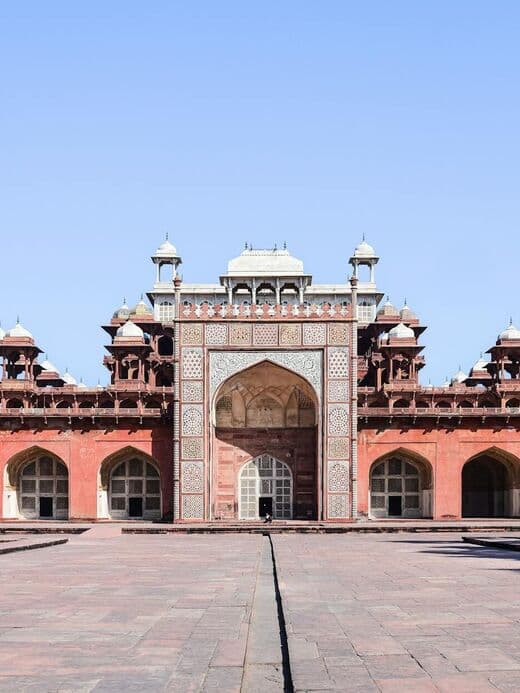
Mausoleum of the great Emperor Akbar, 6 miles (10 km) from Agra. Unique architecture combining Hindu, Islamic, and Christian elements - reflecting Akbar's religious tolerance. Entry ₹310 (~$4).
What's New in 2025
Agra continues modernizing tourist infrastructure while preserving its heritage.
Taj Mahal Eco-Zone
The ecological buffer zone around the Taj Mahal has expanded. Petrol and diesel vehicles are banned within 500 meters of the mausoleum. Only electric buses, cycle rickshaws, and walking allowed. This has improved air quality and marble preservation.
Online Booking and QR Tickets
The ticketing system is now fully digital. Purchase tickets on the ASI website or app. QR code on your smartphone serves as entry ticket. This has reduced queues and eliminated counterfeit ticket issues.
Mughal Heritage Center
A new museum complex near Fatehpur Sikri features interactive exhibitions about Mughal Empire history, Taj Mahal construction techniques, and virtual reality immersion into the era. Excellent supplement to monument visits.
Improved Transportation Links
Gatimaan Express now runs more frequently, with additional high-speed train departures from Delhi. A metro line extension from Delhi to Agra is planned (expected completion 2027).
Agra Fort Night Illumination
An evening illumination program has launched at Agra Fort. The light show narrates the fortress and Mughal Empire history. Runs nightly after sunset, separate tickets required.
Clean Air Program
Agra is actively combating air pollution. Industrial facilities near the Taj Mahal have closed, green spaces have expanded, and electric transport is growing. Air quality has noticeably improved compared to previous years.
Agra's Cuisine
Agra is famous for its Mughlai cuisine - rich, aromatic, with abundant spices and nuts. Vegetarians will also find plenty of options.
Traditional Dishes
Petha - Agra's most famous sweet. Candy made from ash gourd in sugar syrup, available in various types: classic white, saffron-flavored, with nuts, with coconut. Best pethas at Panchi and Panchhi Petha shops. Makes an excellent souvenir.
Dalmoth - crispy snack of fried lentils and spices. Sold everywhere, perfect with tea.
Mughlai curries: Shahi Paneer (cottage cheese in cream sauce), Korma (meat in nut sauce), Biryani (rice with meat and spices), Kebabs. Many recipes date back to imperial kitchens.
Paratha - stuffed flatbreads (potato, paneer, onion). Traditional breakfast with butter and yogurt.
Bedai and Jalebi - popular breakfast: fried bedai bread with vegetable curry and sweet jalebi.
Where to Eat
Pinch of Spice (Fatehabad Road): Agra's best restaurant, modern interpretation of Mughlai cuisine. Average check ₹800-1200 (~$10-15) per person.
Esphahan (Oberoi Amarvilas): Luxury restaurant with Taj Mahal view. Refined Indian cuisine. Expensive but unforgettable.
Mama Chicken (Sadar Bazaar): Popular with locals, excellent tandoori dishes. Budget-friendly.
Dasaprakash: South Indian vegetarian cuisine - dosas, idlis, sambar. Clean option for vegetarians.
Rooftop restaurants in Taj Ganj: Numerous cafes with rooftops overlooking the Taj Mahal. Food quality average, but views are stunning. Saniya Palace Hotel, Hotel Kamal - popular choices.
Street Food
Chaat (tangy snacks), samosas, kachoris, lassi (yogurt drink) - all available on the streets. Be cautious about hygiene: choose places where food is prepared fresh before you and has many customers. Avoid raw salads and ice in drinks.
For International Visitors
Indian cuisine can be spicy. Request "no spicy" or "mild" if you're not accustomed to spices. Bottled water is essential - don't drink tap water or use it even for brushing teeth.
Evening Entertainment
Agra is not a nightlife city. It's a religious and tourist center where evenings are quiet. But several after-dark options exist.
Taj Mahal by Moonlight
The main evening attraction - visiting the Taj Mahal during full moon. The mausoleum opens from 8:30 PM to 12:30 AM on the night before, night of, and night after full moon. Maximum 400 visitors per night in groups of 50 every half hour. Tickets (₹750/~$9) sold 24 hours ahead at the East Gate counter. A mystical experience when white marble glows in moonlight.
Kalakriti Cultural Show
Kalakriti Cultural Center presents nightly "Mohabbat the Taj" - a dramatic performance about Shah Jahan and Mumtaz Mahal's love story. Show in Hindi and English with dance and music. Starts at 6:30 PM and 8:30 PM, tickets ₹500-1000 (~$6-12).
Hotel Bars
Alcohol in Agra is only available in hotels. Bars at ITC Mughal, Oberoi Amarvilas, Radisson offer drinks and light snacks in pleasant settings. Prices are high by Indian standards.
Yamuna Riverfront Walk
An evening stroll along the river with Taj Mahal views is a romantic way to end the day. Boat rides available from Mehtab Bagh.
Markets
Kinari Bazaar and Sadar Bazaar operate until 9 PM. Evening shopping in cooler temperatures is a good alternative to daytime heat.
Shopping in Agra
Agra is renowned for traditional crafts, many dating to the Mughal era.
What to Buy
Marble items with inlay (Pietra Dura): The inlay technique using semi-precious stones, as seen in the Taj Mahal. Boxes, tabletops, plates, coasters. Prices from ₹500 (~$6) for small boxes to hundreds of thousands for tabletops. Check quality: real stones don't heat up in sunlight.
Leather goods: Agra is India's largest footwear producer. Bags, belts, handmade shoes. Buy from reputable shops, check quality.
Carpets: Handmade silk and wool carpets. Persian and Mughal-style patterns. Bargain - initial prices may be 3-5 times inflated.
Zari and embroidery: Fabrics with gold and silver embroidery. Saris, bedspreads, cushions.
Petha and sweets: Excellent edible souvenir. Buy from Panchi or Panchhi Petha branded shops.
Where to Buy
Subhash Emporium (18 Gwalior Road): Government shop with fixed prices. Quality guaranteed, no cheating. Good starting point to understand prices.
Kinari Bazaar: Old market for spices, fabrics, and jewelry. Atmospheric but bargaining essential.
Sadar Bazaar: More modern shops. Clothing, footwear, souvenirs.
Shilpgram: Craft village near the Eastern Gate of Taj Mahal. Workshops and attached shops. Watch items being created.
Shopping Tips
- Bargain everywhere except government shops. Start at 30-40% of quoted price
- Don't trust rickshaw drivers offering to take you to the "best" shop - they receive commission, you overpay
- Ask for certificates on marble products
- Avoid purchases near the Taj Mahal - prices are inflated
- Pay cash for better discounts
Travel Budget
Agra is affordable by world tourism standards. Here are approximate 2025 costs (₹1 ≈ $0.012):
Accommodation
- Hostels and guesthouses: ₹500-1500/night (~$6-18)
- Budget hotels: ₹1500-3000/night (~$18-36)
- Mid-range (3-star): ₹3000-6000/night (~$36-72)
- Premium (4-5 star): ₹8000-25000/night (~$96-300)
- Luxury (Oberoi Amarvilas): from ₹50000/night (~$600+)
Peak season (December-January) prices may increase 30-50%. Book early.
Food
- Street food: ₹50-150 per meal (~$0.60-1.80)
- Simple restaurants: ₹150-300 (~$1.80-3.60)
- Mid-range restaurants: ₹300-800 (~$3.60-10)
- Hotel restaurants: ₹800-2000 (~$10-24)
Entry Fees
- Taj Mahal: ₹1100 (foreigners)
- Agra Fort: ₹650
- Fatehpur Sikri: ₹610
- Itimad-ud-Daulah: ₹310
- Mehtab Bagh: ₹300
- Akbar's Tomb: ₹310
No combined ticket for all attractions available.
Transportation
- Auto-rickshaw (per ride): ₹50-150 (~$0.60-1.80)
- Half-day taxi: ₹1500-2000 (~$18-24)
- Full-day taxi: ₹2500-3500 (~$30-42)
- Delhi-Agra train: ₹550-750 (AC class)
Approximate Daily Budget
- Backpacker: ₹2000-3000/day (~$24-36)
- Mid-range: ₹5000-8000/day (~$60-96)
- Comfortable: ₹10000-15000/day (~$120-180)
- Luxury: ₹20000+/day (~$240+)
Culture and Etiquette
India has a rich culture with its own behavioral norms. Understanding basics helps avoid misunderstandings.
Religion and Respect
Agra is a city with both Islamic and Hindu heritage. The Taj Mahal is a Muslim mausoleum; the fort is connected to both religions. Respect religious sensitivities: be quiet, don't disturb worshippers, remove shoes when entering mosques and temples.
Dress Code
Dress modestly, especially at religious sites. Covered shoulders and knees are required. Loose clothing recommended for women. Free shoe covers are provided at the Taj Mahal entrance; you don't need to remove shoes.
Photography
Ask permission before photographing people. Many Indians happily pose, but some may decline. Photography may be restricted at religious sites.
Left Hand
The left hand is considered unclean in Indian culture. Pass money, gifts, and food with your right hand. Eat with your right hand if using hands (traditional in Indian food).
Bargaining
Haggling is part of the culture and expected behavior. Vendors start with inflated prices. Bargain with a smile - it's social interaction, not conflict.
Tipping
Tips are not mandatory but appreciated. In restaurants - 10% of the bill. For porters, rickshaw drivers, guides - at your discretion (typically ₹50-100).
Time
The concept of "Indian time" (IST, jokingly called "Indian Stretchable Time") means 15-30 minute delays are normal. Be patient.
Practical Tips
Advice for a safe and comfortable Agra trip.
Safety
Agra is relatively safe for tourists, but vigilance doesn't hurt. Watch for pickpockets in crowds. Don't display expensive jewelry. Keep money and documents in different places. Avoid deserted areas after dark.
Scams
Common schemes to avoid:
- "Free" guides: Offer help near Taj Mahal, then demand payment or take you to shops
- "Taj Mahal is closed": Rickshaws claim the mausoleum is closed and offer alternative tours. Verify information yourself
- Fake shops: Rickshaws take you to "government" stores with supposed discounts. These are private shops with inflated prices
- Inflated prices: Initial tourist price may be 5-10 times the actual value. Bargain
- "Charity" schools: Offers to visit a school and donate. Often scams
Health
- Drink only bottled water (check seal integrity)
- Avoid street ice in drinks
- Wash hands frequently, carry sanitizer
- Bring stomach upset medication (common tourist issue)
- Sunscreen and hat are essential
- In hot season, drink lots of water - dehydration risk is high
Internet and Communication
WiFi available at most hotels. Mobile internet: buy Airtel or Jio SIM card in Delhi (passport and photo required). Easier to use roaming or international eSIM.
Electricity
230V, 50Hz. Socket types C, D, and M (round pins of different diameters). US/UK plugs need adapters. European Type C plugs usually work. Bring a universal adapter to be safe.
Emergency Numbers
- Police: 100
- Ambulance: 102
- Agra Tourist Police: +91 562 242 1204
- US Embassy Delhi: +91 11 2419 8000
- UK High Commission Delhi: +91 11 2419 2100
Useful Hindi Phrases
- Hello: Namaste (नमस्ते)
- Thank you: Dhanyavaad (धन्यवाद)
- Yes: Haan (हाँ)
- No: Nahin (नहीं)
- How much?: Kitne ka hai? (कितने का है?)
- Too expensive: Bahut mahenga hai (बहुत महंगा है)
- Help: Madad karo (मदद करो)
Sample Itineraries
Visit plans based on available time.
1 Day (Minimum)
Sunrise: Taj Mahal (arrive at 6:00 AM opening for best photos and fewer crowds). 2-3 hours for viewing.
Morning: Breakfast at hotel or Taj Ganj cafe.
Late morning: Agra Fort. 2 hours.
Lunch: Pinch of Spice restaurant.
Afternoon: Itimad-ud-Daulah (1-1.5 hours).
Sunset: Mehtab Bagh - sunset photos of Taj Mahal.
2 Days (Recommended)
Day 1: As above.
Day 2 morning: Fatehpur Sikri (25-mile drive, 3-4 hours touring).
Day 2 afternoon: Akbar's Tomb at Sikandra.
Evening: Shopping at Kinari Bazaar or Sadar Bazaar.
3 Days (Full Experience)
Add to 2-day itinerary:
Day 3 morning: Return to Taj Mahal (if you want to see it in different light).
Day 3: Mathura and Vrindavan - sacred Krishna cities 30 miles from Agra. Or a relaxed day with shopping and local cuisine tasting.
Day Trip from Delhi
Possible but tiring. Recommended plan:
6:00 AM - Gatimaan Express from Delhi. 7:40 AM - Arrive Agra. 8:00-11:00 AM - Taj Mahal. 11:30 AM-1:30 PM - Agra Fort. 2:00 PM - Lunch. 3:00-4:30 PM - Itimad-ud-Daulah. 5:50 PM - Gatimaan Express back to Delhi (arrives 7:30 PM).
Frequently Asked Questions
Q: How much time do I need at the Taj Mahal?
A: Minimum 2 hours, better 3-4 hours for leisurely viewing and photos. Arrive at opening (6:00 AM) or 2 hours before sunset.
Q: Why is the Taj Mahal closed on Fridays?
A: Friday is the Muslim day of prayer. Prayers are held at the Taj Mahal mosque. Plan visits for other days.
Q: Do I need a guide?
A: Not mandatory but useful for understanding history. Hire official guides at ticket counters (around ₹500 for 2 hours). Avoid "volunteer" street guides.
Q: Is street food safe?
A: With caution. Choose high-traffic spots where food is prepared fresh before you. Avoid raw items and ice. Drink only bottled water.
Q: How long is the journey from Delhi?
A: By train 1.5-2 hours (Gatimaan or Shatabdi Express). By car 3-4 hours via Yamuna Expressway.
Q: When's the best time to visit?
A: October-March is peak season with comfortable weather. Avoid May-June (extreme heat) and July-September (monsoons) unless prepared for challenging conditions.
Q: Are there ATMs?
A: Yes, ATMs throughout the city. State Bank of India, HDFC, ICICI are major banks. Withdraw cash in smaller amounts.
Q: What currency should I bring?
A: Indian Rupees. Exchange currency in Delhi (airport, banks). Fewer exchange points in Agra. Visa/Mastercard accepted at major shops and hotels.
Q: Can I use a drone?
A: No. Drones are prohibited over the Taj Mahal and other protected monuments. Violations result in confiscation and fines.
Q: What should I wear?
A: Modestly, covering shoulders and knees. Comfortable shoes for long walks. Summer - light, breathable clothing and hat. Winter - warm layers for morning and evening.