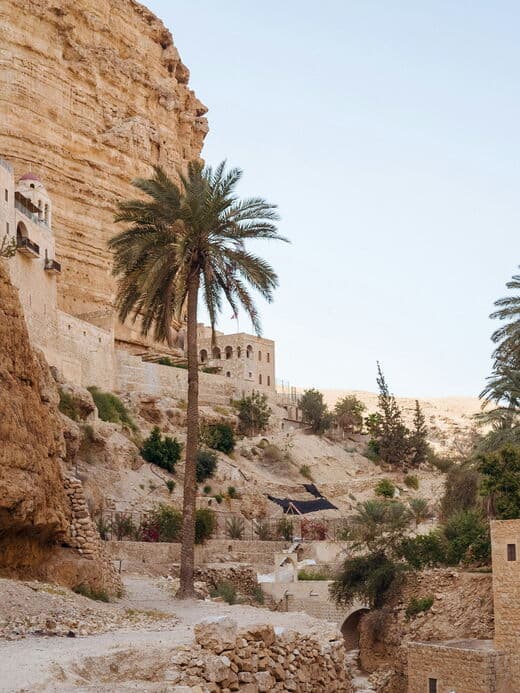
Palestine is a historic land in the Middle East where the fates of peoples, religions and cultures intertwine. Every stone here holds memories of millennia of history, and ancient cities coexist with modern life. For travelers, Palestine means Bethlehem, Hebron, Jericho, Nablus and Ramallah.
Geography and Climate
The Palestinian territories (West Bank and Gaza Strip) cover about 6,020 km². The West Bank lies between Israel and Jordan, while the Gaza Strip is a narrow coastal strip on the Mediterranean. The terrain is diverse: from the Jordan Valley (the lowest point on Earth at the Dead Sea, -430m) to the hilly plateaus of Judea and Samaria.
The climate is Mediterranean with hot, dry summers (June-August, up to +40°C) and mild, rainy winters (December-February, +5…+15°C). The best time to visit is spring (March-May) and autumn (September-November), when temperatures are comfortable (+15…+25°C), fields bloom and fruits ripen.
Visa and Entry
Most tourists enter Palestine through Israel (Ben Gurion Airport in Tel Aviv). Palestine does not issue its own tourist visas - entry is controlled by Israeli authorities. Whether you need a visa depends on your citizenship and Israel's entry rules. Russians can enter Israel visa-free for up to 90 days.
From Jerusalem to Bethlehem, Hebron and other Palestinian cities you can travel by bus or taxi through checkpoints. Document checks are standard but can take time. Always carry your passport.
Transport
Buses and Shared Taxis
The main transport between cities is buses and shared taxis (sheruts). Superbus company connects Ramallah, Bethlehem, Hebron and Nablus. Prices are low (5-15 shekels per trip) but buses can be crowded.
Service taxis (sheruts) operate on fixed routes, leave when full, cost slightly more than buses (10-20 shekels) but are faster.
Taxis and Car Rental
Private taxis are expensive (50-150 shekels) - agree on price beforehand. Careem app works in Ramallah and Bethlehem (cash only).
Car rental is possible (150-250 shekels/day) but complicated: many Israeli rental companies prohibit entry to the West Bank. Palestinian agencies exist in Ramallah and Bethlehem, but cars with Palestinian plates may face issues at Israeli checkpoints.
There are no trains in Palestine.
Where to Stay
- Bethlehem - best choice for first visit. Close to holy sites, developed tourist infrastructure, safe. Hotels and hostels from 30 USD/night.
- Ramallah - administrative and cultural center. Modern city with restaurants, cafes, nightlife. Accommodation from 40 USD/night.
- Jericho - world's oldest city, warm climate year-round, near Dead Sea. Fewer tourists than Bethlehem. From 35 USD/night.
- Hebron - ancient city with markets and Ibrahim Mosque. Tense atmosphere due to Israeli settlements, not for everyone. From 30 USD/night.
Food and Cuisine
Palestinian cuisine is Levantine tradition with emphasis on fresh vegetables, olive oil, spices and herbs.
- Musakhan - national dish: roasted chicken with sumac, onions and pine nuts on taboon bread.
- Maqluba - upside-down rice with meat, vegetables and spices.
- Knafeh - sweet cheese pastry with syrup, Nablus specialty. Must try at Al-Aqsa or Samir pastry shops.
- Falafel - fried chickpea balls, popular street food (5-10 shekels).
- Hummus, tabbouleh, fattoush - classic appetizers.
Lunch at simple cafe costs 20-40 shekels, dinner at good restaurant 60-120 shekels per person.
What to See
- Church of the Nativity in Bethlehem - birthplace of Jesus, one of oldest Christian shrines. Free entry, queues can be long.
- Jericho - world's oldest city (10,000 years). Ancient settlement ruins, Hisham Palace (magnificent mosaics), Monastery of Temptation on mountain.
- Hebron - Cave of the Patriarchs (Ibrahim Mosque), ancient market. Tense atmosphere, better with guide.
- Nablus - largest Palestinian city, famous for knafeh, soap and markets. Ancient Sebastia ruins nearby.
- Ramallah - modern city with museums (Yasser Arafat Museum), galleries, cafes and nightlife.
- Dead Sea - lowest point on Earth (-430m). Access via Israeli or Jordanian side.
Money
Official currency is Israeli Shekel (ILS, ₪). Palestinian territories have no own currency. Rate: 1 USD ≈ 3.5-3.7 ILS.
Most places accept cash only. Cards accepted at large hotels and restaurants but fees may be high. ATMs available in cities (Visa/Mastercard), withdrawal fee 15-25 shekels.
Dollars and euros sometimes accepted but rate unfavorable. Better to exchange to shekels at Ramallah or Bethlehem exchange offices.
Connectivity and Internet
Two mobile operators: Jawwal (best coverage) and Ooredoo. SIM cards sold in shops and kiosks, passport required. Prices: 50-80 shekels for 5-10GB per month. No eSIM.
4G works in cities, weak in rural areas. Israeli SIM cards work but roaming expensive.
WiFi available in hotels, cafes and restaurants, usually free but slow.
Safety
Major Palestinian cities (Bethlehem, Ramallah, Jericho, Nablus) are generally safe for tourists. Crime rate low, locals hospitable.
However:
- Political situation can change quickly. Avoid demonstrations and confrontation zones.
- Checkpoints are part of life. Be patient and polite with soldiers.
- Don't photograph military, checkpoints and Israeli settlements without permission.
- Avoid political discussions, especially with strangers.
- Follow advice of locals and guides.
Culture and Etiquette
Palestinian society is conservative, especially in rural areas.
- Dress modestly: cover shoulders and knees. Women advised to carry scarf for holy sites.
- Remove shoes when entering mosques and some homes.
- Friday is rest day, many shops and restaurants closed or operate reduced hours.
- Handshake common among men. With women shake hands only if she offers first.
- Tipping customary and expected: 10-15% in restaurants, round up in taxis, 5-10 shekels for hotel staff.
Practical Tips
- Always carry passport - checkpoints verify documents.
- Download offline maps - internet can be unstable.
- Drink only bottled water.
- Carry cash shekels - cards not accepted everywhere.
- Hire local guides - they know safe routes and cultural nuances.
- Friday is rest day - plan food and transport ahead.
- Try knafeh in Nablus - original and best.
Palestine is not just a place on a map. It is living history, incredible hospitality and a chance to see the world through the eyes of people whose land witnessed the birth of civilizations.